


How Rod Stewart Became A Focal Point in My Rock & Roll World
If you worked in the music business in the early ’70s, you didn’t need an introduction to Rod Stewart. His voice alone could fill a room, crackle on a radio, or transform a packed auditorium into a gospel revival. But for me, Rod Stewart was more than a superstar; he was the artist who defined a story of my life, anchoring my leap into independence and reshaping my career at American Talent International.
I was twenty-seven when I bolted out of my old agency in a haze of frustration. A missing secretary shouldn’t lead to a life-altering decision — but it did. My emotions overruled logic, and suddenly I was without a desk, a paycheck, or a safety net. I did what any hot-headed young agent immersed in rock and roll bands might do: I bet everything on my clients and on myself.
And the first call I made was to Rod Stewart via his then manager, Billy Gaff.
Securing Rod Stewart And The Faces
My frantic first hours at home after quitting involved speed-dialing the managers who mattered most. Billy Gaff — the sharp, instinctual manager behind Rod Stewart and The Faces — answered my call, as did Harry Simmonds of Savoy Brown. These were the anchors I needed. With Rod Stewart and The Faces in my corner, I knew I could rebuild from the ground up.
At that moment, the world of rock bands felt wide open. I had clients, I had loyalty, and I had a chance to define a story of my life.
My early interviews with other agencies went about as well as you might expect. One HR rep even offered me a mailroom position — proof that not everyone had caught on to who Rod Stewart was or why representing him mattered in the new era of rock and roll bands. I needed a home that understood the business and the changing tides.
Building American Talent International
That home became American Talent International. Sol Saffian — old school, loyal, until a few years later, alcohol changed that— welcomed me back. Alongside Sol and Jeff Franklin, we rebuilt a company from the ashes of Action Talent. We shed the bubble-gum roster, shed the debt, and shed the limitations of the old name.
What we kept was the fire.
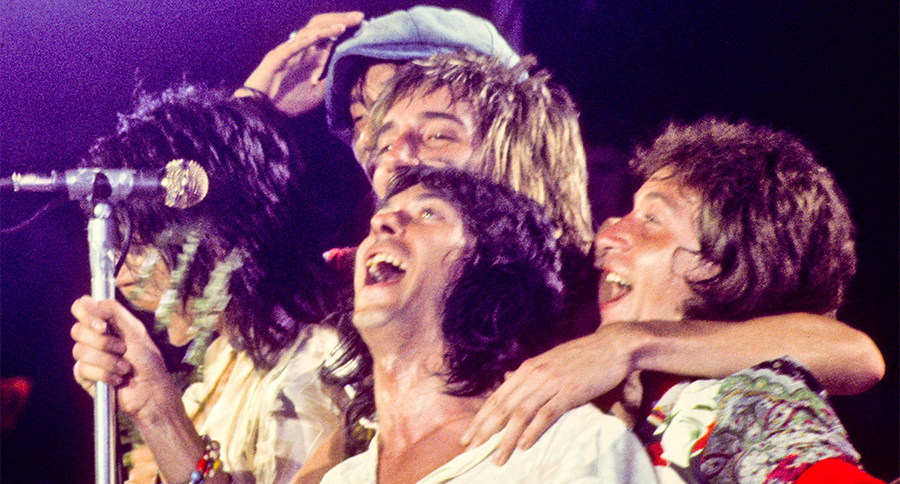
And the centerpiece of that fire was Rod Stewart during his explosive run with The Faces. They were young, dangerous, and impossible to ignore — the kind of rock bands that didn’t just tour; they detonated across America. For me, representing them became a story of my life, each tour and negotiation a chapter in the book of American music.
The Faces Rock And Roll Circus Era
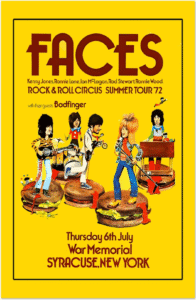
To set them apart, I didn’t want just a tour — I wanted a spectacle. That’s how The Faces Rock and Roll Circus came to be: a one-ring circus opening the show, followed by The Faces in all their swaggering, raucous glory. Later tours featured Scottish bagpipers in honor of Rod and Mac. When I represented Rod Stewart, sameness wasn’t an option. These unique touches made the tour unforgettable for fans of rock and roll bands everywhere.
One night in Boston proved my strategy. I intentionally booked a smaller venue — better to be too small than too big — and watched thousands of kids climb the building, desperate to get in. That news frenzy propelled the next tour straight into the city’s biggest arena. Demand for Rod Stewart was undeniable, and it became another key chapter in “a story of my life“.
Expanding The Roster With British Rock Band Royalty
Success breeds success. With the numbers from Rod Stewart and The Faces’ tours behind me, I could land additional British talent: Uriah Heep, Nazareth, Deep Purple, Rory Gallagher — a roster of rock bands that transformed ATI into a powerhouse. Each booking, each signed act became part of a story of my life, weaving a narrative of ambition, risk, and rock-and-roll passion.
London became a second home. Meetings, signings, late nights, Havana cigars — every trip widened the world I operated in. And everywhere I turned, the reputation of Rod Stewart made the door-opening easier, a testament to his influence on the scene of rock and roll bands.
The Breakup And A Missed Opportunity
It was inevitable that Rod Stewart would leave The Faces. His voice — raw, raspy, unmistakable — demanded center stage. While he didn’t invent his signature vocal style, he perfected it, and no band could contain him forever. The internal band politics only sped up what destiny had already planned.
Traveling with him meant instant attention. Restaurant tables magically appeared. Strangers stared. Women gravitated. Fame has a gravity all its own, and Rod Stewart carried more of it than most. I look back on these moments as defining episodes of a story of my life, when representing top-tier rock bands shaped my path in ways nothing else could.
In Bermuda, during a brief fracture between Rod and Billy Gaff, Rod offered me the chance to become his manager. It was the fork-in-the-road moment every agent dreams about. But loyalty outweighed ambition. I chose friendship over opportunity — another important line in a story of my life.
Looking Back At The Rod Stewart Years
Representing Rod Stewart during his blazing, momentum-driven days with The Faces remains one of the defining chapters of my career. Those tours, those negotiations, those nights on the road — they built the foundation of American Talent International and shaped everything that followed. For anyone who ever booked, managed, or admired rock bands, these were lessons in timing, talent, and tenacity.
If you worked in music, then you witnessed history.
If you represented Rod Stewart, you lived it. And that, ultimately, is the heart of a story of my life.
