


These events are part of the same journey that shaped my rock and roll memoir, based on what actually happened inside the music business at the time.
“On the roof, it’s peaceful as can be, and the world below can’t bother me…. Up On The Roof.” This was not only one of the greatest lines in rock and roll music, but it charted a course in my life as a music business celebrity. It is also a chapter in my memoir, “Once A King, Now A Prince,” so when it comes to writing about memoirs by celebrities, I think I understand the genre and some of the pivotal periods of my life. This was the one that headed me towards the music business and my rock and roll career.
In memoirs by celebrities, the story starts before the music plays
Yes, this is one of those books about crazy families, and mine was a top-tier dysfunctional family, back in the days when most people never even heard the clinical phrase, dysfunctional family in use. Before this period, the “top minds” of the era deduced that my little self would best be served, once removed from my parents’ abode, and “at once, I was removed.” I was eventually shipped off to a school named “Hawthorn Cedar Knowles.” The name sounds impressive, and almost like a preparatory school for those en route to Harvard or Yale, but it was not. There was not much of a stress on education, which is why for a period of close to four years away from home, I was not educated at all.
While there were some pretty awful times during my stay there, at least they were infrequent. Most of the time, I was left to myself, and aside from the couple of times where I became the childhood victim of older guys, I lounged in peaceful tranquility, not wondering where or when the hammer would fall, as my crazy father would mount his next attack on me. The problem with reading memoirs by celebrities is that they are not always an enjoyable read.
There is a chapter in my memoir about “The Tall Grass,” which describes one of my peaceful escapes into the solitude of my “forest of tall grass,” as I lie on the ground daydreaming in the autumn chill, in my sheepskin jacket, while being left alone in reverie. Maybe this explains why one of my favorite old doo wop rock and roll songs was “My Reverie,” by The Larks? There was also the cottage dog.
We lived in a series of cottages, which I think were grouped by age, and “Tippy” was our house pet. Tippy was a mutt, but in a kinder language of today, a brown Collie mix. Another of my favorite things to do was to climb tall pine trees in the area, which was a very wooded one, in Westchester County, a feat I would shudder to attempt as an adult.
The bottom line was that to escape my dysfunctional family, this was a necessity, one that served its purpose at the time, but of course would need to be replaced by more adult methods of solitude and escape as I grew up.
From a crazy family to life up on the roof
This then brings me to the roof of my apartment, in Brooklyn, New York, where I also found solace and peace from my crazy family. I had my dog, Blackie, who also has his chapter in my memoir, and while there was no grass, but asphalt, and no trees to climb, at least I was in a high spot, “up on the roof,” as the Drifters would soon sing, in 1962.
While up on my “asphalt beach,” I would have my blanket and my radio, with its long extension cord, draped over the side of the building and plugged into a socket in my bedroom on the top floor of our building. On most days, my pal Blackie, also a mutt, or shall we say a Spitz mix, who was black but for white boots and chest, was with me, groovin’ to the rock and roll music.
I listened to all of the rock stations of the day, from Allen Freed and his “Big Beat”to “Jocko” Henderson and his “Rocket Ship” show. I also tuned in to WNJR, and Jack Walker “the pear shaped talker,” an R&B station in New Jersey that broadcast into Brooklyn, playing R&B and blues. This would later give me some authority in my conversations with Savoy Brown, Rory Gallagher, or other blues clients. I guess you could say that concerning memoirs by celebrities, this is where it all began.
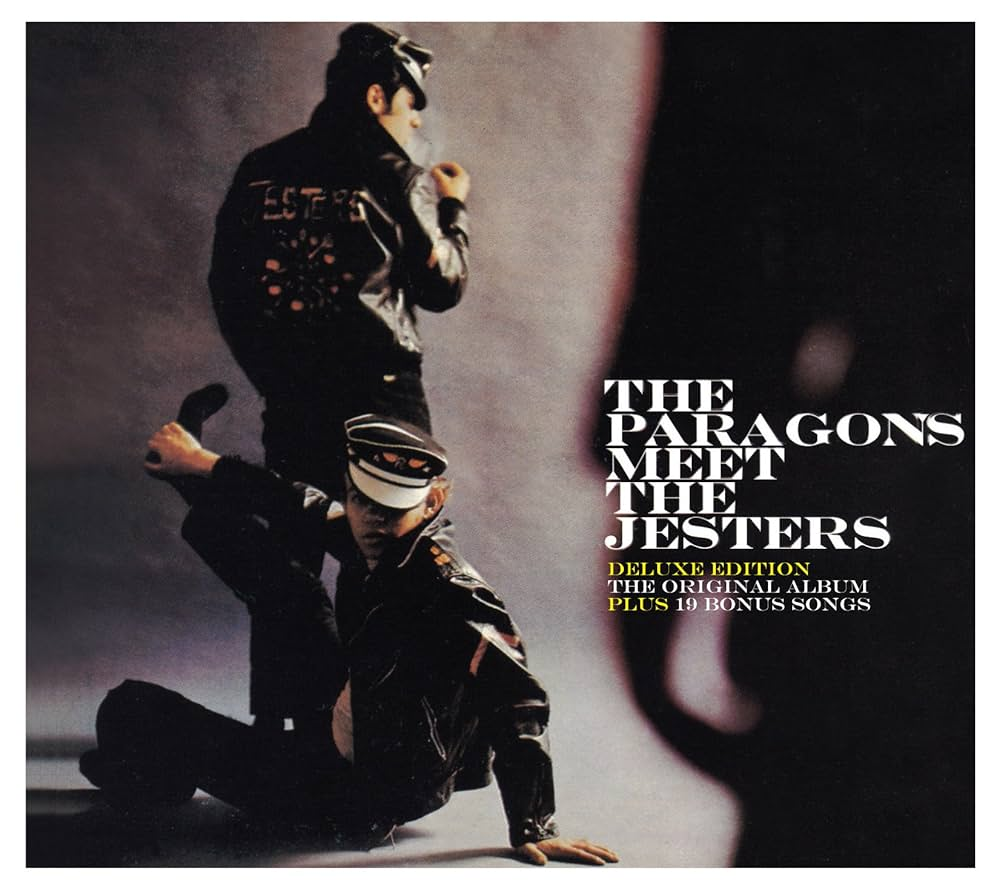
Other favorites of mine at the time were The Paragons and The Jesters, who had an album that I would listen to over and over called “The Paragons Meet The Jesters.” It was what, later on, would also be referred to as the “New York Sound” of doo wop rock and roll. The “New York Sound” was typified by strong lead vocals, a high girlish tenor voice, a booming bass, the likes of which you will not hear until the beat box era of the early 1970s rap music, which used it to establish the “beat” with.
The epitome of the “New York style” of doo wop was the full-throated and lush harmonies overall in the background, as the tenor, bass, and lead vocals weaved magically throughout. As mine is an autobiography by famous people, this is where my love affair with music began: up on the roof at Glenwood Road in Brooklyn.
There is a song by The Monotones, entitled “The Book Of Love,” where the chorus line goes; “I wonder, wonder who, who wrote the book of love?” I hope that when it comes to memoirs by celebrities, the “book of my life” has as much benefit to others, who read it, that The Monotones and other rock and roll celebrities of the fifties had for me, as I escaped into their rhythms, up on my roof.
