










“There is no new thing under the sun….” King Solomon, Ecclesiastes 1:9
Songwriting is a craft, and crafting a hit song means understanding what makes a listener stop, listen, remember, and want to hear it again.
If you want to be a rock star, sooner or later you need the song. The clothes, the stage show, the attitude, the manager, the agent, the record company and the hype may help, but none of them can rescue a record nobody wants to hear twice. That is one of the lessons I learned inside the music business and one of the reasons this rock n roll book and my supporting blog posts go beyond the people I represented. This post is also about what I learned from being around songs, songwriters, musicians, producers and records for most of my working life.
My music industry memoir contains the stories. This is about some of the craft behind them. Many music memoirs tell you how the hit happened after everyone already knows it was a hit. I had the advantage—and sometimes the disadvantage—of being there when records, careers and decisions were still being made. As a music industry executive, agent, manager and later publisher, I learned that great talent and a great song are not necessarily the same thing. That distinction runs through this rock n roll book and my supporting blog posts.
When you write a song, you will inevitably be writing about human nature, and human nature has remained essentially unchanged from biblical times to today. The Bible and Shakespeare wrote about it, and I am sure you have heard the phrase, “It’s an age-old story.” Whether you set out to write a song in pop, rock and roll, or country music, most writers will write about love, lost love, unrequited love, new love, or old love.
Why is this the case? It is generally the most popular subject in pop or rock music. Of course, it is not the only thing you can write about. Still, whatever topic you choose to start your musical story, it must be one of universal appeal and one that almost everyone can relate to. The one necessary point to make is that whatever the topic, your treatment of it must be unique.
That idea of being universal but still different is something I came to understand more completely with time. Working inside the music business, you hear thousands of songs. Most are competently written. Some are very good. A handful make you stop what you are doing. The difficult part is understanding why. That is another reason this rock n roll book and my supporting blog posts keep returning to the songs themselves: the difference between good and unforgettable is often buried in a few seconds of music.
With songwriting, whether for rock and roll or any other genre, the most general comment I could make is that it’s essential to make every single element of a song catchy. That means a great story, with an excellent hook for a chorus, an intelligent verse, a soaring melody, and a killer arrangement. Great songs have a beginning, whether it’s a pre-chorus or otherwise, a middle, and an end. It is just like a novel or film, as the purpose is to hook the listener at the opening note, keep them there throughout with a great middle, and close like your life depended on it.
That is why songwriting belongs in my supporting blog posts around this rock n roll book. When I look back at the artists I represented, I no longer hear only the performances. I hear the decisions inside the records—the hook, the riff, the title, the arrangement and those few seconds that can be the difference between someone changing the station and turning the volume up. The artists and records behind the book taught me that a hook can come from almost anywhere if it is strong enough to stay in your head.
B. B. King A Blues Song Writing Legend And Early Client At A.B.C.
I represented B.B. King at Associated Booking Corporation during the period when his audience was expanding beyond the traditional blues circuit. Part of what I did was help put B.B. in front of the white rock audiences that were discovering blues through venues such as the Fillmores. Those audiences might have arrived thinking they were rock fans, but once B.B. started playing, labels did not matter very much.
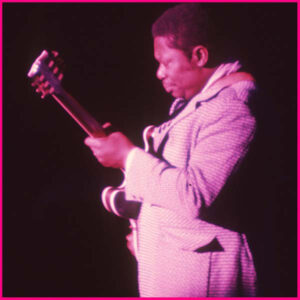
B.B. also proved a point that is essential to songwriting: the hook does not always have to come from the lyric. Sometimes the guitar line is the hook.
Listen to “The Thrill Is Gone.” A few notes and that instantly recognizable minor-key guitar statement establish the emotion of the record before the story has had time to unfold. His economy was part of his genius. B.B. did not need twenty notes when two or three, bent and held exactly right, could make you feel something.
On “Lucille,” his guitar almost becomes another person in the conversation. He sings, and the guitar answers him. On “Sweet Little Angel,” the high-register opening guitar phrases announce B.B. King before anyone would ever need to tell you who was playing.
That is a hook. It can be a title. It can be a chorus. It can be a sound. It can be a guitar lick. But whatever form it takes, it has to make the listener remember the song. That is something I came to appreciate more and more during my years inside the music business. B.B. belongs in the story behind this rock n roll book for that reason alone: he demonstrated that the guitar itself could carry the memory of the song.
When writing, consider a universal story as your starting point. Every songwriter benefits from starting with a universal idea. Therefore, start by storyboarding it as if writing a novel or a movie. In so doing, ask yourself, is this an excellent idea for a story? Is it one that needs to be told, rather than one everyone else is writing? Then the chorus hook and the song’s title need to be so catchy that no one can stop singing it, whistling it, or getting it out of their head.
The key is to come up with a hook, which is a brand-new way of saying what everyone is feeling in their lives. What you will accomplish by doing so is also a validation of what most are feeling, and thus a sure winner. “I want you, I need you, I love you” was fine for Elvis, but we have come a long way in the history of songwriting since Elvis.
There is a limit to the content on human emotions that has been explored since Shakespeare and even the Bible. There is not a lot that is new to human behavior. Therefore, the key is to describe a universal feeling that is both catchy and expressed in a way that no other writer ever has or is even able to.
Once again, the word that comes up is “universal.” All need to be able to relate to it, to have felt it at least sometime in their lives, and still, it must be unique. One way to do this is to become a master of the jargon of the day. You must become the king or queen of colloquialisms, phrases that all have heard, but have not been utilized in song.
One of my longstanding examples of such an idiomatic wunderkind is the hit single by Duran-Duran, written by the band, “Hungry Like The Wolf.” They were the first to use this in songwriting, but you have probably heard this phrase all your life, as “hungry as a wolf.” One of the recurring lessons connected to this rock n roll book is that originality does not require inventing a new human emotion; it requires finding a new way to express an old one.
This is where you get your first chance, at the beginning of the song, to rope in the listener. It’s your first chance to grab them by the balls and reel them in. It should lead you right into the hook. Not all songs have, or require, a pre-chorus.
Here is where you can become lazy, and go with what rhymes, or shine and tell your story, creating the most interest in your tale to be sung, because you didn’t simply go with the flow, and if it rhymes, that’s good enough. Good enough is never the goal, and it is not the making of a hit record. This is where you want to stretch and put on your poetry brain and choose the most captivating words in your tale. The verse is the explanation of what the chorus is about.
You betcha, as in “Jump Around” by House of Pain. That screech from the beginning that repeats through the arrangement is right there in your face, pulling you into the track. The repetitive nature of the musical track is almost trans-like. The Savoy Brown years behind this rock n roll book taught me another lesson: a great rocker and a potential hit single do not always have the same job.
Writing A Rocker And Finding A Hit Are Not The Same Thing
I learned that lesson from another direction with Savoy Brown and my friend Kim Simmonds. Kim and I wrote two songs together for the band. I wrote the lyrics to “Bad Girls (Make Me Feel Good)” and “Nobody’s Perfect,” and Kim wrote the music. We wrote them as rockers. We were not sitting there saying, “Now let’s manufacture a hit single.” They were meant to rock, and that was exactly what we wanted them to do.
But I also understood that an album could use the kind of song that had genuine hit potential. My friend Mike Chapman was one of the major hit songwriters and producers of that period. Together with Nicky Chinn, Mike had written hit after hit. I was able to bring Savoy Brown their song “Lay Back in the Arms of Someone,” which the band recorded and which became a chart single for them. That episode is part of the larger story behind this rock n roll book because it showed me the difference between writing the rocker you wanted and finding the song the album needed.
That was not a contradiction. It was knowing what each song was supposed to accomplish. “Bad Girls” and “Nobody’s Perfect” were rockers. “Lay Back in the Arms of Someone” supplied something different.
That distinction is one of those things you learn inside the music business. A great album track does not necessarily have to be a single. A great live song does not necessarily have to be a radio record. And a song written specifically to connect with a large audience may need something different from one written simply because the band wants to tear the roof off the place.
My blog posts let me look more deeply at some of the records and artists behind this rock n roll book. The older I became, the better I became at separating great playing, great performance, great arrangements and great songwriting. Sometimes they all arrive in one record. Sometimes they do not.
You must understand how to create the structure or the pieces of the pie to create a great song. I mentioned at the start that songs have a beginning, middle, and end, as in my or anyone’s rock and roll memoirs. The beginning opens the door and starts your listening journey, the middle continues the story and keeps you interested, and the end closes the deal. Looking back through my blog posts, the records themselves were always part of the story.
What I Wish I Had Known Then: Rory Gallagher
There is another part of this story that belongs here because age gives you something success cannot: hindsight. I have written elsewhere that there were things I learned later in life that I wish I had known when I was representing some of my clients. I was successful. I had good ears. I could recognize talent. But that does not mean I already knew everything I eventually learned about songs and arrangements.
Rory Gallagher is probably the example that stays with me most. Rory was a world-class guitarist and one of the nicest people I represented. He could play his ass off. What I came to understand only much later was how I might have been able to help him make some of his songs and arrangements reach an even larger audience. Rory is one of the clearest examples connected to this rock n roll book of how extraordinary musicianship and commercial songwriting are related, but they are not the same thing.
The problem was never Rory’s ability to play. The question was whether more of the songs could have had another identifiable musical hook—a recurring riff, sound or arrangement device that grabbed you immediately and stayed with you. I mean the kind of thing you hear in “Sharp Dressed Man,” “Hungry Like The Wolf,” “Jump Around,” or some of the great Cream and Led Zeppelin records.
I wish I had possessed then the song-and-arrangement knowledge that I developed later, particularly after my additional years working with songwriters and publishing. I would have loved the opportunity to sit with Rory and work through some of those ideas. Not to turn Rory Gallagher into somebody else. The last thing Rory needed was to become somebody else.
I would have wanted to help make what was already Rory even more immediately identifiable in the record. That is one of the reasons this rock n roll book and my supporting blog posts matter to me. They give me room to look back at those years with the knowledge I acquired later and to explain what I now understand about the songs, arrangements and decisions behind them.
You Can Have Great Ears And Still Learn More
Rory was not the only example. With Brainstorm, I could already hear when a production was drifting too close to Earth, Wind & Fire rather than preserving what had made Brainstorm distinctive. I knew something was wrong. What I did not yet have were all the later tools to explain precisely what I wanted changed and how to change it.
That came later. So did more work with quality songwriters and music publishing. As a music industry executive, I had been able to recognize great talent and great records for years, but recognizing something and being able to dissect exactly why it works are different skills. That difference is another part of what this rock n roll book and my supporting blog posts can explore with hindsight.
That distinction matters to me now when I read music memoirs that turn every decision into genius after the fact. That is not how I remember life inside the music business. Sometimes you knew. Sometimes you guessed correctly. Sometimes you knew something was wrong without yet knowing exactly how to repair it. And sometimes the lesson arrived twenty years too late to help the artist you wish you could have helped. That is another reason this article is as much about what I learned later as what I knew then.
The Real Lesson Behind This Rock N Roll Book And My Supporting Blog Posts
So ya wanna be a rock star? Then ya need a hit song.
That line makes a good graphic because it is funny and because there is a lot of truth underneath it. Talent gets you into the room. Playing your ass off gets people to notice. Image can get attention. Promotion can create awareness. Money can buy exposure. But somewhere in the middle of all of it, somebody still has to write something people want to hear again.
At its core, this rock n roll book and my supporting blog posts are about more than careers, records and famous names. They are also about what experience eventually taught me about the music itself. My life inside the music business gave me access to extraordinary musicians, great songwriters, producers, managers and records. My later years gave me another gift: enough distance to understand some of those records differently.
The music industry memoir tells the story of who was in the room and what happened there. My blog posts give me room to go further into what I eventually understood about the songs, arrangements, decisions and lessons that came from those years. The best music memoirs are not merely victory laps. They include the things we would do differently if somebody handed us the years back.
If there is one songwriting lesson running through this rock n roll book and my supporting blog posts, it is that talent opens the door, but the song is what makes people come back. Nobody is handing me those years back. But I can tell you what I learned from them.
And if you still wanna be a rock star, start with the song.
Writing a rock n roll book brings back much that has not been utilized in years. You can purchase it on Amazon.
