








Human nature tells us that essentially, we are all the same. That is mostly true as a general rule. But then we have the subclasses within that, and they include people like me, who fall into two basic categories: those seeking celebrity, fame, and fortune, and those who love the music.
Those lovers of music mostly cannot play an instrument or sing worth a damn, so rather than stand onstage, they gravitate toward the stage by working inside the music business. Lacking the creative brain to perform, write, or play, many moved into recording, management, agency work, sales, and promotion, except for Barry Richards, who could listen to a record and, better than anyone I ever knew, tell you on the spot whether that record could be a hit.
Me, I have a celebrity sister who got all my father’s love and attention, whereas I got a slap in the face. Ain’t that a kick in the ass? It’s worse, as the slap hurt both my face and my feeling of self-worth.
Most of those drawn to get inside the music business were there purely for the love of music. In my opinion, many tended to gravitate to the publishing or recording side of the business, except for the record promotion and sales guys, who often fell into the same category as the agents and managers.
How Did I Get Inside The Music Business?
I am glad that you asked. Initially, and on the intellectual and emotional side, I loved the music. I listened to all the great music and performers of the day, such as Elvis Presley, Fats Domino, Chuck Berry, The Heartbeats, The Crows, The Wrens, and a myriad of other bird groups. Doo Wop music had me by the heartstrings.
Those early sounds became the opening chapter of my rock and roll memoir. I listened at every chance I could get, and started purchasing records, with my earliest by the Paragons and The Jesters, once I started to receive an allowance in the seventh grade of public school. A favorite stop was the candy store, as it had a jukebox.
It was the candy store jukebox where I heard Shirley and Lee for the very first time sing “Let The Good Times Roll” and “I Feel Good.” The candy store’s jukebox also introduced me to Fats Domino and was where I heard Johnny and Joe sing “Over The Mountain.” Little did I know that this music would drive me to become a major player inside the music business. It would also become a defining thread in my stories from my life.
Then there was the emotionally driven side of me that I did not understand, and I could not have explained it then because it never even entered my brain. That was the connection to wanting what my sister had. She had his love and was not a recipient of our father’s wrath, anger, or physical abuse. She was abused in other ways, such as abandonment at an early age and separation due to his divorce prior to my being born.
I did not fathom this at that time as a young child, but emotionally, down deep, I seemed to sense that she had something that I wanted, our father’s love and attention. I never put that together as a child, but only after the fact, as an adult, did I realize that this became part of why I included dysfunctional family stories in my rock and roll memoir, Once a King and Now a Prince, and in part what drove me to get inside the music business and succeed in such a grand way as I did.
Inside The Music Business I Found My Fame And Fortune
I did not have a business plan or any plan for success, let alone how to get inside the music business, let alone thrive as I did. I simply followed my instincts and did what I loved. At first I promoted local dances, where the Watusi and the Wobble were the dances of the day. That was the early sixties. Those years would later provide rich material for my rock and roll memoir and any honest rock n roll book.
The last place where I promoted shows closed, and thus I was out of work, so while finding a local band called The Emeralds, who also wanted to get inside the music business, we partnered up, with me becoming their manager. From there it was a natural progression, finding more talent and becoming an agent for quite a few of the local wannabees. That momentum became another chapter in my rock and roll memoir.
One of the things kids or the less sophisticated did in those days, and probably even today, was, when designing one’s business cards, we wanted to ensure everyone knew that we truly were players inside the music business, and we loaded up our business cards with all of the right titles: Agent, manager, producer, publisher, you name it.
One card stood out to me to this day. There was a very hip bandleader who designed his card with great tongue-in-cheek humor. His card read: Agent, manager, producer, publisher, engineer, songwriter, and men’s socks. Moments like that are what give a rock and roll memoir its truth and humor, and the flavor readers hope to find in a rock n roll book.
A Look Inside The Music Business Is Not Complete Without Record Promoters
Inside The Music Business, record promoters were often the unseen engines behind chart success. They operated outside the spotlight but close to the center of influence, working phones, relationships, and timing to move a record from new release status onto station playlists. Paid as independents, their first victory was often simple but valuable: getting it added. That initial add was the trigger. Getting it added to the station’s playlist was enough for the “Indy,” as they were commonly called, to earn their paycheck for the “ad.” What happened next, whether the record held, climbed, or disappeared, was another fight entirely.
They were dealmakers in motion, moving between labels, program directors, and stations with one goal: get the record heard and keep it there. In an era when airplay meant everything, the right promoter could change the trajectory of a release almost overnight. Their presence was rarely public, but their impact was unmistakable.
These are the indies inside the music business, unseen by record buyers and radio listeners, who made records happen.
Barry “Reazar” Richards
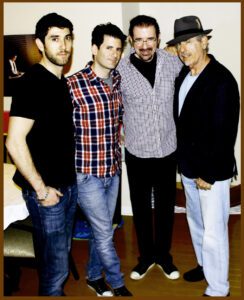
Barry “Reazar” Richards was my friend, and one of the most colorful independent record promoters of his era, known for hustle, personality, and an outsized presence inside the music business. He started in radio in the Wash. DC market, where he was not just successful, but everywhere. He worked at stations including WHMC and WEAM, along with earlier stops at WDON, WUST, WINX, and WKYS, building relationships across the dial that only come from living inside the business day and night. By the time he left radio for promotion, he already knew who to call, and more importantly, who would take his call.
Working outside the label payroll structure, he turned those same relationships into promotional power, going back to many of the same people and, as the saying went, “hock them to death” until they played the sides he was pushing. He repeated that formula in city after city, carrying that same mix of personality, persistence, and pressure into markets like Baltimore, New Orleans, Los Angeles, and beyond, helping records gain spins, momentum, and chart visibility.
That path eventually came full circle. After years of working the phones and the playlists, he moved into ownership, culminating in his stake in stations in the Florida Panhandle, where he was no longer just calling the shots, but literally calling the shots. His career reflected the full arc of the business, from the control room, to the streets, and back again. In his later and more seasoned years, he is still hocking the stations today.
Joe Isgro
Joe Isgro emerged as one of the most successful and controversial independent record promoters in the record industry, representing the high-stakes world of radio promotion at its peak. Labels hired figures like Isgro because airplay meant sales, chart movement, and visibility, and he was known for delivering results. He developed a powerful network of radio relationships that made him a major force in breaking records nationally.
In addition, being inside the music business in ways few outsiders knew about, he also acted as the godfather among indies. If you wanted to become one, or add stations to your indy roster, you needed Joe’s blessing. You did not want to move ahead with your expansion any other way. His influence reached beyond promotion itself and into who could operate, grow, and compete within that tightly controlled world.
His name later became tied to broader industry scrutiny over promotional practices, placing him at the center of debates about how records were advanced in the marketplace. Even so, Isgro’s prominence showed how valuable elite independent promoters had become. In that era, few roles carried more leverage than the person who could help turn spins into hits.
Ben Scotti
Ben Scotti built a respected career as an independent promoter and later as a label executive, owning Scotti Brothers Records along with his brother Tony. I was friendly with them both, and was able to help my former partner at American Talent International land a job there in the Country Music department. That opportunity later led to his move to Nashville, where he joined one of the biggest country music agencies in America. I was also able to land another friend there a job as an in-house record producer, Richie Wise.
He worked the essential lanes of promotion, helping records secure exposure and climb the charts through direct relationships with stations and programmers. Scotti earned notice as someone who understood both the mechanics of promotion and the bigger strategy behind artist development. Unlike some figures known mainly for controversy or flash, Scotti developed a reputation for longevity and adaptability. He moved through changing eras of the music business while remaining relevant, which is rare in a field built on trends and turnover. His career illustrates how strong promotional skills could become a bridge to larger executive opportunities.
Inside The Music Business, With A Life Behind It
I came from a background I wrote about earlier in my telling of dysfunctional family stories that could have broken many people, yet I learned to survive and rise through it. Those same qualities became the fuel that carried me from the streets of Brooklyn to become a major influence inside the music business, shaping tours, artists, and opportunities during one of rock and roll’s most explosive eras. Those years became the backbone of a rock and roll memoir and the best possible stories from my life.
