








POSTSCRIPT: The King Has Died—Long Live the King.
Barry Richards passed away. The man is gone, but everything he meant to me—and to the music—remains. This is a postscript to my music autobiography that I never expected, or wanted, to write. For anyone who does not know who he was, he was a giant in the music business. When I met him, he was a DJ in Washington, D.C., and one of the things that I always admired about him was that, of everyone I knew in the music business, BR (Barry Richards, A/K/A The Reazar) had the best “ears” for hearing a hit record.
Barry, due to his radio show success, grew into the “top rotation,” so to speak, and became a P.D., a Program Director. He was the man in charge of the playlists. Some radio stations leave that to the Music Director. Barry eventually bought his own radio station on the “Redneck Riviera,” which is the northern and most eastern part of Florida. He was not fond of living there, and when I visited him there, I couldn’t agree more. No good delis!
The Legacy Of Barry Richards
I think the thing that bonded us as friends right off the bat was that he was very much my twin when it came to our outlooks of “presentation.” Barry was the P. T. Barnum of rock and roll. One of his promotions was running secondary wrestling events, for which I doubt he will ever be inducted into the “Wrestling Hall of Fame,” assuming there is one.
Anyone reading my music autobiography knows that presentation was always a major part of the business to me, and Barry understood that instinctively. What happened behind the music could be every bit as important as what happened onstage.
His family is also part of his legacy. Dee, his loyal and faithful companion for decades, was his foundation and, many times, his moral compass. If Barry was ever wrong on an issue with me or anyone else, she would not take his side, as many wives would in a knee-jerk fashion. She would stand up to him and get him straight. Dee became as much a friend to me as Barry was, and it is heartbreaking to imagine her anguish. He raised a great family, with all of them growing into “solid citizens” and carving their own unique niche in the music business.
The Crazy Times We Had Together That Did Not Make It Into My Music Autobiography
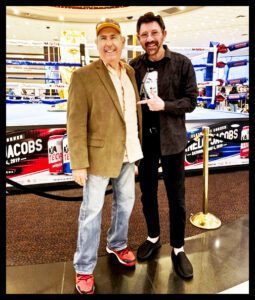
On one of my visits with Barry at a show he produced with Rory Gallagher, I hung out with him for a few days, and one of the things we did was go to a show at a bar where he was the featured attraction. This was in the early days, prior to his becoming famous as the most important independent record promotion “dick,” as he referred to his position (with “dick” replacing “man”). He would emcee his shows, which he promoted using his radio DJ and PD positions.
One of his favorite “shticks” at his events was playing “Hide The Salami.” BR would announce a contest, and I can bear witness, as I was at one of these shows. The contest was called “Hide The Salami,” in which he would take an actual whole salami and hide it somewhere on his person. The contestant, who always seemed to be female, would have to find it by patting him down. Well, as you may have guessed, these were some fun shows, with lots of laughs and some strange patting in weird places. It put a jail search to shame.
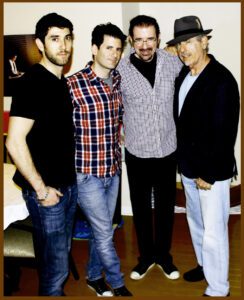
While I was still living in Los Angeles, Barry and I had a standing Saturday event. We would go downtown to Chinatown, eat Chinese food, and then cruise the bootleg movie DVD sellers’ stands, grabbing all the new discs and hoping none were recorded by camcorder.
When I left L.A. for Vegas, Barry said to me, “Ira, you’re leaving? Who the hell am I going to hang out with now?” That was rough, but I had my reasons for moving. Looking back now, I probably would have been better served by staying. I loved L.A. and my great condo in Marina Del Rey.
These are exactly the kinds of stories that disappear from many music autobiographies because there is never enough room for everything. Barry supplied enough material for a music autobiography of his own.
How Barry And I First Met
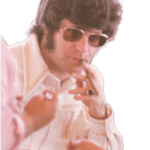
I first became friendly with Barry when I worked as a young agent for Joe Glasser in the late sixties. Barry would promote rock and roll shows from his platform as a DJ, and he was the biggest name in rock radio in his area of D.C., Baltimore, and Virginia. He would run shows at the Alexandria Roller Rink and other similar places before he graduated to arenas, partnering with my buddy, the notorious Dicky Klotzman, and/or Bud Becker.
I would support him with great prices, anywhere from $450–$750 for a one-night gig. At the high end, he paid $750 for Rod Stewart and Faces. In return, BR would support my tours by giving me dates on Mondays, Tuesdays, and sometimes Wednesdays, which were the hardest dates to secure bookings on. We had a mutual admiration society thing—highly symbiotic—as we supported each other in our endeavors, something that we carried on doing for decades.
The great thing about these dates is that they contributed to me building rock and roll tours that were 6 and even sometimes 7 gigs in a week. My chief competition was Frank Barselona of Premier Talent Associates. His tours averaged four days per week. This difference allowed me to book tours that were profitable to the bands and tout that fact every time I tried to sign a new band. Thank you, BR.
That relationship is an important part of my music autobiography because Barry was one of those people behind the music who helped make the touring business work.
The Music Business Has Changed Since Those Days
Today, with streaming and a more fractured industry, musicians do not appreciate what we did. Without people like Barry getting their records added to the playlist or upped in rotation, there would be no record sales.
Without me booking both creative and profitable tours, there would not be an audience to buy their records. Just yesterday on the Rush Forum, I posted how, with the help of Marty Scott and John Scher of Jem Records, record importers, I engineered dates for Rush with Kiss, Savoy Brown, and others, and how, through my contacts at radio, I had asked for and was given hot rotation in Cleveland from the lunar rotation. Without that, there would be no Rush. I had to school some fan who thought all a band had to do was to be great. “If a tree falls in a forest and no one is there to hear the sound…” Well, you know.
As a music industry executive, I learned long ago that great music alone was never enough. That part of the business is often missing from music autobiographies, but it was the world Barry and I lived in every day.
From Local DJ To The Most Important Indy Record Promoter
I watched Barry grow and become the most important independent record promoter in the music business. He got the plays that the in-house record guys could not, and they paid him well, very, very well until Napster. However, by any standard, they still did after that. He especially became the giant he did when he secured Jerry Clifton as a client with all his disco and pop stations.
Barry and I even partnered on some things over the years, one of which was a disco artist of Jamaican descent and from the U.K. called Princess. She had a top-five disco hit and a brother who would travel on tour dates with an attaché case, not filled with contracts and various music business stuff, but full of bottles of Pickapeppa Sauce, which is one of my own house staples to this day.
Looking back through my music autobiography, Barry appears in the larger story because he understood both promotion and people. From my perspective as a music industry executive, that combination was rare.
There will never be another like him.
My Farewell To Barry From My Music Autobiography
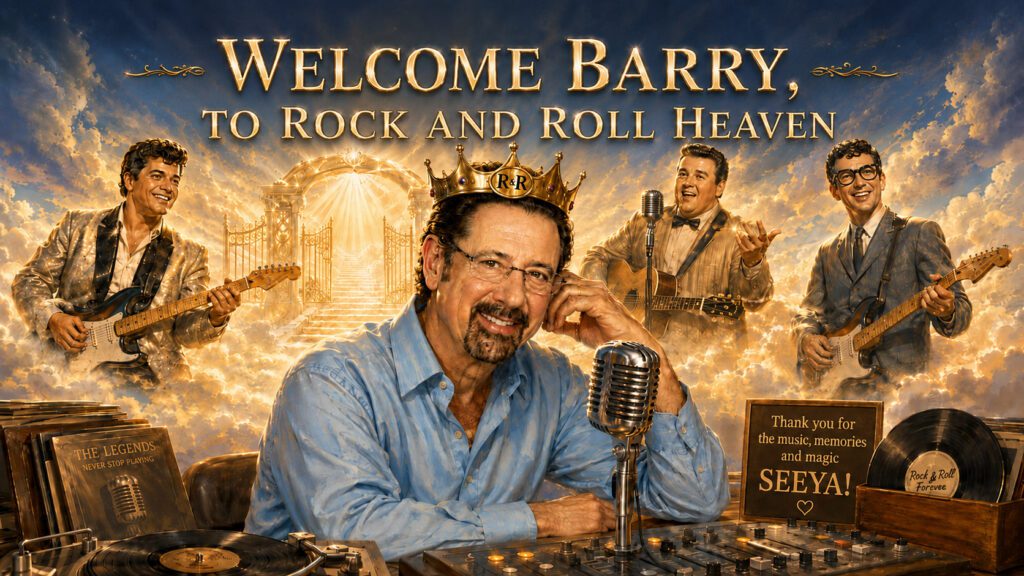
Hearing that BR passed was more than just a “punch in the gut.” It was a “punch below the belt,” as if God cheated us by removing him from this planet and bringing him up to Rock and Roll Heaven, where he now rules under Him. BR was a king amongst us. He was a true rock and roll king in the record business.
My music autobiography was already written before this happened. This postscript is here because Barry deserves to remain part of the story.
I am done writing and crying, and it’s 9:30 at night. So, as Barry would say many times, “It’s 9:30, gravel Gerdy,” and continue with, “eee-tiddely-ok, are you ready to rock?” He would also end a meeting or phone conversation with his typical farewell salutation, also from his radio days as a jock: “SEEYA.” Yes, he will see us in Rock and Roll Heaven!
