



Imprinting is the process where children internalize and reproduce parent behaviors, attitudes, and emotional patterns, often without conscious realization.
The Imprint That Shapes Behavior
Most dysfunctional family stories don’t begin with a single defining moment. They develop slowly, through repetition, through exposure, through a child watching behavior that eventually becomes his blueprint for survival. In my story my life, that blueprint was formed in a household where volatility and emotional imbalance were not the exception but the norm. A child does not question what he sees every day; he accepts it, absorbs it, and carries it forward. That is how the patterns found in non fiction books about dysfunctional families are created, not in theory, but in lived experience.
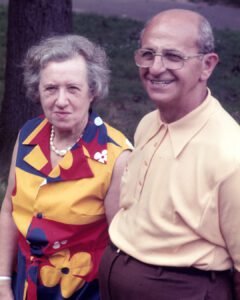
My father was a rageaholic, and his anger defined the emotional climate of the house. It was not occasional or contained; it was constant, unpredictable, and often violent. He was both a child abuser and a wife abuser, and that reality shaped how I learned to respond to the world. My mother, by contrast, expressed her anger through passive-aggressive behavior, quieter but equally corrosive.
Between those two extremes, I was never exposed to calm problem-solving or rational communication. Instead, I learned to react. Like many individuals whose lives later reflect the patterns described in dysfunctional family stories, I developed a tendency to respond emotionally rather than thoughtfully, especially under pressure. I did not act with intention; I reacted based on conditioning. That limitation followed me into adulthood, leaving me with fewer tools to navigate conflict and forcing me to learn, much later in life, what had never been taught.
My Story My Life And The Drive Behind New Celebrity Memoirs
At the same time, another force was developing beneath the surface, one that would eventually shape the direction of my life. My sister became a celebrity, a well-known Hollywood actress with a successful television series and film career. My father adored her in a way that made the contrast unmistakable. In a child’s mind, those differences do not remain abstract; they become conclusions.
Somewhere in my subconscious, a connection was formed between recognition and approval. If celebrity status earned his affection, then that was the path I would have to follow. This dynamic appears repeatedly in new celebrity memoirs, where the pursuit of success is often rooted not just in ambition, but in the need to be seen, valued, and acknowledged in ways that were missing early on.
From Dysfunctional Family Stories To Rock And Roll Memoirs Beginnings
I remember a moment that reinforced that belief with absolute clarity. At around 22 years old, I was running a rock and roll dance at The Golden Slipper in Glen Cove, Long Island. The event drew over a thousand kids, with live bands and a format loosely modeled after the Playboy Club. On opening night, both of my parents attended.
What stood out was not the music or the crowd, but the look on my father’s face. For the first time, I saw something that resembled pride, and it was tied directly to the visible success of the event, the size of the crowd, and the money being collected at the door. That moment served as a powerful reinforcement, pushing me further along a path that would eventually lead me into the world of rock and roll memoirs and rock n roll books, where success and visibility are central themes.
Lessons Found In Non Fiction Books And Dysfunctional Family Stories

Following that experience, I became involved in running a nightclub called the Silver Knight in Hewlett, Long Island. The opportunity came through individuals connected to organized crime, and declining it was not a realistic option. My partner and I were paid fifty dollars a week, and the club operated with two distinct environments: upstairs for jazz and comedy with legitimate patrons, and downstairs for a younger crowd using less legitimate means of entry. The atmosphere was volatile, with fights occurring regularly.
Looking back, it was an extension of the chaos I had grown up with, something that felt familiar rather than unusual. This alignment between early experience and later environment is a common thread in dysfunctional family stories, where individuals often find themselves drawn to situations that mirror what they already know.
The Silver Knight eventually collapsed, functioning as what was known as a “bust out joint,” where credit was extended, debts were ignored, and incoming cash was diverted. When the operation finally shut down, I arrived one day to find a padlock on the door and a sheriff’s notice posted outside. That moment could have marked an ending, but instead it became a transition point. A band I had hired to perform there had their equipment locked inside the club, and in researching the situation, I learned that their instruments were legally considered the tools of their trade and could not be withheld. That discovery led me into a closer working relationship with the band, The Emeralds.
Building A Path Into Rock N Roll Books Beyond Dysfunctional Family Stories
Shortly afterward, I met with the band’s leader, Don Selah, at a local diner, a typical meeting place of the time. My proposal was straightforward: we were both out of work, so I would manage the band. That decision marked the beginning of my shift from nightclub operations into artist representation. What started as a single management relationship quickly expanded as I secured bookings for The Emeralds at well-known New York venues such as Trude Heller’s, The Peppermint Lounge, and The Metropole.
Their first performance took place at The Gingerbread Lounge in Greenwich Village, owned by the Ruggiero brothers, who were both charismatic figures and connected to the Joey Gallo Gang. During the band’s run there, I was asked who else I had available to perform. Although I had no additional acts at the time, I responded as if I did. That answer forced immediate action, and by the next morning, I was actively recruiting bands and building a roster. This moment marked the transition from managing one act to becoming an agent representing several.
As my involvement in booking grew, I began offering nationally known recording artists to the venues where I was placing bands. This expanded role brought me into contact with established agents at major booking agencies, who evaluated my abilities firsthand. One of those agents, Larry Magid, introduced me to Sol Saffian at Associated Booking Corporation.
After a single meeting, I was offered a position, which I accepted. That opportunity marked a significant step forward, eventually leading to the creation of my own agency, American Talent International. At that point, the path that had begun in a childhood shaped by instability had evolved into a career firmly embedded in the world described by rock and roll memoirs and rock n roll books.
Why Dysfunctional Family Stories Led To New Celebrity Memoirs
Looking back, the connection between early experience and later achievement becomes clear. The patterns found in dysfunctional family stories do not simply disappear; they evolve, often transforming into drive, persistence, and a need to redefine one’s identity. In my story my life, the same forces that created emotional challenges also fueled the determination to build something meaningful.
This duality is what makes many non fiction books about dysfunctional families so compelling. They are not only accounts of hardship, but also stories of transformation, where the need to be seen and valued becomes the foundation for success. That same theme runs through many new celebrity memoirs, where public achievement often reflects a private journey shaped by circumstances far removed from the spotlight.
