






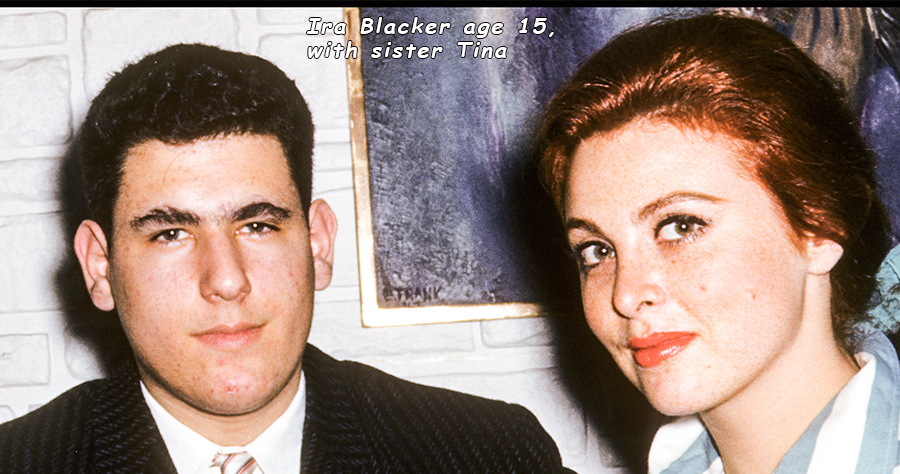
When it comes to books about crazy families, there is often an unspoken competition over who had it worse. Whose father raged louder. Whose mother vanished longer. Whose childhood felt less like childhood and more like a long-running endurance test. I do not claim victory lightly, but my family makes a serious showing, particularly my father, who ruled our home with volatility, volume, and a sense of entitlement that made daily life feel like a hostage negotiation. What still surprises me is not the dysfunction itself, but that I lived through it at all.
SURVIVAL WAS NEVER NOBLE IN BOOKS ABOUT CRAZY FAMILIES
Survival is a recurring theme in books about crazy families, yet it is rarely portrayed honestly. Survival is not noble in the moment. It is clumsy. Improvised. Often unhealthy. The tools I used were not chosen from a shelf of good options. They were scavenged from whatever a frightened kid could reach. My mental toolbox was small, dented, and assembled by necessity.
At first, my choices were limited simply because I was a child. And children do not know much beyond what they are shown. They copy. They adapt. They repeat whatever seems to work. As time passed, I kept relying on those same tools, not because they were good, but because they were familiar. Familiarity feels like safety when chaos is the baseline. This is one of the quieter truths buried inside books about crazy families.
CONTROL CAME IN SMALL PIECES
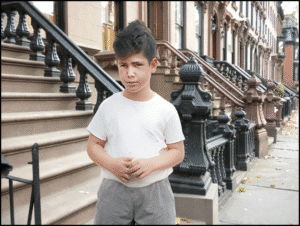
As a kid, I could not fix my circumstances, but I learned to perfect small things. Control, even in miniature, mattered. I missed most of my elementary education after being removed from school and warehoused at Kings County Hospital, followed by Hawthorn Cedar Knolls. Education was not the priority in those places. Containment was.
This absence shows up again and again in books about crazy families. The missing classrooms. The lost routines. The unspoken understanding that your future is secondary to your manageability in the present.
Still, intelligence finds cracks. I had to understand money because money existed whether I was taught about it or not. I rounded numbers to tens and handled the pennies afterward, inventing my own system. Years later, schools would call this kind of thinking innovation. For me, it was survival math, a quiet adaptation echoed throughout books about crazy families.
LEARNING THE WRONG LESSONS IN BOOKS ABOUT CRAZY FAMILIES
Not all adaptations were admirable. I learned early that my father’s belligerence commanded attention. Volume equaled control. Aggression ended conversations. So I copied it. Screaming became a language. Tantrums became leverage. These behaviors were not learned in therapy or textbooks. They were learned at home.
Many books about crazy families avoid this truth. Children do not simply endure dysfunction. They absorb it. They practice it. They weaponize it when necessary. What keeps you afloat as a child often becomes the very thing you must unlearn as an adult.
THE ECHO THAT FOLLOWS YOU
The habits do not disappear when the danger ends. They linger. Reflexes remain. You grow older, but the internal rulebook stays the same. You react before you reflect. You dominate before you trust. This is why books about crazy families are not really about childhood at all. They are about adulthood shaped by unresolved noise.
I do not romanticize any of it. There is nothing charming about institutions instead of classrooms, fear instead of guidance, or survival tactics replacing curiosity. But I do acknowledge what it produced. The child I was learned to observe, calculate, and adapt. He learned how to stand his ground in a house where standing still was dangerous.
WHY THESE STORIES MATTER
Many books about crazy families chase shock value. Outrageous scenes. Unbelievable parents. What matters more are the quiet adjustments no one sees. The internal negotiations. The small victories that never get applause. Figuring out math alone. Fighting back with noise because silence felt unsafe.
If this story belongs among books about crazy families, it is because it tells the unglamorous truth. Survival is messy. It leaves dents. It creates adults who function, but carry scars. Against the odds, against the noise, against a King who ruled through fear, I stayed standing. Not gracefully. Not quietly. But standing. And sometimes, that is the only honest ending books about crazy families can offer.
