








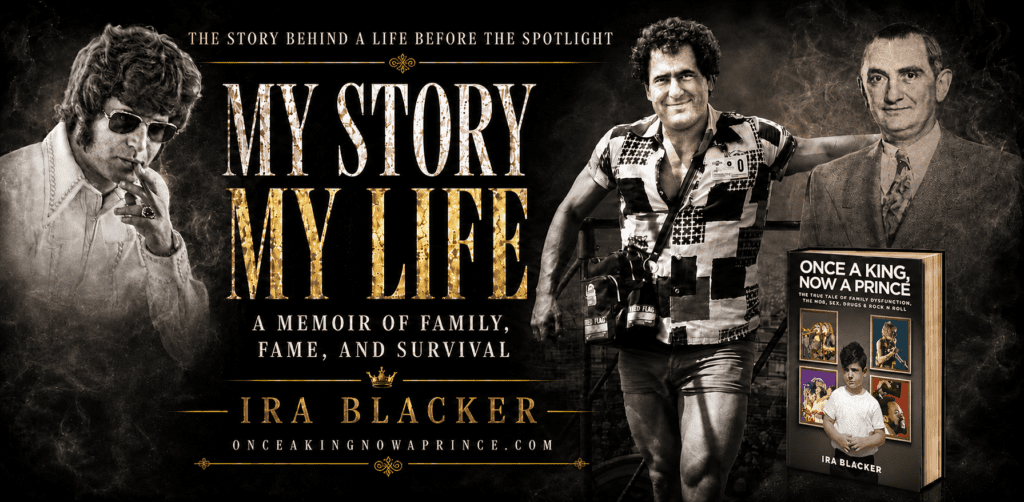
The Story Behind A Life Before The Spotlight
In a market crowded with polished confessionals and carefully managed narratives, my story my life means something very different. Too many books in the current wave of new celebrity memoirs are built to protect an image rather than reveal a life. They give the reader a curated version of events, the public highlights, the manageable wounds, and the familiar rise-fall-redemption rhythm that has become almost mechanical. That is why so many memoirs by celebrities feel interchangeable.
That is where my story my life parts company from the pack. This is not a performance of honesty. It is an attempt to connect the earliest fractures of a life to everything that came afterward, from fear and family conflict to ambition, survival, and a long career in the music business. The strongest memoirs are not simply timelines of achievement. They are explanations of how a person became who they became. That is why the phrase my story my life matters here. It is not branding. It is the backbone of the book.
Why A Real Memoir Starts Before Success
The problem with many good celebrity memoirs is that they begin too late. They open when the world starts paying attention, when the career is already in motion, when the glamour or notoriety has arrived. But the real story always starts earlier, in the private terrain where personality is formed and damage takes root. In my case, my story my life begins long before the music business, long before any professional triumphs, and long before there was any sense that life would amount to more than endurance. It begins in a home shaped by volatility, fear, and emotional confusion, where survival itself was a kind of education.
That early terrain matters because it explains the choices that follow. A true music memoir is never just about the business. It is about what drives a person toward that business in the first place. It is about how someone learns to read danger, adapt quickly, and keep moving through chaos until chaos begins to feel normal. Those are not abstract themes in my story my life. They are the foundation. The later chapters in the clubs, agencies, and boardrooms make more sense because the earlier chapters explain the wiring.
Why New Celebrity Memoirs Often Feel Too Safe
One of the reasons new celebrity memoirs can feel so thin is that they are often written from a protected altitude. They look down at the past instead of going back into it. The result is a story that may be readable but rarely cuts deep. By contrast, my story my life is not interested in a comfortable distance. The family damage is not treated as scenery. It is central to the whole structure of the book. The confusion of childhood, the rage of a father, the instability of being sent away, and the need to build an inner life just to survive are not side notes. They are the opening act of everything that follows.
That is also what separates stronger memoirs by celebrities from forgettable ones. The memorable books are not afraid to show the raw material of a life before it becomes publicly recognizable. Readers may come for reputation, but they stay for truth. In my story my life, the truth is not a marketing angle. It is the only way the later success means anything.
From Family Damage To A Music Memoir
What makes my story my life more than a personal history is the way it evolves into a true music memoir without ever losing sight of the emotional groundwork. The path into music was not a clean career plan. It emerged from instinct, hustle, and the ability to function under pressure. Early promotions, packed rooms, managing bands, and navigating club owners were not isolated adventures. They were the next stage of a life already shaped by unpredictability. By the time I was building events, taking on acts like the Emeralds, and learning how to move from one opportunity to the next, I was already fluent in the language of chaos.
That is why the business chapters in my story my life carry more weight than the usual rise story. They show the formation of an operator, not just the success of one. The same instincts that helped me survive family dysfunction later helped me read rooms, make deals, and hold my ground among people who were sharper, older, tougher, and often more dangerous. That is the hidden bridge between the early life and the professional one, and it gives this music memoir its shape.
Memoirs By Celebrities Need A Real Human Core
The best memoirs by celebrities succeed when the public figure never fully buries the private person. Readers are not just looking for names, places, and famous encounters. They are looking for the emotional continuity that turns events into meaning. In my story my life, that continuity is what holds the whole narrative together. The child trying to survive fear at home, the young man finding his footing in business, and the professional working among hard players in the music world are not separate people. They are one person in motion.
That is why good celebrity memoirs leave a mark. They do more than recount incidents. They show how one chapter becomes the next. They reveal that the public life is often the visible result of invisible struggles. My story my life leans into that connection. It refuses to present success as if it arrived untouched by what came before.
Why Good Celebrity Memoirs Stay With The Reader
In the end, good celebrity memoirs endure because they give the reader more than access. They give them recognition. Even when the circumstances are extraordinary, the emotional truth feels familiar. That is what a memoir should do. It should take an individual life and make the reader understand something larger about survival, resilience, damage, and reinvention. My story my life aims for exactly that. It is personal, but it is not sealed off. It is specific, but it is not narrow.
In a culture saturated with new celebrity memoirs, a book has to do more than announce itself. It has to earn its place. My story my life earns that place by telling the story before the spotlight, during the climb, and inside the business without losing the thread that ties it all together. That is what gives the book its authority. It is not simply a record of what happened. It is an honest account of how a life was shaped, tested, and carried forward. That is the difference between a book that fills shelf space and one that stays in the reader’s head long after the last page.
