






STORY ABOUT FAMILY
THIS STORY ABOUT FAMILY CREATED THE MAN I BECAME
I was not born a rock and roll mogul. I was born an innocent baby, same as anyone else. So I cannot say that rock and roll moguls are born, not made. In my case, it was the opposite. My crazy, dysfunctional family instilled in me, and many times beat into me, the drive to succeed, to prove them wrong, to conquer, and to control my environment as much as any person can. This story about family eventually became the emotional foundation for my memoir about family life, my music autobiography, and later, my rock and roll autobiography.
A baby, at birth, and for at least the next two years, is not just fragile, but a blank canvas. Parents can either “paint like Michelangelo” or create a possible nightmare by slapping gang graffiti on the wall. It is up to them.
My mother tried hard to raise me, but feeling trapped in a loveless “marriage of opportunity,” she did not always act in my best interests. My father, on the other hand, was not conflicted by any second guessing. He did not want to be in the marriage, nor did he want me as a son. This progressed right up to the point of my leaving our household and created my rather skewed outlook on “life in the big city” as I grew up. Many dysfunctional family stories begin with silence and denial, but mine unfolded in full view, shaping everything that followed.
THE NEXT SAGA IN MY STORY ABOUT FAMILY
The next few years in my then-short life were not pretty. In fact, they were quite dysfunctional, as my father let out all of his anger and frustration over being trapped inside what was to become my story about family. His outlet became one of continual abuse toward not just me, but my mother. He would yell at her, smack me around, and this became our normal. My father was manic-depressive, and when manic, as you might expect, he was gregarious to the point of obnoxiousness. But mostly, he was depressed.
I know from my own life that it felt better to be angry and self-righteous than to feel depressed. I am sure that is why he was so often angry, and mostly, he directed his anger toward me. All was inevitably “my fault,” despite my young years. Later in our lives, while he continued his abuse well into my mid-teen years, he loved to say, “You think you have it bad? My father left scars on my back from breaking a chair over it.”
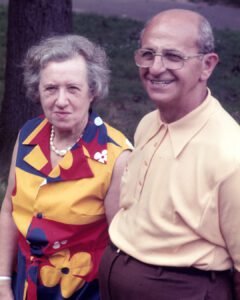
He must have felt, therefore, very comfortable with his aberrant behavior. It even seemed at times, after he calmed down and stopped swinging at me, that he found it enjoyable.
At a certain point in my life, when I started to show the wear and tear from his abuse, my mother decided to make an attempt to do something about our “status of dysfunction” and to get me some help from living under my father’s dominion of anger. In school, I was showing signs of, shall I say, “restlessness,” which was probably partly symptomatic of my treatment in our strange story about family life, and partly because I was a very bright child sitting in the very dull and stifling environment of public school in the 1940s. I became a problem for my teachers. Thus, after my mother consulted with some shrinks back then, it was decided that I should be sent away from the only home I knew. Those early years later became some of the most difficult chapters in my memoir about family and in the personal history behind my music autobiography.
HEARD THE JOKE ABOUT DYSFUNCTIONAL FAMILY STORIES?
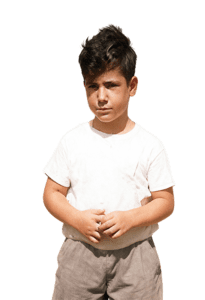
Well, to me, as a little kid, it wasn’t a joke, unless you consider that the joke was on me. I think the first problem I was forced to face was that the shrinks my mother went to see for advice were more than likely hacks. But this was the 1940s, and while closer to the age of Freud, they were far from where we are today. The simple answer is, I don’t think they knew what to do with me. Like many dysfunctional family stories, the adults involved often understood less than the children living through the chaos.
With that last thought in mind, is it any wonder that their first plan of attack was to dump me into Kings County Hospital, on the children’s mental ward, and let the hospital figure out what they should have figured out themselves?
Needless to say, one does not require a great imagination to conjure up what this six-year-old was going to be put through there. All that was accomplished was that I was removed from one crazy environment and thrown into another. Some therapy. Following my six months of confinement with the “Kings of the County,” this little “King of the Devils” was sent home.
HAWTHORNE WAS MY NEXT STORY ABOUT FAMILY LIFE
Upon my release from Kings County, I was granted a reprieve, if you care to call it that, since I was still home with “daddy dearest.” I had about one and a half to two years at home before being tossed back into the lion’s den. I was sent to an institution called Hawthorne Cedar Knolls, which was a bit north of White Plains, New York, in Westchester County.
Aside from some abusive behavior at my expense, not by the staff, but by my fellow inmates, the order of the day was “nothing.” Yes, not much was accomplished during the days spent there, other than keeping me away from my dysfunctional family. We did not have schooling, so I missed grades 3-6, as I languished among my caretakers. Once every six weeks, after a bit there, I would get a weekend furlough.
One of my earliest accomplishments in life occurred at Hawthorne, and that was learning to count in a way that would be taught decades later. Not having the benefit of learning math, as one had to be in school for that, I wound up with some coins, realizing I could not count. I devised a way to handle what no one had seen fit to teach me. I started rounding numbers to tens, and then either adding or subtracting the difference.
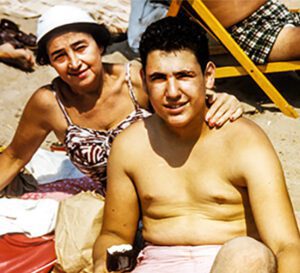
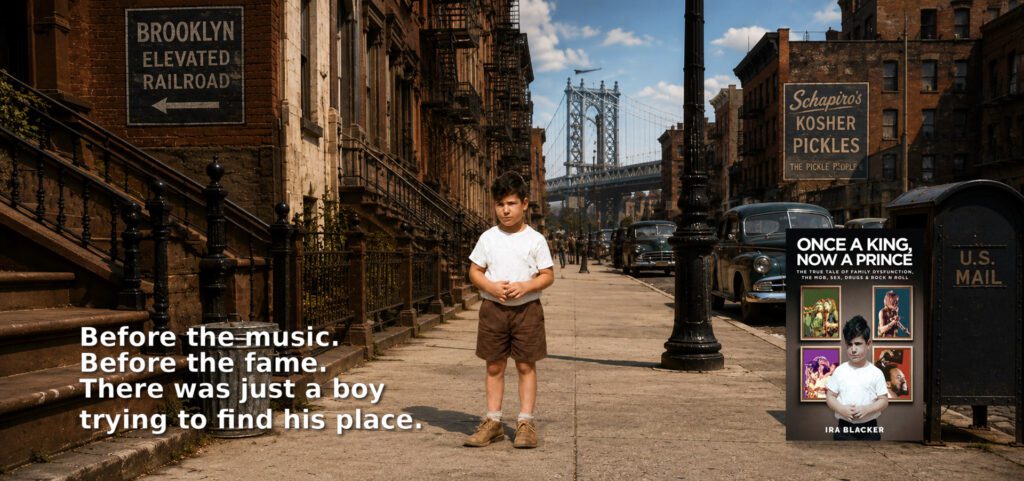
In one of my early chapters in Once A King, Now A Prince, I describe how I actually felt relaxed, steeping in the fall sunshine as I lay in a tall grassy area. Other fun things to do, if fun was the right word to use, included climbing to the top of some of the massive trees surrounding the property. How I never fell, I still cannot fathom.
I guess that I, if nothing else, became accustomed to the calmer life away from home. No one was smacking me around or yelling at me for reasons I never understood at the time, and with the respite from my abusive home, in my story about family, I became, in a way, a victim of Stockholm Syndrome. I make this comparison because I once discovered two girls, while I was wandering the perimeter, who were actually trying to escape. I literally forced them back onto the grounds, as if I were doing them some good. That strange adjustment to institutional life became part of the emotional backbone of my memoir about family and eventually my rock and roll autobiography.
Hawthorne was to be my home for three and a half years, and upon my “graduation” from there, I was sent home at the ripe young age of twelve, back to my story about family.
HIGH SCHOOL: THE NEXT CHAPTER IN MY STORY ABOUT FAMILY
I entered Midwood High School in Brooklyn, New York, totally unprepared for the halls of higher education and learning. Therefore, I did not excel, and I had developed a style where I learned only if I liked the teacher, and if the teacher went out of his or her way to notice me. My favorite teacher was the guy who taught history, and as I was a stamp collector as a kid, which gave me a great sense of geography, I was able to answer questions that were foreign to the rest of the class.
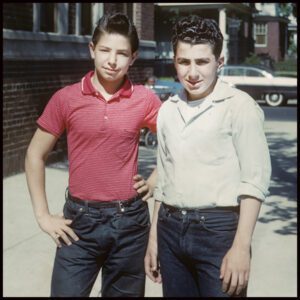
For the most part, I slept through much of high school. I had two friends at the time, Steve and Joel, but I was closer with Steve, who also came from a turbulent household, so maybe I sensed that. My first girlfriend in high school was Martha, who went by the name of Marty, and she was my earliest attempt at sex as a kid. Following Marty was Diane Solomon, who was a cute fifteen-year-old, and why we ended, who knows? Maybe it was due to my father’s crass remark at the time, when I bought her a Valentine’s Day gift, and when I proudly showed my $15.00 gift to my parents, my father came back with a crude retort. I tell that story in depth in my memoir, Once A King, Now A Prince. These experiences would later become part of both my music autobiography and the deeper personal history behind my rock and roll autobiography.
What I could refer to as round two in my life, which included my “groundwork” for entering the world of rock and roll, would take place during my college years.