


My Personal Journey Through Jewish Food and Tradition
As I reflect on my life in New York, I often think about the Great New York Delis, in NYC from the 1950’s to 1970’s, and how they shaped my early years—a story I’ve been slowly piecing together in my memoir and autobiography, entitled “Once A King, Now A Prince.” Growing up in New York during that golden era meant that Jewish food wasn’t just nourishment—it was a cultural anchor, a way of life, and a connection to tradition that stretched across generations. Those delis were more than restaurants; they were meeting places where the smell of freshly baked rye bread, the tang of half-sour pickles, and the richness of corned beef piled high on a sandwich became part of the rhythm of daily life. Writing about these experiences feels almost like writing a memoir, where each sandwich, each barrel of pickles, becomes a page in an autobiography of growing up Jewish in New York.
The Magic of the Neighborhood Deli
For anyone who lived in the city during those years, the deli was a familiar, comforting presence. The Great New York Deli’s, in NYC from the 1950’s to 1970’s were often family-run, with owners who knew your name, your order, and probably your grandparents too. You didn’t just walk in for a meal—you walked into a community. The clatter of dishes, the hum of conversation in English and Yiddish, and the warmth of familiarity all made you feel at home.
I remember walking in after school, greeted by the gleam of glass cases filled with smoked fish, whitefish salad, chopped liver, and knishes. To a child, it was like walking into a treasure chest of flavors, each one waiting to be discovered. That memory, set down here, is a small chapter in the kind of memoir I might write about my early years, a personal autobiography told through food and family.
Pastrami, Corned Beef, and Sandwiches That Defined a City
No discussion of the Great New York Deli’s, in NYC from the 1950’s to 1970’s would be complete without mentioning the sandwiches. They weren’t just meals—they were monuments. Piled high, bursting from between two slices of rye, they seemed impossible to finish, yet impossible to resist. Pastrami was king—spicy, smoky, tender, and cut to just the right thickness. Corned beef, equally beloved, was a close rival, often paired with mustard and a side of crisp pickles.
For many of us, biting into one of those sandwiches was an initiation into adulthood, a rite of passage that made us feel connected to something larger. Each sandwich carried with it not only flavor but also the weight of tradition. The Great New York Deli’s, in NYC from the 1950’s to 1970’s taught us that food could be both filling and meaningful. Looking back, the memory of those first pastrami sandwiches belongs not just to me but to the kind of shared memoir all New Yorkers could write. And in my own autobiography, they are the flavors that defined my youth.
The Sights, Sounds, and Smells
Walking into a deli in those days was a feast for the senses. The Great New York Deli’s, in NYC from the 1950’s to 1970’s had a rhythm of their own. Behind the counter, men in white aprons moved quickly, slicing meats, shouting orders, and calling customers “kid” or “doll.” Steam rose from the soups—matzo ball, mushroom barley, chicken noodle—that filled the air with aromas that made you hungry before you even sat down.
The pickle barrels were legendary, offering everything from full sours to garlicky half sours, each bite a burst of old-world tradition. To this day, the memory of reaching into that barrel with a pair of tongs feels as vivid as ever. This sensory detail would be impossible to leave out of a memoir, and any authentic autobiography about growing up Jewish in New York must describe those pickle barrels.
The Role of Delis in Jewish Identity
For Jewish families like mine, delis were more than just places to eat; they were cultural landmarks. The Great New York Deli’s, in NYC from the 1950’s to 1970’s reflected immigrant resilience and pride. Many of our parents and grandparents had come to New York with little, and the deli became a place where they could recreate the foods of the old country while blending them with American abundance.
It wasn’t unusual to see families gathering on Sundays, ordering platters of lox, bagels, and cream cheese, with a side of herring or sable. Those meals were about more than food—they were about family, continuity, and celebrating the flavors that connected us to our heritage. To put it in memoir form, Sundays at the deli table were never just about eating; they were about living our story. And in any autobiography, those moments become symbols of identity and belonging.
Famous Names: Katz’s, Carnegie, and Stage
Katz’s, the Carnegie, and the Stage were the crown jewels of the Great New York Deli’s, in NYC from the 1950’s to 1970’s.
Katz’s Delicatessen, on the Lower East Side, was the elder statesman. Its hand-cut pastrami and neon lights made it as much a stage as a restaurant. A good memoir about New York Jewish food culture could hardly exist without Katz’s. The experience of standing at the counter, watching the meat sliced to order, and hearing the familiar chatter of the waiters became almost ritualistic. In my own autobiography, Katz’s would be one of the central chapters, a place where tradition and flavor merged, a landmark where the city’s history seemed tangible with every bite.
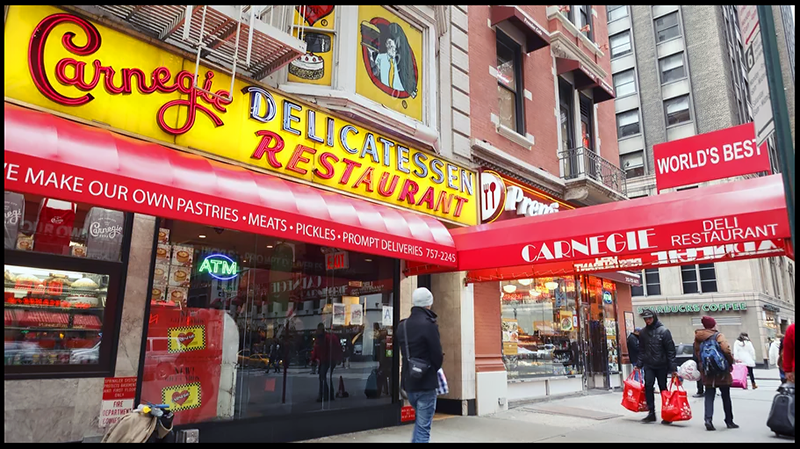
The Carnegie Deli, just a block from my office, was one of my favorite lunch stops. Its sandwiches were enormous, sometimes so tall they required two hands to lift. I’d often walk there at midday, escaping the office buzz for a corned beef or pastrami sandwich paired with a dill pickle and a Dr. Brown’s soda. In addition to its legendary sandwiches, the Carnegie had a warm, bustling atmosphere that made you feel like part of a New York ritual. In a memoir, these lunch breaks would capture the intersection of work, city life, and personal indulgence, while in an autobiography, they are emblematic of the small joys that define everyday life in New York. Its cheesecake was a particular indulgence, rich and creamy, a treat that lingered long after the sandwich was gone. The Carnegie’s energy, combined with proximity to my office, made it feel like a personal oasis and a stage where the city’s culinary culture came alive.
The Stage Deli, playful and celebrity-filled, named its sandwiches after Broadway stars and Hollywood personalities. Walking in felt like stepping onto a set, and if you were lucky, you might spot a celebrity at a corner table enjoying the same corned beef or pastrami that the rest of us savored. Any memoir worth its salt would recall the Stage as a place where deli culture touched Broadway glamour, and in an autobiography, it captures the thrill of mingling with fame while enjoying the comfort of familiar flavors. The Stage reminded us that Jewish deli cuisine was not just sustenance—it was a cultural export, an experience, and sometimes even a spectacle.
And while these giants drew the headlines, every neighborhood had its local gem. Borough delis may not have been world-famous, but they served as the backbone of the city’s Jewish food culture. For families like mine, those local delis were as essential as Katz’s, the Carnegie, or the Stage.
A Taste That Endures
Today, many of those delis are gone, victims of rising rents and changing tastes. Yet the memories remain, and so does the craving for the food that defined an era. Whenever I bite into a pastrami sandwich or taste a matzo ball floating in golden broth, I am transported back to those days—the laughter of family, the clink of glasses, the smells of comfort and tradition.
The Great New York Deli’s, in NYC from the 1950’s to 1970’s may exist now mostly in memory, but their legacy is alive every time we gather around a table laden with Jewish food. For those of us who grew up with them, the delis are not just part of the past—they are part of who we are. And just as a memoir preserves personal experience and an autobiography captures a life, these delis preserve the flavor of a city and the soul of a community.
