



The Foundation Before The Music
Every story about family starts long before anyone understands what it means. You are born into it without choice, without context, and without the ability to interpret what is happening around you. In some homes, that foundation is steady and supportive. In others, like mine, it is unpredictable, tense, and often frightening. Before there was any version of the time of my life, there was an environment that required constant awareness, adaptation, and survival. The sounds in my house were not music, but raised voices, silence that carried weight, and emotional undercurrents that a child could feel but not explain.
This was not a childhood in the traditional sense. It was a conditioning process. I learned early that my role was not to be carefree but to navigate shifting moods, avoid conflict, and figure out how to exist in a space where I often felt unwanted. That is where this story about family truly begins, not with nostalgia, but with reality.
Learning Survival Before Identity
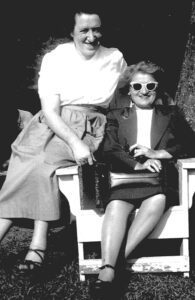
A story about family is not always about love and connection. Sometimes it is about confusion, fear, and the need to understand your place in a system that does not make sense. My father’s rage and my mother’s inability to counter it created an atmosphere where I was constantly reacting rather than developing. Instead of forming a natural identity, I was forming defenses.
This is why so many non fiction books about dysfunctional families resonate so deeply with readers. They reflect an experience that is often hidden but widely shared. Children in these environments do not grow in straight lines. They adapt in fragments, learning to read people before they understand themselves. That adaptation becomes the foundation for everything that follows.
Escaping Through Imagination
Before I ever connected with music or anything resembling the worlds described in rock n roll memoirs, I found my first escape internally. I created a version of myself that had control, power, and presence, something I lacked in my real environment. I imagined myself as something larger than what I was experiencing, a way to counterbalance the fear and helplessness that surrounded me.
Imagination was not entertainment. It was survival. It allowed me to reshape my reality in a way that made it tolerable. This pattern, which begins in childhood, often shows up later in the lives of people who enter creative or high-pressure environments. Many figures in classic rock memoirs describe similar internal worlds formed long before they ever stepped onto a stage.
When Home Is No Longer Home
At an age when most children are just beginning to understand the world, I was removed from mine. Being sent to Kings County Hospital’s psychiatric ward was not something I could comprehend at six years old. What I understood was separation, confusion, and the overwhelming sense that I had been displaced.
A story about family does not stay contained within the home. It follows you into every environment you enter. That experience reshaped how I viewed trust, authority, and safety. It introduced me to a world that was far more chaotic than I was prepared to handle and forced me to adapt in ways that would carry forward into my later life.
Moments Of Relief In A Chaotic World
Despite everything, there were moments that stood apart from the chaos. Sitting in the back seat of my uncle’s car with a sense of safety, lying in the tall grass at Hawthorne where I could disappear from everything around me, and finding brief periods where I was not on edge. These moments were not frequent, but they were significant.
Every story about family contains these contrasts. Without them, there is no reference point for what peace feels like. These small experiences provided a sense, however limited, that another way of living existed. They did not change my situation, but they gave me something to hold onto.
The Rooftop And The Beginning Of Something New
The shift toward what would eventually become my connection to music did not happen in a structured or intentional way. It happened on a rooftop, away from everything else, where I found a radio and began listening to sounds that felt different from anything I had known. Blues and rhythm and blues carried something real, something unfiltered, and something that resonated with what I felt but could not express.
This is where the transition begins that is often seen in rock n roll books. The music did not arrive as a career path or ambition. It arrived as a connection. It gave me a place to go mentally and emotionally that was not defined by my immediate environment. It was not an escape in the same way imagination had been. It was something external that matched something internal.
How Dysfunction Becomes Direction
Looking back, it becomes clear that the early experiences shaped more than just my perspective. They influenced my behavior, my decisions, and my eventual path. Many stories within rock n roll memoirs follow this pattern, where instability, emotional intensity, and a need for recognition or control drive individuals toward environments that reflect or amplify those traits.
A story about family like this does not end when you leave home. It evolves. The same instincts that helped you survive can later help you navigate complex, high-stakes worlds. What begins as defense can transform into drive. What begins as confusion can become clarity over time.
Redefining The Time Of My Life
When people refer to the time of my life, they often imagine a period of ease, success, or happiness. In reality, it is more complicated than that. It is not about escaping what came before but understanding it, integrating it, and moving forward with it as part of your foundation.
Everything that followed in my life, including my eventual immersion into the world associated with classic rock memoirs, was built on top of those early experiences. They did not disappear. They became part of the structure that supported everything else.
Why These Stories Continue To Matter
There is a reason why readers are drawn to non fiction books about dysfunctional families and stories that intersect with rock n roll memoirs. These narratives offer more than entertainment. They provide recognition and validation for experiences that are often difficult to articulate.
This story about family is not unique in its existence, but it is specific in its details. It represents one path through a set of circumstances that many understand in their own way. It shows how early life can shape direction, influence choices, and ultimately lead somewhere unexpected.
Where The Story Goes Next
This story about family does not end with childhood. It continues into the world beyond it, where the lessons learned, the adaptations formed, and the identity shaped begin to play out on a larger stage. The movement from survival into something more defined is where the next chapter begins, and where the elements of music, business, and life begin to intersect.
That is where the transition into the broader narrative of Once A King, Now A Prince takes hold, and where the foundation built in those early years begins to reveal its full impact.
