









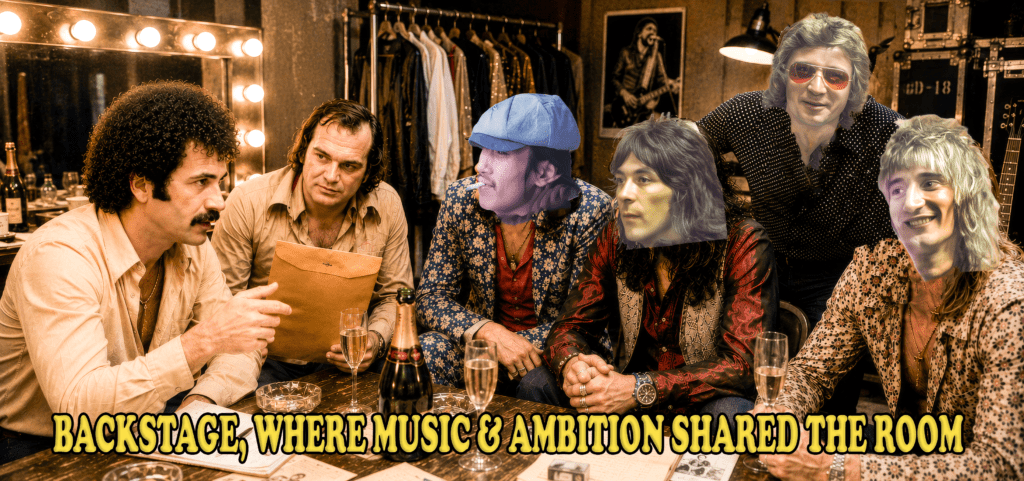
I didn’t write Once A King, Now A Prince to romanticize the past. I wrote it because the truth has weight, and the best music autobiographies don’t float above reality. They dig into it. They bleed a little. They tell the parts most people skip when the lights come on and the applause starts.
When people talk about music autobiographies, they usually expect fame, excess, backstage stories, and celebrity mythology. Those things are part of the landscape, yes. But the best music autobiographies are never just about applause or headlines. What gives these books staying power is the human being underneath the public image.
At its core, Once A King, Now A Prince is not simply a memoir about music industry life. It begins long before talent agencies, major bands, or rooms where everyone suddenly turns to look at you. It begins with childhood abuse, fear, and survival. It begins inside the kind of emotional damage that often shapes dysfunctional family stories long before anyone ever walks into a recording studio or onto a stage.
That foundation matters, because without it, nothing that came later makes sense. And without that truth, this book would never belong among the best music autobiographies worth reading.
The Human Engine Inside The Best Music Autobiographies
What separates the best music autobiographies from glossy nostalgia is the human engine underneath the music. The music may open the door, but it is the personal cost that keeps readers turning pages.

For me, those costs live inside stories that were never polished for comfort. I do not write around the damage. I write through it. The abuse, the survival instincts, the long-term impact on how I trusted people and navigated power. That is where the real narrative lives.
This is also where the book naturally intersects with the world of good celebrity autobiographies. The strongest memoirs are not public-relations exercises disguised as literature. They are honest examinations of fear, ambition, loneliness, ego, survival, and reinvention.
Family is not always nurturing. Sometimes it is the first place you learn how dangerous love can become. I did not grow up with a safety net. I grew up learning how to read rooms, anticipate threats, and endure. Those lessons followed me into adulthood and eventually into the music business itself.
That is why Once A King, Now A Prince belongs naturally beside serious music autobiographies. The industry does not exist in a vacuum. It attracts survivors, risk-takers, outsiders, and people who already know how to live close to the edge.
When The Mob Walks Into The Chapter
Plenty of music autobiographies flirt with danger. Mine does not flirt. It documents it.
After college, I was offered a job I literally could not refuse. I found myself connected to a major talent agency with direct ties to organized crime and the Capone network. That was not mythology. That was daily reality. The stakes were not theoretical, and walking away was not always an option.
These chapters are not included for shock value. They matter because they explain why success never felt clean or simple. They explain why survival remained my primary skill even while working with some of the biggest British rock and roll bands brought to America during the 1960s and 1970s.
This is also why the book functions as a genuine memoir about music industry life rather than a polished backstage scrapbook. The music business could be thrilling, glamorous, creative, dangerous, and predatory all at once. Sometimes within the same room.
When you grow up under threat, danger can begin to feel strangely familiar. The music business simply gave it a louder soundtrack.
That collision between trauma, ambition, celebrity culture, and criminal power structures is part of what gives the best music autobiographies their staying power. Readers recognize truth when they feel it.
Why Once A King, Now A Prince Belongs Among The Best Music Autobiographies
I did not write this book to compete with shallow celebrity culture or to decorate old memories with fake glamour. I wrote it because the best music autobiographies tell truths people recognize in their own lives.
This is the story of survival. Not just the music-industry years, but the years that followed. The years after I left that world, built other businesses, reflected on the past, and tried to understand how a severely abused child became a man who once walked into rooms where all heads turned.
The book is filled with hard-earned experiences that are not always neat, but they are real. I do not offer tidy lessons or manufactured redemption arcs. I offer lived experience.
That is why I believe Once A King, Now A Prince deserves its place among meaningful music autobiographies. Not because of who I worked with, but because of what it cost to survive long enough to tell the story.
For readers searching for the best music autobiographies, the book is available through BookBaby, Amazon, and other retailers. It is there for readers who want something deeper than surface-level fame and polished nostalgia.
Closing Chord
The best music autobiographies do not simply entertain. They resonate. They remind readers that survival itself can become a form of artistry, and that truth does not need amplification to be loud.
Once A King, Now A Prince was built from lived experience told without apology. It is a book about survival, identity, family damage, reinvention, and the hidden cost of life inside the music business.
Praise for “Once A King, Now A Prince, from on high.
