


Where Rock N Roll Bands Became Real Life
There’s a version of rock n roll bands most people think they understand, the loud guitars, the lights, and the chaos that looks good from a distance. But when you’re actually in it, working with these acts day in and day out, it becomes something far more grounded and, in many ways, far more revealing. It becomes a world of constant movement where personalities matter as much as talent, and where the difference between success and failure often has very little to do with what happens on stage.
During my years with American Talent International, working with rock n roll bands was not an abstract idea or a romantic notion. It was daily life. What people later read in rock n roll memoirs only scratches the surface. The real story lives in the conversations, in the decisions made under pressure, and in the relationships that either held things together or quietly worked against them.
Savoy Brown, Nazareth, and Faces Up Close
Savoy Brown: A Great Bunch, Easy All the Way
Savoy Brown was one of those rock n roll bands that made your job easier simply by being who they were. They were a great bunch, easy to work with, and steady in a business that rarely rewarded steadiness. There were no unnecessary complications and no egos interfering with the work. They showed up, played well, and handled themselves like professionals who understood both the music and the business around it.
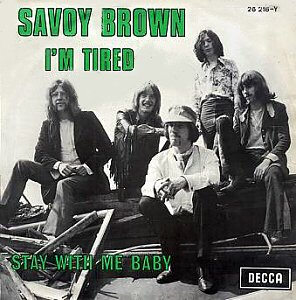
When people look back at classic rock memoirs, they often focus on the chaos, but bands like Savoy Brown were just as important. They were dependable, and in a business built on uncertainty, that counted for more than most people realize.
An interesting factoid about Savoy Brown: The original band gave me chills down my spine when they played live. Their album not so much, but live? They were the essence of rock blues, on par with Muddy Watters when he went electric. After the first lineup change, losing Chris Youlden, the band went down a notch, and after losing Roger, Dave and Tony they were initially like a local bar band, and it took them some time to build back into a viable band.
Nazareth: Love Hurts and So Did the Applause
Nazareth was another group I respected, both for their music and for who they were offstage. I loved their song Love Hurts, and still do. It had a kind of honesty that didn’t feel manufactured, something that stayed with you.
Offstage, they were just as genuine. They were approachable, easy to deal with, and consistent in a way that made working with them straightforward. The public image of sex drugs rock and roll leaves very little room for that side of the business, but it existed, and it mattered when you were dealing with rock n roll bands over time.
Rod & Faces: Vaudeville Meets Rock N Roll
Rod Stewart and Faces were something else entirely. Even for me, they were exciting to watch, and by that point I had seen more than my share of performances. What set them apart was that they didn’t just play, they entertained.
There was something almost vaudevillian about them, a sense of performance that went beyond the music itself. Timing, personality, and presence all came together in a way that made every show feel alive and unpredictable. Among the many rock n roll bands I worked with, they stood out because they understood that entertainment was as important as sound, and they delivered both.
The Ones You Don’t Forget… For Different Reasons
Not every experience was smooth. Klaus Doldinger was, without question, the biggest pain in the butt I ever worked with. There is no way to soften that, and no reason to try.
That is part of the reality behind rock n roll bands that does not always make it into rock n roll memoirs. For every group that made things easy, there was another that required constant effort just to keep things moving. You learned to deal with it because that was the business, but it never went unnoticed.
It also became clear over time that not every story ended the way it should have, and that some of the most talented rock n roll bands never reached the level they deserved.
Bands That Should Have Made It
There were rock n roll bands that had everything, talent, presence, and a sound that stood out, and still did not break through the way they should have. In most cases, the issue had nothing to do with the music. It was everything surrounding it that failed.
Spooky Tooth: Great Band, Wrong Hands at the Wheel
Spooky Tooth was an amazing band. Strong musically, tight as a unit, and already sounding like they belonged at a much higher level. When you listened to them, you were not hearing potential, you were hearing a band that had already arrived.
I once asked them where they got the idea for the way they dressed, because I genuinely liked it. It felt natural, as though it matched their sound. They told me they did not have much choice. They were so broke they had to buy their clothes at second-hand and junk shops.
That was not a style decision, it was reality, and somehow it worked perfectly. They looked exactly like they sounded, unpolished, heavy, and real.
They were the epitome of heavy rock, the kind of music that existed just before metal had a name. You could place them alongside Cream and Deep Purple in terms of that underlying weight and drive, even though each had its own identity.
Spooky Tooth belonged in that company. The problem was not the band. The problem was inept management. A band can do everything right on stage and still fail to move forward if the people guiding it are not capable. That is something you see repeatedly when working with rock n roll bands, and it explains why so many stories in rock n roll memoirs involve missed opportunities as much as success.
Inga Rumpf: A Voice From Another Era
Inga Rumpf was a German singer with a powerful, old-style voice, the kind that did not depend on trends or production to make an impact. She was a belter in the traditional sense, capable of carrying a song through sheer strength and presence.
The difficulty was not her ability, it was where she fit. The industry at the time was moving in directions that did not always leave room for that kind of voice, and without the right positioning or support, even strong talent could be overlooked.
That is another reality of rock n roll bands that often goes unspoken. Not everyone who should have made it, did.
American Talent International and the Real Story
Working through American Talent International gave me a clear understanding of how rock n roll bands actually functioned behind the scenes. It was never just about booking shows. It was about managing people, solving problems quickly, and keeping everything moving forward regardless of what came up.
That is why the most credible rock n roll books and classic rock memoirs come from those who were directly involved. They understand that the story is not just about what happens on stage, but about everything that has to happen to make those moments possible.
More Than Sex, Drugs, Rock And Roll
The phrase sex drugs rock and roll has been repeated so often that it has become a shorthand for the entire business, but it only tells a small part of the story. The larger reality involves relationships, trust, timing, and the ability to navigate an environment that can change quickly.
That is what defined the experience of working with rock n roll bands, and it is what gives depth to the best rock n roll memoirs.
The Time of My Life
Looking back, working with those rock n roll bands was more than just a career. It was the time of my life. It was not perfect, and it was not always easy, but it was real and constantly moving forward.
Every day brought something different, and every band added its own character to the experience. Those moments, both the good and the difficult, are what turn into stories, and those stories become the kind of rock n roll books people connect with because they come from real experience.
In the end, rock n roll bands were never just about the music. They were about people, and the lives built around that music.
