








Thinking back over the years I spent in the music business, there were many strange occasions and weird things happening. In any music business memoir, those are the moments that stay with you. I will add a few here that may provide some laughs, insights, or whatever you take away from this music memoir, which is, in many ways, all about the music business as it really was.
HOW TO RUIN A CONCERT: GOOD MATERIAL FOR A MUSIC BUSINESS MEMOIR
One of the most awful concert endings took place at C.W. Post College on Long Island, New York. I was able to sign The Doors and had put together their first tour since Jim Morrison died.
After he passed in 1971, the remaining members of The Doors were Ray Manzarek (keyboards), Robby Krieger (guitar), and John Densmore (drums), and they remained as a trio with Ray singing lead. They recorded two more studio albums, Other Voices (1971) and Full Circle (1972), before officially disbanding in 1973.
There is a rule in rock and roll memoir storytelling, and in all stage productions: “If you haven’t earned an encore, don’t take one.” Another is, “If you end on a massive high note, leave the stage there.”
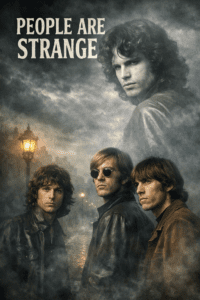
Well, The Doors did an amazingly good set that night at C.W. Post, and the audience was enthralled. They played all their hits, and as their final curtain, Ray sang “Light My Fire.” He tore the hell out of it, and the audience went wild. The performance just rocked, and I couldn’t tell the difference between Ray and Jim Morrison. It felt like Jim had come back for one night.
When they finished, the set had clearly ended on a high note. Then one of my agents, Richard Halem, ran on stage, grabbed the microphone, and yelled, “do ya wanna hear more?” When he didn’t get the reaction he wanted, he kept pushing it.
I was backstage turning green. None of us could believe what he had just done. Whether it was drugs or stupidity, who knows, but now the audience wanted more.
They played an encore, but it was clear nothing could top “Light My Fire.” The crowd politely applauded, but the edge was gone. What should have been a perfect ending wasn’t. Moments like that are exactly what define a music business memoir.
EVERY ROCK AND ROLL MEMOIR HAS A DRUG STORY
In the early days of American Talent International, Ltd., the agency I founded with Sol Saffian and Jeff Franklin, Sol liked his scotch, and I liked my weed. In any music memoir, those off-hours moments tell you as much as the business itself.
It wasn’t unusual, after work was done, for the word to go out that “the smoking lamp is now lit.”
Money was tight back then. We had just moved into 888 Seventh Avenue and didn’t have enough office space, so we built a temporary one with 2 x 4s and plastic sheeting.
One day, when the call went out, I, Bobby Caviano, and a couple of others lit up some of Bob’s Lumbo. We got wasted, laughing like idiots, and the next thing you know, I trip, hit the wall, and the whole thing collapses in a pile of wood and plastic.
After that, we built Bob a real office.
You might wonder how we managed to book tours. The answer is simple. Our tours were the best in the music business. The first U.K. tours made money, while competitors’ did not. We routed better, booked more dates, and found weekday gigs others missed.
That’s the part of a music business memoir people don’t expect—the discipline behind the madness, and what makes a true rock and roll memoir more than just stories.
MY MUSIC BUSINESS MEMOIR: WHAT REALLY HAPPENED ON THE ROAD
What rock and roll memoir would be complete without a road story? This is what readers looking for books about rock and roll history expect—the reality behind the curtain.
I went to Miami for a weekend with a young lady I had just started seeing, and we had a great time. One morning, we went for a walk on the beach and ended up doing the “horizontal tango.” People walked by, but she didn’t care. At that time, she was my kind of woman. On the flight to Miami, I introduced her to the “Mile High Club.”
On the way back, I ran into the manager of Frankie Beverly and Maze, who I represented. After a quick hello, I went back to my seat, grabbed some blankets, and we continued our “tango” under cover on the red-eye.
As luck would have it, this manager—wide awake and looking to talk—came over right in the middle of things and completely killed what would have been the perfect ending to that chapter of my music business memoir on the road.
WHY THESE MOMENTS DEFINE A MUSIC BUSINESS MEMOIR

Looking back, these stories are more than just memories. They are part of a music business memoir that reflects what really went on behind the scenes, far from the polished version people usually see. For anyone interested in books about rock and roll history or a true rock and roll memoir, this is all about the music business as it was actually lived.
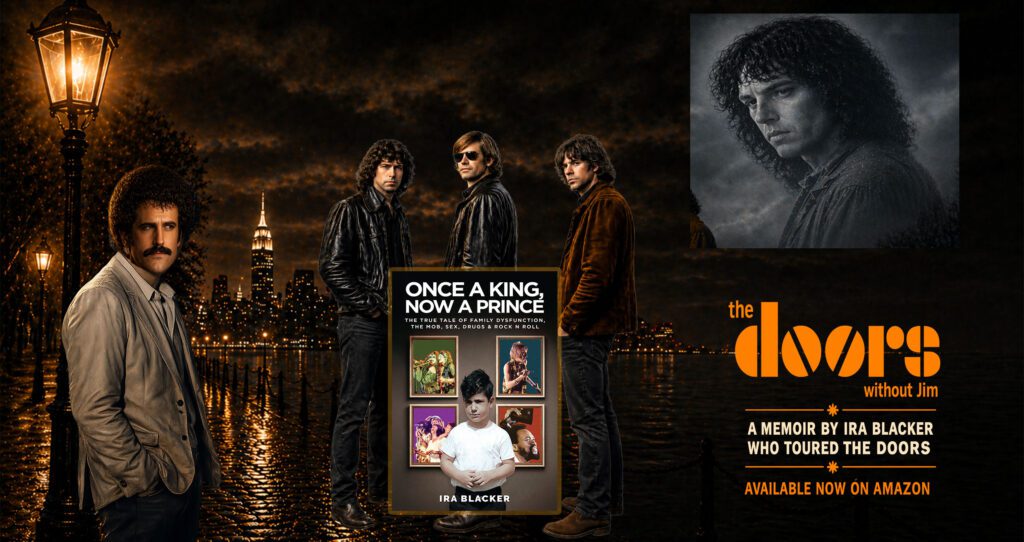
While I do not write these blogs as part of another book, they have become an extension of my life in the music business, and in many ways, a continuation of the story told in Once A King, Now A Prince. You might think of them as a sequel told in real time—pieces of a music memoir that continue to unfold, story by story.
For those who have followed my journey, or for those just discovering it, this music business memoir is not about rewriting history—it is about remembering it as it happened, and sharing what it was really like inside the world of rock and roll.
