









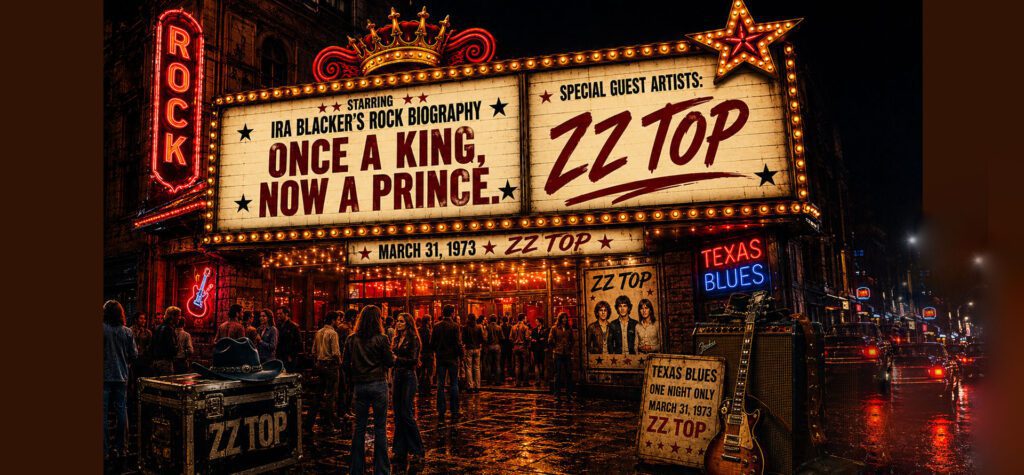
When ZZ Top Walked Into Our World
A real rock autobiography is never only about the stars once they become legends. It is about the point before the mythology hardens, when the musicians are still flesh and blood, hauling equipment, fighting for audiences, and moving through the chaos of the music business one night at a time.
England had already become my home away from home, and American Talent International, Ltd. was expanding rapidly on both sides of the Atlantic. New artists were arriving constantly, and the roster was becoming a collision of rock, soul, funk, progressive music, and Southern bands that carried a completely different kind of energy.
One of the most important additions to the agency came through Bill Hall, who had been working in Macon, Georgia, for a regional agency, Paragon Artists. Bill arrived carrying serious Southern rock credibility, and through his close relationship with Bill Ham, he brought us ZZ Top before the beards, before the worldwide image, and before they became one of the most recognizable acts in rock history.
That period belongs in any honest rock autobiography because it captures artists before the world turns them into monuments.
Along with ZZ Top came Wet Willie and several other Southern groups that expanded the flavor of the agency dramatically. Up until then, much of our attention had been tied to English rock acts and progressive artists, but ZZ Top brought a different swagger altogether. Their sound was rooted in Texas blues, hard-driving rhythm, and the stripped-down force of American barroom rock and roll.
Bill Ham And The Texas Machine
Bill Ham was unlike most managers in the music business. He was not merely handling schedules and contracts. He believed in shaping identity, controlling presentation, and building careers with long-range vision. Long before the giant beards became part of rock history, Bill Ham already understood that ZZ Top was more than another touring band.
A strong music autobiography often comes down to the personalities behind the curtain, and Bill Ham was very much part of the ZZ Top story. Protective, intense, and deeply loyal to the band, he watched over them like a field commander protecting territory. That loyalty later helped transform ZZ Top into one of the great American touring acts, but during the early years, it could also create moments of tension when Texas instincts collided with New York streets.
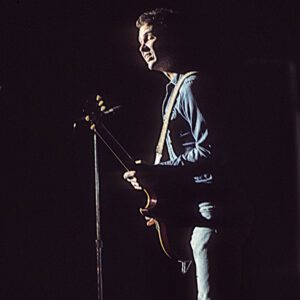
For me, that is part of what separates a true rock autobiography from many polished entertainment stories. The music business was unpredictable every single night. Sometimes the danger arrived quietly and stood only a few feet away from the stage.
At the same time, the agency itself was exploding with talent. Artists I signed, along with several signed by Sol, included 10CC, Brian Auger and Trinity, Chicken Shack, Earth, Wind & Fire, Larry Graham, P-Funk with Bootsy Collins, Mandrill, Michael Des Barres, Rory Gallagher, Blue Öyster Cult, Rare Earth, Billy Preston, Frank Zappa, and The Mothers of Invention. Looking back now, it reads like a chapter from one of the best music memoirs, but at the time it simply felt like life moving at dangerous speed.
The Night In Central Park
One of the most tense concerts involving ZZ Top took place in Central Park in Manhattan. At the time, Central Park regularly hosted concerts for city residents, and ZZ Top had been chosen to headline one of the performances.
The atmosphere was electric, but the setup itself was risky. Audience members could come directly to the edge of the stage without barriers, pits, or much separation from the performers. Kids leaned against the stage with their arms resting on the platform as if they were standing in somebody’s garage instead of attending a major concert in New York City. That kind of scene might sound romantic in hindsight, but a serious rock autobiography tells the truth about what it actually felt like from the stage. The energy could shift instantly.
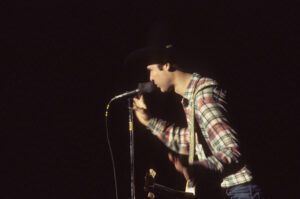
At some point during the show, several kids began climbing onto the stage area. Bill Ham saw it happening and became visibly tense. From his perspective, he was protecting ZZ Top. He aggressively motioned for the kids to get off the stage and made it very clear that he wanted distance between the band and the crowd. The problem was that his Texas style did not translate particularly well to the streets of Manhattan.
I was standing on the stage from a different angle when I suddenly saw one of the kids pull a large dagger from inside his pants. It was not a joke, and it was not theatrical posturing. The blade looked very real, and in my opinion the kid had absolutely no hesitation about using it if the confrontation escalated. Moments like that never appear in glossy publicity pieces, but they absolutely belong inside a truthful rock autobiography.
Diffusing Disaster
I quickly stepped forward and tried to calm the situation before it exploded. I explained to the kids near the stage that Bill Ham was not trying to insult anyone or disrespect them. I told them he was simply worried about ZZ Top’s safety and reacting protectively toward the group. Somehow the explanation worked. The atmosphere eased, the kid with the knife backed off, and the disaster that seemed ready to happen simply dissolved back into the noise of the concert.
That moment has stayed with me for years because it captured the strange balancing act of life inside the music business. One second you were negotiating contracts or helping build careers. The next second you were trying to stop somebody from getting stabbed at a rock concert. A great music autobiography is built from moments exactly like that. Not the polished magazine version afterward, but the split-second reality while events are still unfolding.
When I later explained to Bill Ham how dangerous the situation had actually become, I never felt he fully understood how close things came to turning tragic. Maybe it was rock and roll ego. Maybe it was Texas confidence. Maybe managers who survive long enough simply begin believing they are indestructible.
Why ZZ Top Still Stays With Me
ZZ Top eventually became part of rock history, but I still remember them before the mythology became larger than the musicians themselves. I remember the agency excitement when Bill Hall first brought them into our orbit. I remember Bill Ham watching the stage like a man protecting territory. I remember Central Park, the tension in the crowd, and the knife appearing under the lights. I remember also thinking about how their manager used to work at London Records, the same label that Savoy Brown were on, and how similar ZZ Top’s music at that time, to Savoy Brown’s.
That is why this story belongs in a rock autobiography rather than a sanitized industry recap. The strongest good celebrity autobiographies and the most revealing best music memoirs are not built only from success stories. They are built from pressure, instinct, danger, personalities, and survival.
In the end, a true rock and roll autobiography is about the moments nobody planned for, the nights that could have gone wrong, and the strange human collisions that happened while rock music was still loud enough to feel dangerous.
My Rock Autobiography and Rock and Roll book.
