









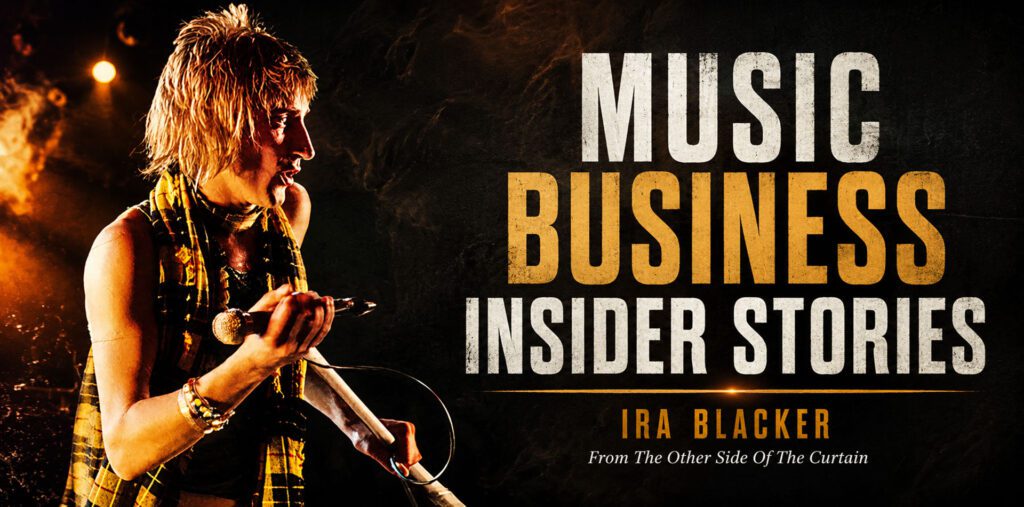
Music Business Insider Stories From The Other Side Of The Curtain
Some music business insider stories are written from the balcony, where everything looks glamorous, organized, and vaguely civilized. Mine are written from closer to the loading dock, the dressing room door, the agency desk, the airport counter, and the moment when somebody in a suit thinks he is explaining reality to you, except you were there when reality walked in wearing platform shoes. Those platform shoes reminded me of my old pair of crepe-bottomed, high-heeled shoes, in red, that I purchased on Oxford Street in London back in the late sixties.
I did not enter the music business as a tourist. I came into it carrying the usual baggage, which in my case meant childhood damage, a mouth that could get me into trouble, and an appetite to prove I was more than the rotten reviews I got at home. By the time rock and roll found me, or I found it, I had already learned a few lessons about survival. The music business did not invent madness for me. It just gave it better lighting.
That is why these music business insider stories are not gossip dressed up in a tuxedo. They are part of the stories from my life, and like most lives that are worth telling, they include some comedy, some humiliation, some luck, some sex, some stupidity, and a fair amount of standing there wondering, “What the hell just happened?”
Inside The Music Business Was Never Just About Music
When people imagine inside the music business, they usually picture limousines, backstage passes, beautiful women, and a few well-placed legends leaning against the bar. There was some of that, of course. I would be lying if I said otherwise, and at my age lying requires too much energy unless there is a very good meal involved.
But music business insider stories are not only about perks. They are about pressure. They are about booking acts, calming managers, finding the next move, keeping clients happy, and sometimes leaving one company in a blaze of anger before you have fully figured out where your next paycheck is coming from.
At one point, I was the New York rock and roll agent, making a fine living and handling important acts. Then, after too much aggravation and not enough help, I gave the company my farewell speech, which did not come from Dale Carnegie. It was more along the lines of taking the company and placing it somewhere anatomically inconvenient. Not my finest diplomatic hour, but it was honest.
The next thing I knew, I was out the door with no safety net, no grand plan, and enough nerve to call Billy Gaff, manager of Rod Stewart and The Faces, and Harry Simmonds, manager of Savoy Brown. That is how some music business insider stories begin. Not with strategy. With panic wearing a good suit.
The Devil You Know Had Two F’s Like In Frank
After that exit, I needed a landing place. I spoke to people at major agencies, including one where the employment department seemed unaware that Rod Stewart was not exactly an unknown kid looking for a school dance. I was offered a mailroom job. That was humbling enough to make a man check whether his shoes were still on the floor.
So I called Sol Saffian, my former boss from Associated Booking. Sol was old school, and as the English liked to say, the devil you know is better than the devil you don’t. Sol, “two F’s like in Frank,” invited me over to meet Jeff Franklin and Betty Sperber at what was then Action Talent, Inc., soon to be part of the ATI story.
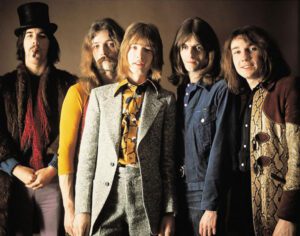
This is where music business insider stories become something larger than personal adventure. Sol had the packaging idea that helped put things in motion: Rod Stewart & Faces, Savoy Brown, and Joe Cocker’s Grease Band. Put the right acts together, sell the package, and suddenly the road begins to open. It sounds simple now, but simple ideas are often the ones that separate the people who understand the business from the people who merely own a desk.
The public saw the show. The business saw the routing, the leverage, the billing, the risk, the phone calls, the managers, the egos, and the nightly question of whether the whole damn contraption would make money or blow apart somewhere between Cleveland and Chicago.
That is the difference between concert memories and music business insider stories. One remembers the applause. The other remembers the deal that got the amplifiers into the room.
The Most Influential People Were Not Always The Loudest
Some of the most influential people I met in music were not always the ones posing for photographers. Rod Stewart belongs in any serious conversation about the most influential people in rock and roll, not because of a press release, but because the man had the voice, the swagger, the timing, and the audience. Around him were the managers, agents, promoters, secretaries, hustlers, and dealmakers who understood that the music business was a moving street fight with better stationery.
There were people who could make one phone call and change an artist’s year. Others could ruin a tour with the confidence of a dentist drilling the wrong tooth. You learned who had taste, who had nerve, who paid, who stalled, who lied, and who could smell money before the check was written.
The young version of me wanted to win. The older version can admit that winning often came with lessons I did not understand until years later. In the middle of it, I thought I was simply building a career. Looking back, I was also building a self, one booking, one fight, one humiliation, and one lucky break at a time.
That is why music business insider stories need more than famous names. Famous names are useful, certainly, and I had my share of them floating through the room. But the real story lives in the machinery. It lives in who took your call, who returned it, who pretended not to know you, who came through, and who left you standing there with your tie on fire.
The Perks Were Real, But So Was The Price
The music business had perks, and anyone who says otherwise is either lying or was not invited. There were groupies, good tables, backstage access, free travel, strange favors, and the kind of moments that make a young man think he has cracked the secret code of life. I traveled to England, Germany, Spain, and other places where business could be mixed with pleasure until the distinction became as blurry as the last drink of the evening.
There were record people, managers, artists, samples to hear, cigars to bring home, and in my case, a fair amount of Indian food in England, because I always felt at home there. There were first-class tickets when special deals floated through the music community, and once you have flown up front, it is hard to go back to coach with the goats, flying Air India, courtesy of Warner Bros. Records.
But perks are only one side of music business insider stories. The other side is wear, pressure, temptation, and the steady erosion of whatever innocence you may still have been dragging behind you. I had lost plenty of mine long before music entered the picture, but the business knew how to locate what remained and sell tickets to it.
Good Celebrity Autobiographies Usually Know Where The Bodies Are Buried
I have read enough good celebrity autobiographies to know the difference between a life remembered and a life airbrushed. Too many books about fame polish the furniture and hide the broken glass. The better ones admit that the room was a mess.
That is the kind of truth I care about, and it is why music industry stories only matter when the storyteller is willing to show the bruises along with the backstage pass. I am less interested in pretending the music business was one long champagne toast. It was thrilling, often funny, sometimes profitable, and frequently absurd. It also had racism, betrayal, bad judgment, sexual excess, business failure, and enough ego to float a battleship down Broadway.
The best music business insider stories do not ask the reader to admire the narrator too much. I do not need to be admired on every page. I would rather be believed. I was ambitious, damaged, funny when I could be, foolish when I had the opportunity, and more vulnerable than I understood at the time. That is not a marketing slogan. That is closer to the truth.
Music Business Insider Stories Are Really Human Stories
In the end, music business insider stories are not only about rock and roll. They are about what happens when wounded people get near power, money, applause, sex, fame, and travel. Some rise. Some fold. Some improvise badly and call it a plan. I did a little of all three.
The kid who once listened to rhythm and blues on a Brooklyn rooftop could not have known that the music would one day become a career. He could not have imagined agency offices, managers, backstage doors, European hotels, half-price first-class tickets, or the strange education that comes from seeing famous people as human beings before the public turns them into marble statues.
There are plenty of classic rock memoirs, new rock memoirs, rock memoirs, rock n roll memoirs, and every promised rock and roll autobiography under the sun, but the ones that stay with me are the ones that do not pretend the star walked through life without tracking mud on the carpet.
That is what I bring to these music business insider stories. Not the cleaned-up version. Not the brochure. Not the fan magazine fog. I bring the view from the inside, where the curtain is not velvet but wiring, dust, anxiety, and a few people trying to keep the whole show from collapsing before the encore.
And if there is a reason to tell it now, it is because the music business was not just where I made a living. It was where a frightened, angry, funny, damaged Brooklyn kid found a stage large enough to hold his contradictions. These music business insider stories are part of that life, and they belong to the same long road that began in family dysfunction and somehow wound up backstage, where the truth was often louder than the amplifiers.
Who Were Some Of My Favorite Bands? Watch And Find Out.
