










Let me tell you a story, as it’s what I do at this stage of my life, when I am no longer conquering the music business, but remembering when I did with stories behind the music industry. I’ve never claimed to be an author, but I can tell a damn good story. So, let’s go.
Behind The Music Industry And The German Rock Door
After the unfortunate loss of Rush due to Ray Daniels’ betrayal, I wanted to reinvent myself. I had always been considered second tier in the English music industry, standing somewhere behind Frank Barcelona, the owner of Premier Talent Agency. That never sat very well with me, especially since my tours were always better and more profitable than his. Savoy Brown, for example, was the first English band to take home a profit on its first American tour.
Still, perception can be a stubborn bastard. Frank Barcelona, of Premier Talent, had gotten to England before me, and his wife at the time wrote for NME, the New Musical Express, where she was always touting him. That gave him a nice little spotlight, whether he deserved the wattage or not. So I decided it was time for me to be first somewhere else. If I could not be king of England, I would find another kingdom.
Around that same time, I used to cruise the LP bins at a record store on 8th Street in Greenwich Village. The store specialized in imports from other countries, and one day I discovered the German section. That was where, digging further behind the music industry, I found artists such as Tangerine Dream, Kraftwerk, Neu, Harmonia, Randy Pie, Inga Rumpf, and others. I fell in love with that hypnotic sound. It was strange, moody, driving, and unlike anything else coming out of the usual English and American rock pipelines. That was one of my first real glimpses behind the music industry in Germany, where opportunity was sitting in a record bin waiting for someone to notice it.
That was when I realized I had found a country without Frank Barcelona. Germany could be mine. I could become the Kaiser of Rock ’N’ Roll.
Music Business Stories From Der Fatherland
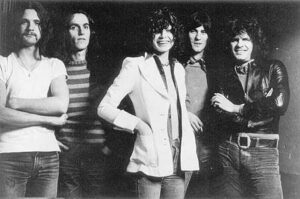
I contacted several of these groups and eventually headed out for Der Fatherland, where I met with Kraftwerk, Randy Pie, Klaus Schulz, Inga Rumpf, and several others. I agreed to represent a number of them, and what I was seeing behind the music industry was a fresh road into America, and I went on to secure record deals and agency representation in America for many of these acts.
These are the kinds of music business stories that rarely get told correctly, because the people who made the deals, took the chances, and flew into strange countries with nothing but instinct and nerve are usually left out of the polished version.
I want to point out that I was right about Kraftwerk. I signed them before Irwin Steinberg released their record at Mercury Records, and before “Autobahn” became a top-five hit. I saw that one coming. In a business where everyone loves to pretend they knew after the fact, I actually knew before the fact. That is one of the little satisfactions of looking back behind the music industry. You remember not only what happened, but what you knew before everyone else caught up.
Germany itself was a kick, and behind the music industry it felt like a new frontier, a real old-world experience. I stayed in the best places, because if I was going to conquer a new territory, I intended to do it comfortably. In Hamburg, I stayed on the lake at the Vier Jahreszeiten, the Four Seasons, a hotel with a lobby and restaurant wrapped in dark old-world oak, fantastic food, and magnificent accommodations.
My bathroom was about the size of an average hotel room, with a drain in the middle of the floor, which meant there was no need for a shower curtain. I reveled in the luxury of it, splashing water everywhere with the confidence of a man who believed plumbing had finally caught up with his lifestyle.
Rock And Roll Stories In A Hamburg Hotel Room
The hotel concierge warned me that if I left the room, I should close the windows. These windows were about the size of an average door and opened onto the lake. If I left them open, he explained, bugs would head straight for the room lights.
Naturally, I did not listen.
That evening, I was with the guys in Randy Pie, and they rolled me a spliff, the Euro version of a joint, made with weed or hash rolled over cigarette tobacco. I did not smoke cigarettes, but I appreciated the gesture and went along with it. By the time I got back to my room, I was already a bit tipsy and did not notice anything unusual. I lit the spliff, and it was intense in every possible way. I did not just get wasted. I got sick. That cigarette tobacco rocked my world in the most unpleasant direction possible.
The first thing I did was shed most of my clothes and run into that grand shower. As Ken Nordine said in his word poem “Down the Drain,” I took a sitting-down shower. After thoroughly drenching myself, I dried off and headed straight for the bed to crash.
Then I made the mistake of looking up.
On the wall over the bed and across the ceiling was a sickening mass of BUG. Thousands of bugs had flown into the room because I had ignored the concierge and left the windows open. It looked like a horror show, the kind of thing one should never see while stoned, sick, and questioning every life decision that had led him to a luxury hotel room in Hamburg.
I grabbed my copy of Billboard magazine, rolled it up, and began swatting and sweating, swatting and sweating. But even in my less-than-sober and fully terrified condition, I finally realized the bug blitzkrieg was going to win. There were too many of them, and I was in no shape to conduct a military campaign from a hotel mattress.
At that point, I had to face the concierge. I went to him apologetically and admitted he had been right. I needed help. He gave me a stern and disapproving look, the kind only a hotel concierge in Europe can truly deliver, and provided me with another room.
That is the part of behind the music industry people do not usually imagine. They picture limousines, backstage passes, record company dinners, and rock stars walking through airports in sunglasses. They do not picture a half-dressed American agent in Germany, sick from a spliff, armed with Billboard magazine, losing a war against insects. These are the rock and roll stories that survive because they are too ridiculous to invent.
Rock And Roll Memoir Lessons From Kraftwerk, Neu, Harmonia, And Atlantis
Following my signing of Kraftwerk, I kept pushing further behind the music industry in Germany and pursued and signed several other German bands and artists, including Klaus Doldinger. He was a modern-day Colonel Klink, demanding and ridiculous, with very little appreciation in his demeanor considering the great tour I did for him. I booked most of those dates personally. He may have been a jazz star in Germany, but when he came to America, he forgot that over here he was only a wannabe.
Other German bands I became involved with included Neu and Harmonia, two more Krautrock groups in the mold of Kraftwerk. I placed the Harmonia album with Motown, although they never released it. I also came up with a deal for Neu, but they decided not to take the American deal for reasons known only to them. Another German band I quite liked, and one that was not electronic, was Randy Pie, but I could not secure a deal for them in the United States.
These were not just rock and roll stories for me. They were lessons in timing, ego, instinct, and the strange little turns that decide who gets heard and who disappears into the import bins. Some acts had the goods but not the break. Some had the break and did not know what to do with it. Some were simply born in the wrong place at the wrong time. That is why a real rock and roll memoir cannot just be about the hits. It has to show what happened behind the music industry, where the missed chances and almost-made-its live.
Another favorite of mine was Atlantis, featuring Inga Rumpf, who was in the mold of Janis Joplin and Tina Turner. She was a head-turning redhead who could belt out a tune with the best of them, and I brought them over for one tour of the United States. That group should have made it here, but unfortunately, they did not. In a rock and roll memoir, that is one of the recurring truths: talent is necessary, but it is never the whole story.
Behind The Music Industry: The Deal I Should Not Have Lost
One of my mistakes, and there were always mistakes behind the music industry, was letting my ego get in the way with a Swiss German band called Tea, which featured a lead singer from the U.K., Marc Storace, who later became the lead singer for the platinum group Krokus. I had been good friends with their producer, Dieter Dierks, and I had come up with a record deal, although a small one, with RCA through Bud Prager’s label, Windfall Records. RCA kept stalling and stalling over signing the paperwork, and out of frustration, I told them to shove it.
That was a gross mistake. I knew it then, and I know it now. These music business stories are not all victories, and any honest rock and roll memoir has to admit that sometimes the bad call was your own. Even though I had mishandled Tea, I still maintained my relationship with Dieter, and we continued trying to do things together over the next few years.
But I missed that boat too.
Later for that.
