








WHEN A ROCK N ROLL MEMOIR STOPS BEING ABOUT THE APPLAUSE
There was a time when going on the road with a rock band seemed like the greatest life imaginable. I was young, ambitious, making money, flying back and forth to England, discovering bands, negotiating deals, and watching artists I believed in walk onto stages in front of thousands of people. Every city brought another hotel, another promoter, another concert, and another problem to solve before the lights went down. We were helping create the modern touring business without really thinking of it that way. We were simply living it.
For a long time, it was exhilarating. Then, somewhere along the way, the road stopped being quite so much fun. That change is at the heart of this rock n roll memoir.
I cannot point to one particular day when that happened. It happened gradually, as the stories accumulated and the things that once seemed outrageous and amusing began having consequences that could no longer be laughed away. The drinking got heavier, the drugs got harder, friends died, people I trusted became people I could no longer trust, and artists sometimes destroyed opportunities I had spent years creating for them.
That is the part of a rock n roll memoir that interests me now. Not simply who played where or which band sold out what theater, but what happened behind the stage, inside the cars, in the hotel rooms, and in the offices where careers were sometimes made or destroyed in a matter of minutes.
SAVOY BROWN AND THE DARKER SIDE OF A MUSIC INDUSTRY MEMOIR
Savoy Brown had been part of my life for years, and no rock n roll memoir of mine could honestly avoid what I lived through with them. I first represented them and later managed the band, so I did not learn their history by reading about it decades later. I lived a good part of it with them.
To my ears, the best Savoy Brown was the early band with Chris Youlden, Kim Simmonds, Lonesome Dave Peverett, Tony Stevens, and Roger Earl. By the time Ralph Morman became lead singer, Chris had been gone for years and Savoy Brown had already gone through major changes.
Ralph could drink. There were nights when he could go through most of a bottle of Jack Daniels, and as his manager, I was not sitting backstage thinking what a wonderful rock n roll memoir story this would make someday. I was wondering whether the singer would be able to walk onstage and deliver the performance the promoter and the audience had paid for.
The darker part came away from the stage. Ralph’s wife was also a heavy drinker. One night, while Ralph was driving on the freeway, she was drunk and fell out of the car. She was killed. When you know the people involved and live through something like that with them, all the romantic nonsense about drinking and the rock and roll life disappears very quickly. Someone was dead. That was not mythology. That was life.
Experiences like that changed the way I looked at the business and eventually became part of my music industry memoir, because the truth of those years was never simply about success. There was always another side to it, and any honest rock n roll memoir has to tell that side too.
WHEN THE DRUGS STOPPED BEING FUNNY
I am certainly not going to pretend I stood outside the drug culture looking in. I liked a good joint myself. On one trip to Hamburg, I stayed at the Atlantic Hotel while meeting with German bands. The concierge specifically warned me not to leave the window open because insects from the lake would get into the room. Naturally, I left it open.
A German band, Randy Pie, gave me a spliff containing marijuana mixed with tobacco. I did not smoke tobacco, but I wanted the weed, so I smoked it anyway. The tobacco made me dizzy, and when I lay down on the bed and looked toward the wall and ceiling, it appeared that every insect in Germany had moved into my room. I spent what seemed like hours swinging a rolled-up magazine at them before the hotel finally gave me another room.
That was the funny side. Wally Meyerowitz was the other side. Wally worked for us and handled Uriah Heep. He developed a heroin habit and would go into Central Park during lunch to get high. Eventually, he died of an overdose.
Years later, I met my old college friend Jon Podell for lunch at Patsy’s in Manhattan. Jon had done very well in the music business, but during lunch I watched him talking normally and then suddenly appearing to fall asleep. A little while later, he would come back, start talking again, and then disappear once more. He was doing speedballs, heroin, and cocaine together.
Those memories belong in an honest rock n roll memoir because drugs were not just part of some colorful backstage party. No truthful rock n roll memoir could make those years sound harmless. I watched what drugs did to people I knew, and by then I had seen enough to know that the joke could turn ugly very quickly.
MUSIC BUSINESS STORIES WHERE DANGER CAME WITH THE JOB
ZZ Top once played Central Park before the beards became almost as famous as the band itself. Their manager, Bill Ham, was with us, and the audience could get much closer to the stage than would generally be allowed today.
Some kids began edging toward the stage, and Bill aggressively told them to get away. He was trying to protect his band, but I was standing at another angle and saw something he did not. One of the kids pulled out a dagger. I went over and tried to calm things down before an argument became something far worse. Fortunately, I succeeded.
That is another part of my rock n roll memoir that people who only saw the finished concert never knew. You could spend months booking a tour and negotiating contracts, and the most important thing you did that night might be keeping somebody from getting stabbed.
The road could become dangerous just as quickly when I created the problem myself. I had Savoy Brown headlining a theater in the Italian section of Brooklyn with Buddy Miles as the supporting act. After Buddy performed, he came to me because the theater owners had decided they were not going to pay him.
I told them that if Buddy was not paid, Savoy Brown was not going onstage. I was young, loud, and obnoxious, but I got Buddy paid. I also got myself threatened with death.
Fortunately, I knew Carmine DeNoia, whom everyone called Wassel, and Carmine knew people whose opinions carried considerably more weight with the theater owners than mine did. The problem eventually disappeared, and Buddy Miles later became my client.
These were the kinds of music business stories where being right did not necessarily mean you had handled something intelligently. Looking back, that belongs in this rock n roll memoir as much as any success, because sometimes the lesson was not in winning the argument but in surviving the way I chose to fight it.
BETRAYAL, RUSH, AND MY OWN BAD DECISIONS
Some of my worst mistakes came not from stupidity, but from anger. I had helped build American Talent International with my partners Jeff and Sol. We created something important, but success did not prevent mistrust from growing between us.
Jeff had become involved in a side management venture without being honest with me. Sol later told me about an artist he intended to manage. I decided that if my partners were moving into management, I would find somebody worth managing myself. I found Rush.
Sol knew I was managing them and promised not to tell Jeff. Then one day in 1974, I walked into Jeff’s office, saw the look on his face, and knew immediately that something had happened. He asked me whether I was managing Rush. Sol had told him. I felt betrayed by both partners and reacted the way I often reacted when I was younger. I got angry and walked.
Looking back, leaving ATI may or may not have been the mistake. The way I left certainly was. Jeff actually offered to create a management company connected to ATI that I could run while retaining my salary and interests. A more experienced man would have stopped, negotiated, reviewed the accounting, and protected himself. I bolted out the door.
That belongs in my rock n roll memoir because an honest memoir cannot be a story where the writer is always the smartest man in the room. I made some very good decisions in the music business. I also made some lousy ones, and some of those lousy decisions were mine alone.
ROCK AND ROLL STORIES ABOUT YA YA AND A CAREER THROWN AWAY
Perhaps nothing frustrated me more than working for years to create an opportunity for an artist and then watching the artist destroy it. Ya Ya may have been the final straw. I managed the group worldwide and liked the guys. I had made a major deal with Warner U.K. worth roughly half a million dollars in 1980s money, along with a publishing deal. We had reached the point that thousands of bands spend their entire careers trying to reach.
The deal was signed, sealed, and delivered. Then they fired their lead singer, Lea Hart, just as they were preparing to record for Warner Bros.
I could hardly believe it. Warner had signed the band they heard. Lea Hart was the voice they heard. The chemistry of that particular band was what had attracted the record company in the first place, and almost immediately after getting the deal, Ya Ya changed one of its most important components. Warner lost interest.
I had spent years solving problems for artists, protecting them from bad deals, finding opportunities, fighting promoters, and opening doors. But there is one person a manager cannot always save an artist from: himself.
Those are the rock and roll stories that taught me something success alone never could. Getting the big break is not always the hardest part. Sometimes surviving what you do after you get it is much harder. Ya Ya had theirs, and then they shot themselves in the foot. That story belongs in a rock n roll memoir because the music business is full of people who spend years waiting for the door to open and then, when it finally does, make one decision that lets it slam shut again.
WHAT THE ROAD FINALLY TAUGHT ME ABOUT A ROCK N ROLL MEMOIR
By the time I had lived through all of this, I no longer looked at the road the way I had when I first entered the business. I still loved the music and the excitement of discovering an artist, making a deal, putting a tour together, and walking into a packed theater knowing I had helped make it happen. Those were some of the greatest years of my life, and I would never pretend otherwise.
But an honest rock n roll memoir has to include what came with those years. The Jack Daniels was real. The heroin was real. So were the knives, the death threats, the betrayals, the broken partnerships, and the artists who were sometimes capable of destroying opportunities I had spent years creating for them.
I was not standing outside that world taking notes. I lived in the middle of it. I managed artists, represented them, fought for them, argued with them, made money with them, lost money because of them, and occasionally watched helplessly as they made decisions no manager could undo.
That is what these stories mean to me now. The applause was certainly real, but so was everything that happened before the band walked onstage and after the audience went home. That is also why a rock n roll memoir has to tell more than the glamorous version of the story.
The road gave me some of the greatest experiences of my life. After enough years, enough drugs, enough betrayals, and enough bad decisions, however, I finally understood something I could never have understood when I first entered the music business. The road was still exciting, and the music still mattered. It just wasn’t always fun anymore.
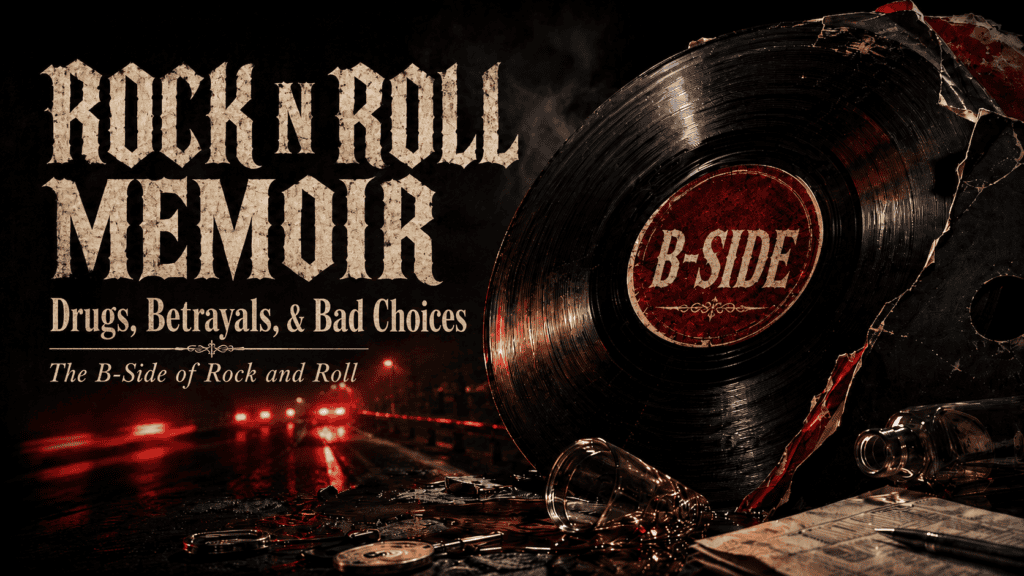
I didn’t just live through all of the rock and roll stories—I witnessed its B-side.
