


The Pain Behind My Memoir About Family
I had been aware of this issue for a long time, but what is a long time anyway when you are 83? Let’s just agree on a few decades and leave it at that. Where did they go? Why do I not hear from them? Why do some family members seem to have disappeared as if I had been written out of the script?
This memoir about family is not only about who loved me. It is also about who vanished, who stayed silent, and who made me feel, once again, like the kid standing outside the room wondering why no one opened the door.
Yes, some are dear to me. They acknowledge my very existence, respond to emails, call me, and are truly integrated into my life and well-being. Those are my second cousins, none of the first, but the second ones. Allison, Sharon, Gerry, and, as Bugs Bunny used to say at the end of his cartoons, “That’s all folks.”
I have had the occasional email from one or two others, usually because I sent a note about what I am accomplishing with my memoir about family, my rock and roll memoir, or this more personal side of the story. Sometimes someone finds an old picture and sends it along, which I appreciate, but there is little conversation beyond that. If I ask, “How are you?” or “What’s new with you?” I usually get silence in return.
So it seems that other than the three charming ladies, who are my second cousins in hierarchy but first in my heart, the rest of the family could not care squat if I were alive or dead.
Good Times In My Memoir About Family
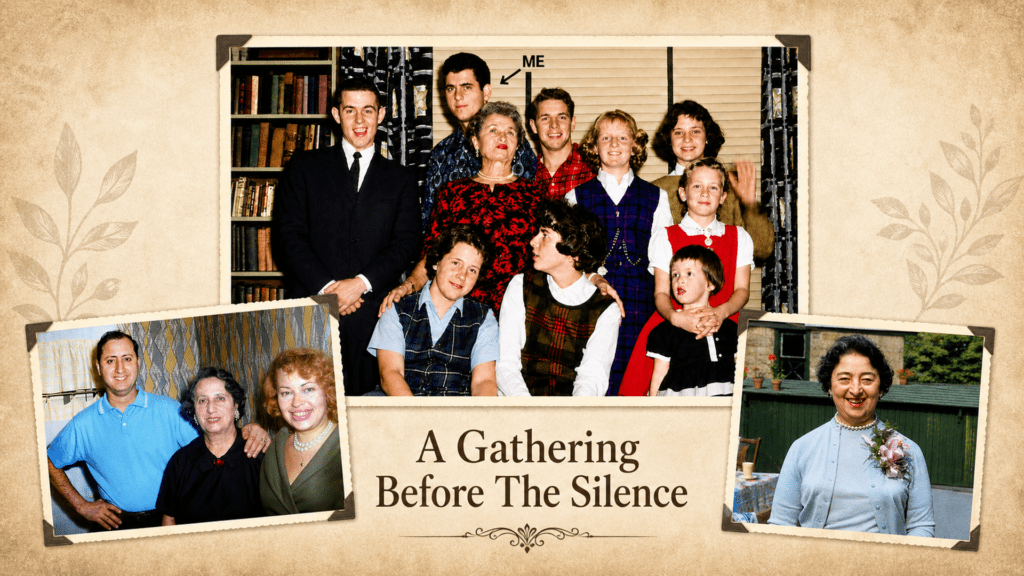
From my earliest years, when memory can recall such things, I remember the love shown at family gatherings. These usually took place at my Uncle Charlie “Pinch Your Cheek” Haibloom’s home. The first thing I remember about his house was that all the homes had the same stairs going up, and under the stairs was an entrance to a lower apartment. Both the stairs and the balcony at the top were adorned with the most beautiful array of pebble stones I had ever seen as a four-year-old.
Once inside Charlie’s pebbled castle, and after his cheeky welcome, the rest of the family would surround my mother and me. They would ask how we were, inquire about our well-being, and quickly share the latest family gossip, always well-meaning and never malicious. My memoir about family belongs in that room because those gatherings were a respite from life at home.
Depending on my father’s mood swing, from his manic-depressive state, he would either glad-hand everyone or shrink sullenly into the background. The latter suited me best.
Relatives Who Belong In My Memoir About Family
Inside that family circle was my lovely Aunt Francis, a sophisticated and charming woman who adored me. If Charlie, by lending us his home, was the king of those gatherings, then Francis, by her warmth and love, was the queen.
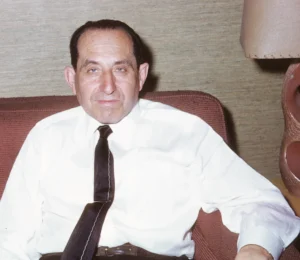
In that same generation was the most dapper gentleman in our family, my Uncle Harry Schwartzberg, brother to my loving Aunt Josie, who, as I write this and think about her, brings tears to my eyes. Harry was a bookie, and that meant he was, as the mob guys would say, “with us.”
Aside from being the best-dressed member of our clan, with my father the worst, Harry had style. My father, on the other hand, might wear a striped shirt with checkered pants and a belt pulled up near his chest, looking like Ed Grimley, played by Martin Short on Saturday Night Live.
One of my favorite memories of Uncle Harry was when he took me to Lundy’s in Sheepshead Bay for cheesecake. He was a well-known fixture there and probably took his bets there as well, although I am guessing at that. Those moments belong in a memoir about family because they show what love felt like before it disappeared into distance, silence, and death.
Relatives Who Showed Me Love In My Memoir About Family
Harry’s sister was my Aunt Josie, the mother of my loving cousins Helen and Joan, who were twins, Donald, and Violet. Josie was adorable. All she could show was love, and she showered it on me profusely. I was a regular visitor at her house, usually stopping there after a visit to my grandmother, Lena Derman, who was also a fixture at our family gatherings.
Only later in life, from my cousin Allison, did I learn that Josie’s husband used to beat her until she finally divorced him. That knowledge hurt, but it also explained something. Families carry stories under the surface, and sometimes the pleasant room has a cellar full of pain.
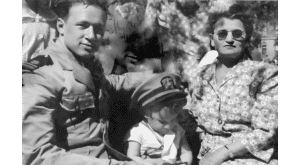
The twins were special to me, as was Helen’s husband, Ian, whom I was very fond of as an adult. Helen died way too young, and Joan had serious mental problems until eventually she required hospitalization. Donald also died too young and was a hero of mine because he served with the 2nd Battalion Marines during World War Two. He later became a policeman, and when I was 14 or 15, he got me out of a scrape after I was accused of joyriding with a pal who, unbeknownst to me, had stolen the vehicle.
This memoir about family is filled with these fragments. Some are warm. Some are painful. Some are both.
Dysfunctional Family Stories Started Early
The worst thing that occurred to me at a family gathering was not some great catastrophe, but it stayed with me. At about 16, I told my mother that I had a new girlfriend. Her name was Diane, and she had an Italian last name I cannot remember after all these decades. The first words out of my mother’s mouth were, “What, she’s a Telena?”
I do not know if this was a literal translation of the word Italian in Yiddish, or more likely a local Yiddish dialect or slang. Nevertheless, my mother was taken aback. Nothing heavy, but a show of surprise. After a bit of conversation, she was good with it, especially since ten years later, my first wife was Italian.
That is the funny thing about dysfunctional family stories. They do not always arrive with thunder. Sometimes they come through one sentence, one look, one small reaction that tells you what people were taught to think before they even knew they were thinking it.
Why This Memoir About Family Still Hurts
I decided to write about this for two reasons. The first is simple: I miss the years when I was surrounded by so many people who loved me. They showed me love at a time when, before and after the family gatherings, I would be home with my immediate dysfunctional family, my parents. Those visits were a respite from my abusive father and passive-aggressive mother, who seemed locked into her existence due to her failure to comprehend that she had other choices.
When I asked my mother, as a young adult, why she stayed with my father, she replied, “I did it for you.”
If that is not passive-aggressive, what is?
I replied, “Mom, if you truly did it for me, you would have left him.”
The second reason I wrote this memoir about family is my feeling of being abandoned again. The first time was by my parents. This time I write about the rest of us. Was it my fault? Their fault? My father’s fault, because they detested him and maybe that rubbed off on me? Was I too wild, too grandiose in my success, or, in my own bouts with depression after my mother’s death, did I ignore them too? Maybe it was distance. Maybe it was time. Maybe family today is not close beyond immediate kin. I really do not know, but it still hurts.
Where My Memoir About Family Meets My Rock And Roll Life
That is why this memoir about family belongs beside my rock and roll memoir. The public life and the private life were never really separate. The same man who later lived through the music business, the tours, the artists, and the wild rock and roll stories also carried these older issues inside him.
This is not only a rock memoir about success, survival, and backstage history. It is also a place for the quieter and more painful dysfunctional family stories that shaped the man before the music business began.
My memoir about family remains close to the bone because family is where the wounds began, but also where some of the love appeared. That is the contradiction. The same family that gave me Uncle Charlie’s pebbled castle, Aunt Francis’s warmth, Aunt Josie’s love, Uncle Harry’s cheesecake trip to Lundy’s, and Donald’s protection also left me wondering, decades later, where everybody went.
The Writer In My Memoir About Family
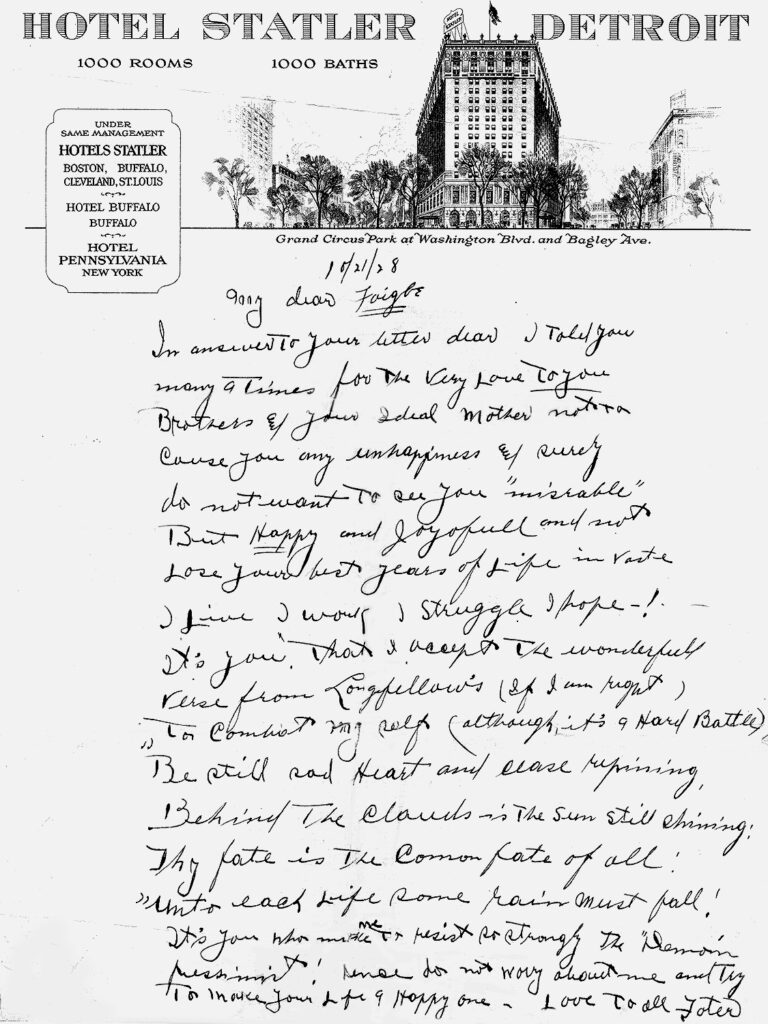
This final note in my memoir about family is also part of why the book matters to me. Why do I write, and how did I come to be able to do so with whatever ability I may have? The answer, I feel, is genetics: Isadore Derman, my grandfather on my mother’s side, whom I loved from afar. He died years before I was born.
He was also a writer. When he wrote letters to my mother while she was traveling, you could feel his warmth and love as you read them. When I post my stories and images online, I use this quote: “I’ve never claimed to be an author, but I can tell a damn good story.”
Well, Grandpa Derman, I do it for you, to paraphrase my mother’s line. And maybe, just maybe, because of genetics.