








The Most Influential People Are Not Always Real
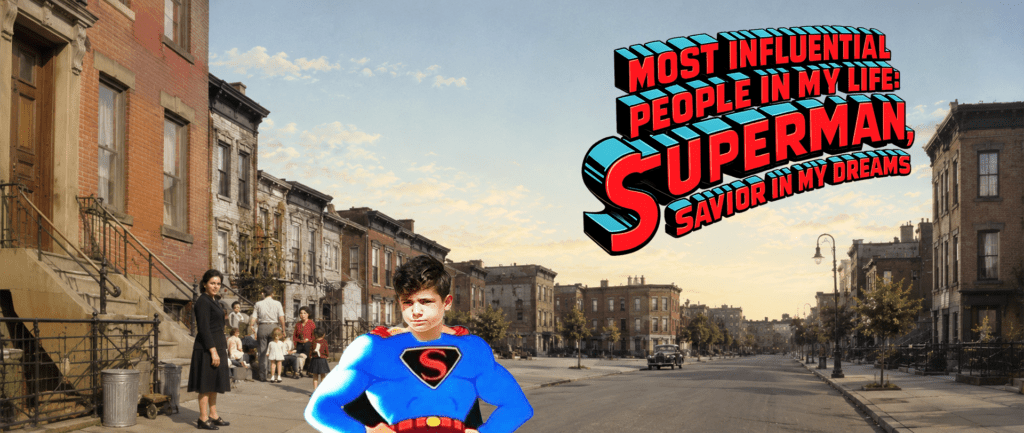
Some of the most influential people in our lives are not always people we can touch, meet, or even prove existed outside the borders of our imagination. Sometimes they arrive through dreams, through fantasy, through the emotional hiding places children create when reality becomes too painful to bear. For me, Superman became one of those figures during the most frightened years of my childhood, long before I understood words like trauma, emotional survival, or psychological escape. I only knew that when life became too much for me, Superman appeared, and for the brief time he occupied my dreams, I felt less alone.
By the time I was six years old, fear already felt woven into the fabric of my life. My father’s anger dominated our household like permanent weather, and children raised in that kind of atmosphere become experts at reading danger before it arrives. Even today, that fear has left me hypervigilant to my surroundings. Every footstep matters, every shift in tone matters, and every change in expression can announce trouble before a word is spoken. You begin studying faces the way sailors study the sky before a storm, because home never fully feels like home when safety can disappear in an instant. That was the world I lived in when Superman entered my dreams.
Most Influential People And The Need To Survive
Superman was not simply a comic book hero to me. He represented everything my real life lacked. He was powerful without being cruel, strong without being vicious, and protective without being humiliating. My father’s version of power came through intimidation, beatings and rage, while Superman represented another kind of power entirely, one rooted in protection, decency, and justice, yes, “Truth, Justice and the American Way.” Even as a frightened child, I instinctively understood the difference between strength that destroys and strength that protects.
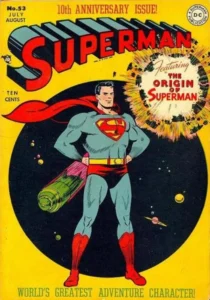
At night, Superman appeared regularly in my dreams, and looking back now, I believe those dreams may have helped save my life emotionally. Imagination became my refuge when reality offered nowhere safe to hide. Maybe those dreams saved me, because I figuratively, hung onto Superman’s cape while somewhere inside that frightened kid was a defiant little voice saying, “Fuck Daddy, I am better than what he thinks of me.” That may sound harsh to some people, but trauma does not speak in polished language, and children trying to survive emotional chaos do not think in elegant theories. They cling to whatever keeps part of their spirit alive.
In my dreams, I actually did not hang on to his cape, but was Super Ira, flying on my own. The only problem, is that my child’s mind felt its limitations, so that while I could fly, I could not soar, and thus I could fly only about ten feet from the ground as I emulated my hero and one of the most influential people in my life. Later in life, when I became a young adult, my hero became my uncle Herb Derman, who was my mother’s brother.
I never dreamed about becoming rich or famous. I dreamed about escape, safety, and the possibility of rising above fear and humiliation. Superman could fly over the pain that trapped me, and in my dreams I flew as him, leaving behind the yelling, the tension, the unpredictability, and the feeling that I was somehow defective in my father’s eyes. Looking back now, I realize those dreams probably helped preserve something essential inside me, because children often survive psychologically long before they understand what survival even means.
Dysfunctional Family Stories Often Begin With Fear
Many dysfunctional family stories begin quietly inside a child’s head long before the outside world notices anything wrong. Children build secret emotional shelters, imaginary protectors, fantasy worlds, hidden strengths, and private rebellions because the real world has failed to provide the safety they need. In my case, Superman became all of those things at once. He was not merely entertainment. He became emotional armor. Superman seemed a far better option to me then being the King of The Devils, as I write in my memoir, Once A King, Now A Prince.
My father believed power came through fear, but Superman taught me that strength could exist without cruelty. That distinction mattered enormously to me, even as a little kid, because I could feel the difference before I had the language to explain it. One kind of strength crushes people beneath it. The other lifts them out of danger. That lesson stayed with me because I needed it to stay with me.
When people talk about childhood trauma, they often focus on the damage, and certainly the damage is real. But children are also survivors. They adapt, invent, retreat, resist, and cling to symbols of hope wherever they can find them. Some children disappear inward. Some become angry. Some become silent. I escaped into imagination because imagination gave me breathing room when real life felt suffocating.
Stories From My Life And The Dreams That Saved Me
When I look back on these stories from my life, I can see how deeply those dreams affected my sense of self. Somewhere inside those nighttime flights with Superman was the beginning of resistance. My father may have believed I was weak, damaged, or doomed, but another part of me had already started arguing back. That argument mattered because children eventually become either the voices they hear most often or the voices they manage to create inside themselves.
My father’s voice was filled with rage, criticism, and humiliation, but Superman represented another voice entirely. He quietly suggested that I might someday rise above the chaos around me. He became proof, at least in my imagination, that strength and decency could coexist, and that power did not have to look like the power I saw at home. I did not need to leap tall buildings or stop speeding bullets. I needed to survive long enough to discover whether there was more to me than fear, shame, and my father’s judgment.
Those dreams gave me that possibility. They gave me a private place where I was not trapped, not small, not helpless, and not defined by someone else’s anger. In waking life, I may have been frightened, but in dreams I could attach myself to something stronger than fear. I could hang onto the cape and let it carry me beyond the walls of that house, if only for the night.
A Story About Family, Survival, And Imagination
This is very much a story about family, because family is where children first learn what love, power, fear, and protection mean. In healthy homes, children learn safety before they learn survival. In damaged homes, survival often comes first, and everything else has to be figured out later. My childhood taught me vigilance before it taught me peace, and I carried that lesson deep into my life.
Yet somewhere beneath the damage remained a stubborn belief that my life might eventually become larger than my fear. Superman helped feed that belief. Strange as it may sound, he became one of the most influential people in my emotional life despite never existing in the literal sense. For one frightened little boy, he was real where it counted, because the dreams he appeared in gave me something I could not find in the waking world.
The dreams faded eventually, as childhood dreams usually do, but what they left behind never disappeared. They left behind the belief that I was not entirely trapped by my father’s rage or judgment and by the fear that surrounded my early years. They left behind the idea that survival itself could become a form of victory, even when the victory was invisible to everyone else.
The True Life Story Behind Superman And I
This is not nostalgia for comic books or television heroes. It is part of a larger true life story about emotional survival and the strange ways children sometimes rescue themselves when the adults around them fail them. Superman may not have saved me literally, but the dreams surrounding him helped keep alive the small part of me that still believed I was worth saving.
That is why, when I think about the most influential people in my life, I cannot leave Superman out simply because he was fictional. Influence is not always measured by physical presence. Sometimes it is measured by what a frightened child manages to hold onto when everything else feels unsafe. Superman gave me something to hold onto, and perhaps that is the real superpower after all.
