









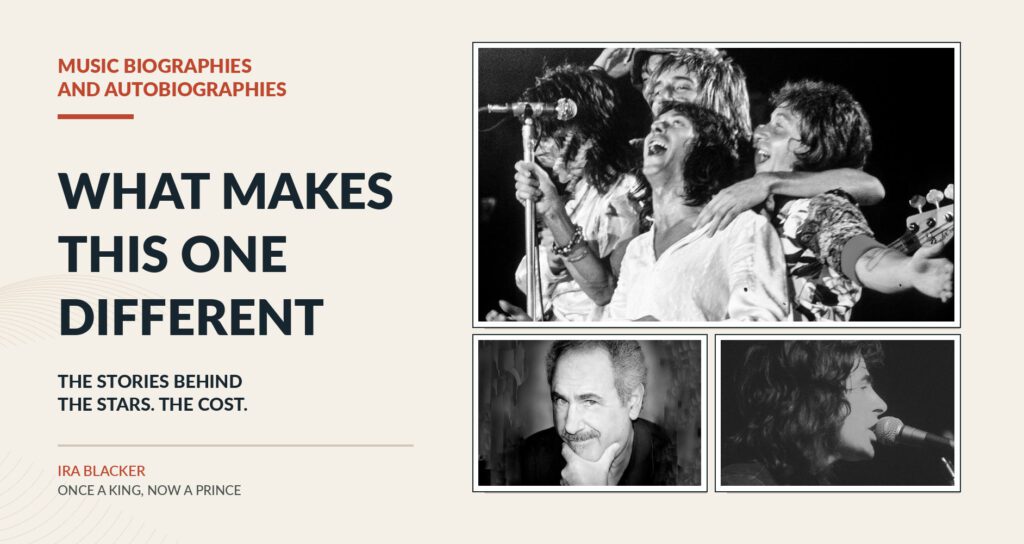
If you browse the world of music biographies and autobiographies, you will find no shortage of books that recycle the same old fairy dust. Everybody was brilliant, everybody was misunderstood, everybody was at the center of the storm, and somehow nobody ever got their shoes muddy. That is not my style, and it is not my life.
If you want polished mythology, there are plenty of music biographies and autobiographies out there for you. If you want the truth as I lived it — the bruises, the absurdity, the betrayals, the laughter, the mob guys, the madness, the hustle, the sex, the fear, the victories, and the rock and roll — then Once A King, Now A Prince belongs on your list. I have no interest in telling you how wonderful I was. I am far more interested in telling you what actually happened.
WHAT SETS MUSIC BIOGRAPHIES AND AUTOBIOGRAPHIES APART
What makes my story different begins with where I came from. I did not come into the music business from some charmed, glamorous beginning. I came out of family dysfunction, fear, beatings, rejection, and institutions that shaped me long before I ever dealt with artists, managers, promoters, or record men.
I was not handed a smooth path. I had to survive one lousy thing after another, and that survival instinct followed me into adult life and into the music business itself. A lot of music biographies and autobiographies tell you what happened. Mine tells you what it felt like to live through it.
That matters because the book is not just a string of celebrity names or road stories. It is the story of how a damaged kid from Brooklyn became a force in rock and roll, then got tested again and again by the same life lessons he thought he had outrun. The childhood material is not window dressing. It is the foundation. If you want to understand why I reacted the way I did in business, in love, in anger, and in ambition, you need the whole picture. That is one reason I believe this book stands apart in the field of music biographies and autobiographies.
FROM BROOKLYN TO THE BACK ROOMS OF ROCK AND ROLL
When I was six, I was sent to the psychiatric ward at Kings County Hospital. Later, I spent more than three years at Hawthorne Cedar Knolls, away from the father whose rage had made our home a battlefield. Those years taught me to look over my shoulder, to protect myself, and sometimes to strike first when there was no need to strike at all. It took me much of my life to recognize the cost of those lessons.
Not many music biographies and autobiographies begin in places like those, and fewer still explain how the past can follow a man right into his greatest successes. That is the part I wanted to put back into music biographies and autobiographies: how the man got there, not just how many records the bands sold.
Another reason this book is different is that I was there when the business still had real characters in it — and I mean characters. I worked in Joe Glaser’s world at Associated Booking, where old-school power, entertainment, and intimidation could sit in the same room. I saw firsthand how business was done when talent, nerve, and street muscle often shared the same air. This is not armchair history. This is lived history. If you are looking for music biographies and autobiographies that pull back the curtain on the business itself, not just the spotlight, my memoir does that.
THE ARTISTS, THE DEALS, AND THE PEOPLE BEHIND THE CURTAIN
Then there is the rock and roll side of it. Music biographies and autobiographies can tell you who was onstage; this one also tells you who got them there. I helped build American Talent International and brought in acts like Rod Stewart, Savoy Brown, Keith Emerson, and others. I worked in a period when tours were built by hustle, instinct, and relationships, not by consultants and spreadsheets. I lived through the rise of package tours, the growth of major live acts, and the chaos that came with trying to build something big while surrounded by oversized egos and hungry operators.
Rod Stewart and the Faces, Savoy Brown, and the Grease Band were more than names on a poster. Putting them together in one show helped us turn a struggling agency into a serious force in the rock business. I was also there as ATI became involved with Deep Purple, Uriah Heep, Nazareth, ZZ Top, and KISS.
That is the kind of history you will not get merely from looking at record sales and concert photographs. The better music biographies and autobiographies ought to reveal the machinery behind the music, because that machinery helped determine which artists the public got to hear.
For readers who search for the best rock and roll autobiography, I can tell you this much: I did not write mine to pose or preen. I wrote it to tell the truth. The deals could be magnificent, the parties could be outrageous, and the people could be impossible. Sometimes all three happened in the same afternoon. I was hardly an innocent spectator, and I am not pretending otherwise. Music biographies and autobiographies are a lot more interesting when the fellow telling the story admits he helped create some of the trouble.
RUSH, KRAFTWERK, AND THE COST OF TRUST
That truth includes triumph, but it also includes betrayal. I lost Deep Purple through agency maneuvering. I watched the internal rot at ATI begin to spread. I learned, sometimes too late, that talent is one thing and trust is another. The story is not a straight climb upward. It is a ride through achievement, disillusionment, reinvention, and survival. Most music biographies and autobiographies have plenty to say about triumphs; I was just as interested in what happened when things fell apart. Readers looking for the best rock autobiography want more than name-dropping. They want to know what success cost.
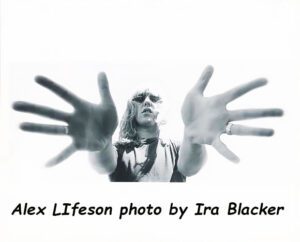
A good reason to read Once A King, Now A Prince is the Rush story. I heard something in that first album, got behind the band, helped create the buzz, secured the Mercury deal, got the record moving, and put the group on the road opening for major acts. I sent the record to Donna Halper at WMMS in Cleveland, where she championed it. I had the band crisscrossing America on a succession of dates, opening for the likes of Uriah Heep, Savoy Brown, and other established attractions.
None of that happened by waving a magic wand. It took phone calls, relationships, nerve, and work — the part many music biographies and autobiographies manage to reduce to a sentence.
Then, after all of that effort, I got burned. We went to court, and I won, but winning and getting made whole are not always the same thing. The emotional truth is that I helped build something and then lost it. That kind of experience leaves a mark. In the world of music biographies and autobiographies, those are the moments that separate real memoir from promotional fluff.
Then I reinvented myself again. I turned toward Germany, signed Kraftwerk before Autobahn broke big, and saw possibilities others did not yet see. I chased new ground because I always wanted to be more than second-tier in someone else’s kingdom. That hunger runs through the whole book. I was always trying to build, to move, to get somewhere, to become something larger than the frightened kid I once was. The real appeal of music biographies and autobiographies, at least to me, is understanding the person behind the achievements, not just admiring the achievements themselves.
WHAT THE BEST ROCK AUTOBIOGRAPHIES SHOULD NEVER LEAVE OUT
There is also the simple fact that the book is entertaining. Not “market-tested entertaining.” I mean genuinely outrageous, human, funny, painful, and sometimes nuts. Where else are you going to get family dysfunction, mental wards, day camp trauma, mob sit-downs, agency warfare, backstage madness, and the building of real rock careers in one life story?
When the brothers who owned a Brooklyn theater threatened to kill me over my insistence that Buddy Miles be paid, a friend named Carmine “Wassel” DeNoia helped get us to a sit-down with Joey Pagano. Suddenly I was no longer “dis asshole.” I was “Mr. Blacker.” You cannot make this stuff up, and I did not have to. I get a kick out of music biographies and autobiographies that make the business sound as if it was run by impeccably behaved gentlemen.
That combination is why I believe the book belongs in any conversation about best rock autobiographies. The book has heart, but it also has teeth. The music biographies and autobiographies I value are the ones that remember the people who made the deals, took the risks, made the mistakes, and sometimes paid dearly for them. The music itself is only part of the story. In music biographies and autobiographies, the personalities behind the scenes can be just as memorable as the stars in front of them.
And perhaps the most important difference is this: I did not sanitize myself. I tell you where I was wrong, impulsive, naïve, angry, or blind. I do not come off as a plaster saint, because I was not one. Too many music biographies and autobiographies are exercises in self-protection. Mine is an effort at self-revelation. I wrote it as a man looking back at the road he traveled, not as a publicist trying to rescue a brand.
So if you are searching through music biographies and autobiographies, and you want something with real life in it — something raw, experienced, unsparing, and deeply human — read Once A King, Now A Prince. It is one of those music biographies and autobiographies where the story behind the career is every bit as important as the career itself. If your shelf already holds what you consider the best rock autobiographies, make room for one more.
If you are still looking for the best rock and roll autobiography, give mine a shot. And if what you want is the best rock autobiography written by someone who lived the business from the inside out, while carrying the scars of everything that came before it, you may find exactly what you are looking for in Once A King, Now A Prince.
