









At 83, Memory Changes Shape
At 83, I have lived long enough to know that memory does not always arrive gently. Sometimes it comes back dressed as wisdom, and sometimes it kicks the door open carrying everything you thought you had buried, including the brutal treatment I suffered as a child from my father. That is one reason writing my memoir became more than a literary exercise for me, because with the memories came the tears.
Most people who search for “my memoir” are probably looking for instructions: how to outline it, how to organize chapters, how to write dialogue, and how to turn childhood memories into something readable. There are thousands of pages explaining how to write a memoir, but there are very few written by people who actually lived through enough life to understand what writing one really costs, and those costs are counted in tears and the pain of those memories.
My memoir was not created in a writing workshop or assembled from formulas about “story arcs” and “character development.” It came from surviving a life that often felt impossible while trying to understand it years later with honesty instead of nostalgia. It was not a quick write, because the more pain you remember, the less quick you are to go back to the keyboard. Mine spanned a fifteen-year period. A real memoir is not simply a collection of memories. It is excavation, it is pain, and many times it is laughter. Sometimes you uncover gold. Sometimes you uncover bones.
The People Who Shape Us Never Fully Leave
When I began writing my music memoir, I realized that the story was not just about me. It was also about the most influential people in my life, some of whom inspired me, while others left wounds that lasted for decades in the form of betrayal or worse. The strange thing about memory is that the people who affect us most deeply continue speaking long after the conversations themselves are over. There was a song in the ’50s, which is where my music ears were first attuned to what became my love of music, titled “The Echoes Keep Calling Me,” by Little Joe & The Thrillers, and that song was so right.
Some of the most influential people in my life were musicians, promoters, managers, and artists I encountered during my years inside the music business. Others came from childhood, family, and the unstable emotional landscape many people quietly carry into adulthood. In many ways, this became not only a music industry memoir, but also a memoir about family, survival, ambition, and identity.
One in particular was my beloved uncle, my mother’s brother, Herb Derman. When you spoke to him, he crooked his neck and looked right at you, in a pose totally intent on listening and thinking about your every word. One memory that still brings a smile to my face is that if something upset him, you did not see him going weird. He would just jingle the change in his pocket.
Like many people raised inside dysfunctional homes, I learned early that survival often meant silence. Families protect secrets the way banks protect money. You are taught what not to say long before you understand why it cannot be said. That silence follows you into adulthood, and eventually it follows you into writing. My family kept schtum, which means silent in Yiddish, or old German, whence it was derived.
Music Became Escape, Identity, And Destiny
For me, music became escape, identity, ambition, and eventually profession. The music business looked glamorous from the outside, especially during the height of rock and roll excess, but behind the curtain it was often chaotic, political, dangerous, funny, absurd, exhilarating, and emotionally exhausting all at once. That contradiction sits at the heart of this music memoir.
Many of the most influential people in my life entered during those years. Some opened doors. Some nearly destroyed careers. Some taught lessons they never intended to teach. The deeper I moved into the business, the more I realized that success and dysfunction often travel in the same limousine.
This music industry memoir is filled with those contradictions because the music business itself was built on contradictions. Fame and insecurity. Wealth and fear. Creativity and manipulation. Public glamour and private loneliness. People outside the industry often see only the surface. Living inside it revealed something very different.
Memory Does Not Arrive In Order
People sometimes assume memoirs are written by sitting quietly at a desk remembering old times. The truth is much stranger than that. Memory does not arrive neatly organized. It appears in fragments: a street corner in New York, a backstage argument, a family dinner that suddenly explains twenty years of anger, the smell of a deli, or a song drifting from a passing car that unlocks an entire vanished decade. That is how this music memoir was written, not as a performance, not as public relations, and not as a polished celebrity fantasy where every chapter conveniently leads to wisdom and redemption.
Real life rarely moves that cleanly. A truthful memoir contains contradictions because people themselves are contradictory. It was written in laughter, lots of pain, and a whole lot of tears. The older I became, the more I understood that some of the most influential people in my life were not necessarily the famous ones. Sometimes the people who shape you most never appear in headlines at all.
Sometimes they are parents, lovers, enemies, teachers, or damaged souls who pass through your life briefly but leave permanent fingerprints on your memory. Here, I discovered too late, that some of the very people I should have been more helpful to, and whose friendships I should have maintained, were not the stars, but the regular folks and the wannabees.
Humor Matters More Than People Think
Without humor, memoir becomes self-pity. Without honesty, it becomes advertising. That balance matters deeply in any memoir about family because families are complicated emotional ecosystems. Even painful memories often contain absurdity, comedy, and moments of unexpected warmth. Some of the funniest moments in my life happened while everything around me was falling apart.
It may be self-protective, or something I use to take the edge off my own reality, but I do tend to write using humor quite a bit. Hey, I am a funny guy, and many have agreed over the years, starting with a stand-up comedy bit at 19 at the Silver Knight in Hewlett, L.I., New York.
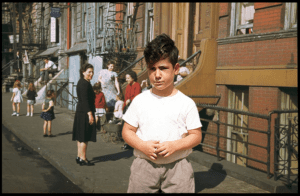
Many memoir-writing websites discuss “finding your voice.” I never had to invent one. The voice in this music industry memoir came directly from living through the experiences themselves. Pain has a voice. Survival has a voice. So does humor, and mine started at five years old, when the teacher put me in the classroom coat closet because I had become too annoying. That closet is where I honed my early humor.
The challenge is finding the courage to tell the truth without turning the story into revenge. When family, love, ambition, disappointment, and success all collide together over decades, there are always things left unresolved. A memoir does not magically solve those mysteries. Sometimes it simply records them honestly for the first time. This is exactly what I did, especially as mine actually started as a journal.
Preserving A Vanished World
My memoir also became a way of preserving worlds that no longer exist. The New York I grew up in. The great delis, like Carnegie, Katz’s, or The Pastrami King. The early music business and the age of the Doo Wop vocal groups. The personalities like Carmine “Wassel” DeNoia and Joe Glaser. Clubs like the Gingerbread on 8th Street in Greenwich Village, owned by two of the funniest guys I knew at the time, the Ruggiero Brothers, who ran the Gingerbread Lounge just down the street from Trude Heller’s. Promoters, artists, and backstage moments that disappeared long before social media transformed life into a permanent performance.
That world moved fast, burned bright, and often vanished without warning. Preserving it became one of the unexpected responsibilities of writing this music memoir. Many of the most influential people in my life belonged to that vanished era. Some became legends. Others disappeared almost completely. Yet their voices, behavior, ambitions, and flaws still echo through memory decades later. That is one reason memoir matters at all. It preserves emotional truth before memory fades into mythology.
Where The Real Writing Begins
For anyone searching “my memoir” because they are thinking about writing one themselves, I would say this: the important part is not learning how to sound like a memoirist. The important part is deciding whether you are willing to tell the truth, warts and all, once you finally remember it.
“I’ve never claimed to be an author, but I can tell a damn good story.”
That is where the real writing begins.
