








I spent a major part of my adult life in rock and roll as the founder and owner of a major rock and roll music agency. I signed artists, represented them, dealt with managers, promoters, record companies, lawyers, and every other character who came with the territory. I broke Rush in America, and I have enough stories from those years to fill more than one lifetime.
So when I built a website around my memoir, I assumed the stories that would attract the most attention would be the obvious ones: the bands, the deals, the backstage insanity, and the kind of things people expect when they go looking for the best rock n roll memoirs.
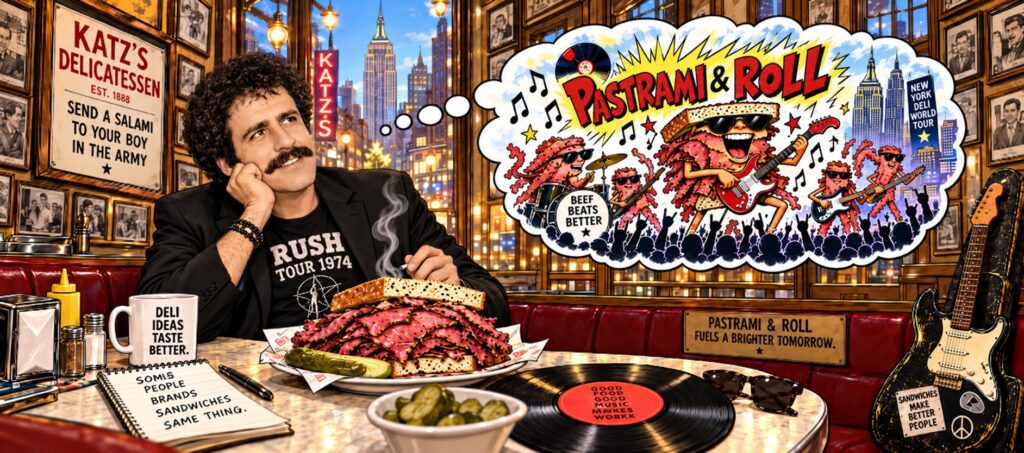
Then one of my stories about great new york delis started getting more attention than some of the rock and roll pieces. At first I thought that was crazy. Here I was writing about a lifetime in the music business, and readers were spending more time with stories about places where I ate. But the more I thought about it, the more I realized the deli story was not separate from the memoir at all. It was part of the same life, and that may be exactly why it connected.
WHY THE BEST ROCK N ROLL MEMOIRS ARE ABOUT MORE THAN MUSIC
The best rock n roll memoirs are not just lists of famous names, concerts, contracts, and backstage stories. Those things matter, and they are part of the fun, but they are not enough by themselves. The best rock n roll memoirs work because the music is attached to a life. They tell you where somebody came from, what shaped him, what he wanted, what he feared, what he got right, what he screwed up, and what the world around him looked like while all of that was happening.
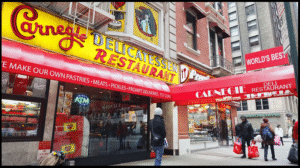
That is where New York and the delis belong in my story. My office was around the corner from the Carnegie Deli. I did not visit those places as some tourist collecting material for a food article fifty years later. They were part of my normal life while I was running the agency.
The streets, restaurants, neighborhoods, and people around me were part of the same world as the artists, managers, and promoters I dealt with every day. Writing about great new york delis is no more separate from my memoir than writing about a hotel, an office, or a concert hall where something important happened. That kind of texture is one of the things that separates the best rock n roll memoirs from a simple chronology of a career.
A MEMOIR ABOUT MUSIC INDUSTRY LIFE STILL HAS TO BE A LIFE
A memoir about music industry experience naturally has rock and roll at the center of it, but the center is not the whole picture. My story did not begin the day I became an agent, and it did not stop every night when I left the office. It began with family, growing up, getting thrown out of the house, discovering rock and roll, finding my way into the business, building an agency, and living through everything that came with it.
That is why the best rock n roll memoirs have room for things that do not look like rock and roll on the surface. A restaurant can tell you as much about a time and place as a dressing room can. A neighborhood can bring back a period of your life faster than a record sometimes does.
The Carnegie Deli mattered because it was there, around the corner from my office, woven into the rhythm of those years. It belonged to the same New York that gave me the business, the artists, the pressure, the opportunities, and the life I eventually wrote about.
Maybe readers respond to that because they recognize it in themselves. They may never have owned a rock and roll agency or broken a band in America, but they know what it is like to remember a place that no longer exists the way it once did. They know what it is like to think about a restaurant, a street corner, or a table where they once sat and suddenly remember who they were at that point in their lives. The best rock n roll memoirs can make that connection because the details around the music often carry as much memory as the music itself.
THE MUSIC BUSINESS AUTOBIOGRAPHY IS BIGGER THAN THE BUSINESS
A music business autobiography that only tells you who was in the room eventually turns into a list. The better story is why the room mattered, what happened before you got there, and what stayed with you after you left. That is why the best rock n roll memoirs go beyond music without ever really leaving it. The business is the spine, but the life around it gives the story its weight.
That is also why I no longer think it is strange that one of my deli stories can outperform one of my rock and roll stories. Readers are not necessarily choosing pastrami over rock and roll. They are choosing a memory, a place, and a piece of a life that feels real to them. The great new york delis I remember were part of my world, and that world eventually became the raw material for my memoir.
A memoir about music industry life and a music business autobiography both work best when the reader sees the whole person rather than just the résumé. The best rock n roll memoirs are not strong because every page has a famous name on it. They are strong because the reader gets the life surrounding those names. In my case, that means the agency, the artists, the family, the deals, the mistakes, New York, and yes, the Carnegie Deli.
That may be the simplest explanation for why the deli story belongs here. A real memoir does not fence off the music from the rest of the life. It lets the reader see the whole world around it.
The best rock n roll memoirs tell the entire story, not just the part that happened backstage. It all happened in the same life, and it all belongs in the memoir.
THE CARNEGIE DELI WAS THE PLACE TO GO FOR GREAT SANDWICHES AND STAND UP COMEDY BY THE WAITERS.
