






The best rock autobiographies reveal what happened behind the stage, including the decisions that helped shape careers.
How Black Blues Artists Reached White Audiences
It wasn’t The Cream, Savoy Brown, Chicken Shack, or other British bands bringing the blues to white audiences who may never have heard of that art form before that allowed black musicians to share the spotlight. The truth is, many did not look beyond The Cream recording songs by Howlin’ Wolf to discover who Howlin’ Wolf was and how he contributed to the blues and rock and roll. It took more than that. To me, the best rock autobiographies should explain not only where the music came from, but how it reached people who had never heard it before.
Black Artists On White Concert Bills
It took someone to place black blues artists and R & B artists to bring their music to the attention of the white masses, who were by far the lion’s share of the record-buying public. I did my bit to do just this. I did it knowingly and with the intent of introducing white audiences to black roots music. The best music memoirs should give those breakthroughs their due, because somebody had to make the bookings that put the music in front of new ears. That’s an important part of the story the best rock autobiographies should preserve, because bringing those artists to new audiences didn’t happen by accident.
B.B. King And A Story Worth Writing
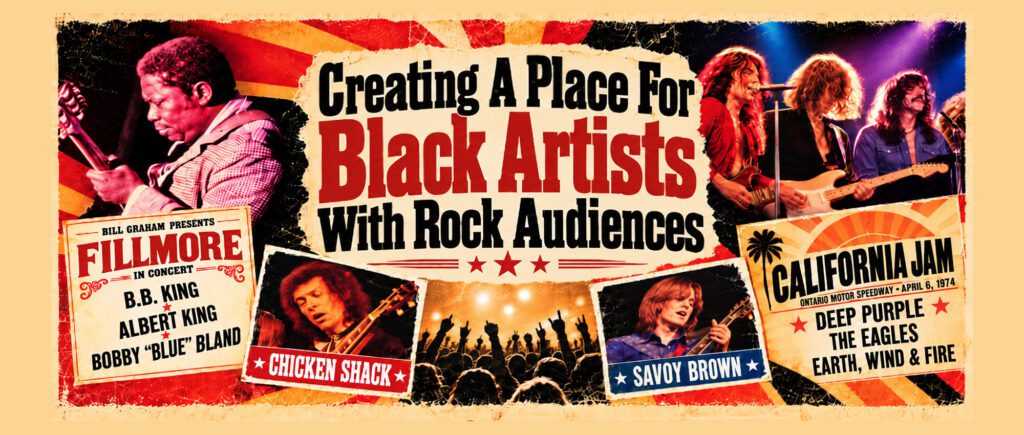
One of my earliest moves as a young agent at Associated Booking Corp. was to place B.B. King on a gig at the Fillmore. It was his very first major performance in front of a predominantly white audience. This was a major turning point in his crossing over to rock and roll audiences. For me, the best rock autobiographies come down to moments like that, when a booking actually changed who was listening. That booking belongs in a rock n roll autobiography as much as any backstage story, because it helped put the blues in front of a new audience and by the original writers/players.
The best rock autobiographies show how great musicians reached audiences that the traditional booking business had overlooked.
Howlin’ Wolf Finally Takes The Spotlight
Also in 1967, Howlin’ Wolf debuted to white audiences at the Fillmore as well. Here was the songwriter for many British blues-based bands, finally having his day in the spotlight. To my mind, the best rock autobiography doesn’t begin with the British bands covering the blues. It begins with the men who created it.
Fats Domino And Almost Getting Fired
One of my earliest moves in the direction of getting great black talent in front of white rock and roll audiences was getting Fats Domino a gig at the Fillmore East. Fats of course killed it there and I came close to being out of a job for setting the Filmore date. Fats was relegated to touring the showband circuit of nightclubs, where he would play 6 nights per week and up to four sets per night. The Fillmore was two days of the week and two sets per night.
The problem was, that I created a move for Fats and his career that took commissions away from the Chicago office of ABC, as 6 nights paid far more than two, even though the right career move for Fats was to play the Fillmore. The head of the Chicago office was screaming for my head. However, I think Joe Glaser liked my balls and my move on behalf of Fats. The best rock autobiographies don’t hide the risks agents took when an artist’s future mattered more than a week’s commissions.
Best Rock Autobiographies: Three Blues Legends On One Bill
My all-time favorite show, which I packaged and sold to Bill Graham for the Fillmore, was on September 5, 1969, and featured the three blues greats, B.B. King, Albert King, and Bobby “Blue” Bland, at the Fillmore East in New York, New York. That September night is one of the reasons I believe the best rock autobiographies should remember who shared a stage, not just who ended up on the charts.
Throughout my time in the music agency business, I replicated these types of bookings many times, and it was far easier after the pioneering bookings to mix them on shows with the white rockers. That part of the best rock autobiographies often gets overlooked: somebody had to put those names on the same marquee.
Earth, Wind & Fire At California Jam
As time went by, other opportunities would present themselves. One such opportunity was the California Jam, at Ontario Raceway, in 1974, where I placed Earth, Wind & Fire, an R & B band, on the bill. What allowed me to do this was that a large segment of the acts that performed there were also represented by me, such as Deep Purple, Rare Earth, and The Eagles.
Earth, Wind & Fire tore it up. Maurice and his kalimba, along with the solid horn sounds of EWF, just broke the audience up with love for the band. Earth, Wind & Fire were received as a highly unique, energetic breakout act, winning over a crowd that was largely unfamiliar with them. If there’s a moment that deserves space in the best rock autobiographies of those years, it was watching that crowd fall for a band they hadn’t come to see.
The best rock autobiographies explain how a booking could introduce exceptional performers to hundreds of thousands of new listeners.
Winning Over A Hard Rock Crowd
At California Jam, Earth, Wind & Fire burst onto the stage with sound and energy unlike anything the audience expected, quickly winning over thousands of fans who had barely heard of them before that day. California Jam also gave Earth, Wind & Fire something few concerts could offer: an enormous audience, extraordinary sound, and national television exposure. The festival’s powerful 54,000-watt sound system carried their music throughout the speedway, reaching spectators seated as far as half a mile from the stage with remarkable clarity.
The National Television Breakthrough
Their 42-minute performance was captured for ABC’s national television coverage, introducing the band’s distinctive sound and spectacular stage presence to millions of potential new fans. The timing couldn’t have been better. Just one year later, Earth, Wind & Fire would break through to mainstream superstardom with their number-one hit, “Shining Star.” What began as an unusual booking at a predominantly hard rock festival became an important stepping stone in the band’s rise to international fame. That’s the kind of crossover the best rock autobiographies need to remember, because a single booking could introduce an entire band to a new audience.
The icing on the cake was that ABC was so thrilled with Earth, Wind & Fire’s performance that I was able to get them on an episode of its major music show, “ABC In Concert.”
Parliament-Funkadelic On The Rock Circuit
Another incredible black band we represented at ATI in the early ’70s was George Clinton’s Parliament-Funkadelic. The group was an amalgamation of The Parliaments, who were late doo-wop performers and early proponents of a smooth soul sound, and the band Funkadelic, whose early sound was raw, psychedelic rock with fuzz guitars. This amalgamation worked on bills with The Amboy Dukes, featuring Ted Nugent, The MC5, and the Stooges.
Crossing Over Without Leaving Their Roots
Like other black bands who were now crossing over into the mainstream of rock, they still played for black audiences. ATI was the agency responsible for representing and routing Parliament-Funkadelic’s massive live touring schedule during this exact era, navigating the chaotic festival circuits of the 1970s. One of my favorite dates was the 1973 Randall’s Island performance by the band. That balance belongs in the best rock autobiographies of those years: crossing over didn’t mean leaving the original audience behind.
Randall’s Island And The Spirit Of P-Funk
The event’s atmosphere was truly that of a love culture event in the traditional rock festival style. The crowd was into P-Funk and was having a wonderful time. It was truly a carryover from the sixties, with its peace, love and happiness atmosphere. The best rock autobiographies should capture the atmosphere as much as the music, and Randall’s Island was a perfect example.
On Stage With P-Funk And No Room To Move
P-Funk’s set was slammin’ and the audience was jumping. All I could say to myself at the time was, “Thank God all were cool and enjoying themselves and the music,” as here was P-Funk, about a dozen or so players, myself and my partner, Sol Saffian, on a stage that could just about fit us all, providing we didn’t move about, which was not something that P-Funk could do as they rocked. Sol and I were on a stage without guards or guard rails, the only two white guys present, and it was truly an event of “peace, love and happiness.” That’s one of the things the best rock and roll autobiographies should capture: not just the musicians, but the moments when an audience discovered something entirely new.
That’s what I believe belongs in the best rock autobiographies: the music, the business, the decisions, and the consequences.
