









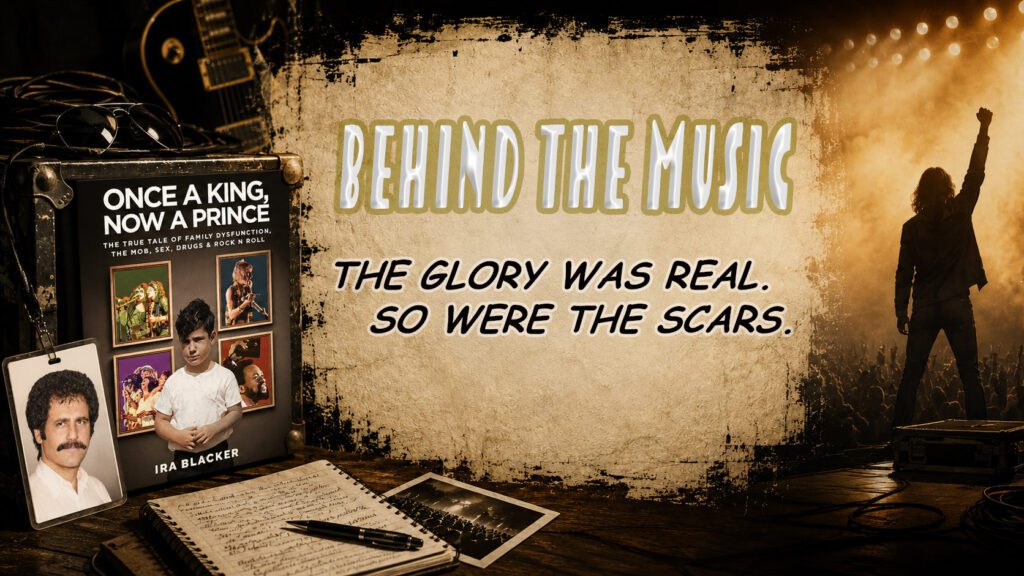
The Glory Was Real. So Were The Scars.
Behind the music business there is not just glory. There is pain, anxiety, backstabbing, betrayal, pressure, jealousy and the occasional moment when you wonder why the hell you got into it in the first place.
Of course, there was plenty of fun behind the music too. I represented artists I believed in, watched careers explode, sat in rooms where important decisions were made and lived through a period of rock and roll that could never be duplicated. But the applause belonged to the people onstage. Behind the music, those of us building careers were often dealing with an entirely different show.
The Pressure Behind The Music
When you are the agent or manager, the audience sees a sold-out arena. You see the contracts, routing, promoters, record companies, egos, personalities and the hundred things that can go wrong before the first note is played.
That is the part of behind the music that fascinates me now. At the time, I was too busy living it.
With Rod Stewart and Faces, some nights were pure insanity and great fun. I still laugh when I remember Rod and me running up twenty-six flights of stairs at the Hotel Pontchartrain after a crowd spotted us waiting for the elevator. Rod, an avid soccer player, moved like a gazelle. I was huffing and puffing behind him, wondering whether the fans would catch me before my lungs gave out.
That is one kind of music business story. There were others that were not funny at all.
When A Handshake Was Not Enough
Early in the days of American Talent International, I arranged an entire American tour for Black Sabbath on a handshake with their manager, Pat Meehan. Then management changed, Don Arden took over, and the tour went elsewhere. I had no written contract and no real protection.
That lesson behind the music was expensive, personal and permanent. After that, I put things on paper.
Years later came Rush. I helped establish them in America, created the pieces that helped lead to their Mercury Records deal, and worked to put them on the road in the United States. Then came a breach of our written agreement. The matter eventually went to arbitration in New York, and I prevailed. The money mattered, but losing the band hurt more. My view was that greed had taken over.
You will not find that feeling on a gold record hanging on a wall. But it is part of behind the music.
Behind The Music Tells Why Success Can Still Hurt
One thing I learned is that doing well can create its own enemies. Success attracts admiration, but it can also attract jealousy. People who need you on the way up may see you differently once they believe they have arrived.
That is why the best music memoirs cannot be only victory laps. A real memoir has to include the moments when you were wrong, when you trusted the wrong person, when somebody burned you, and when your own personality helped make a bad situation worse.
I had power. I had talent. I had instincts that helped me recognize artists who could become important. I also had flaws I did not understand at the time. Looking back, I developed skills later in life that I wish I had possessed when I was representing clients. I believe I could have served some of them even better.
To me, that honesty is what separates a polished celebrity book from the best music autobiography. Behind the music, nobody is perfect, including the guy telling the story.
Why Classic Rock Memoirs Need The Whole Story
I enjoy the nostalgia surrounding the classic rock era, but nostalgia can become dishonest when it removes the scars.
The classic rock memoirs worth reading should show both sides: the sold-out arena and the empty hotel room afterward; the deal that changed a career and the betrayal that followed it; the great friendships and the people you should never have trusted.

That is also what I look for in the best music memoirs. I do not need another sanitized trip through famous names. I want to know what it felt like behind the music. What did success cost? Who stayed loyal? Who disappeared? What did the writer learn too late?
By 1990, I had finally had enough. I left the business and threw away a Rolodex containing the names and numbers of major players throughout the music world. It was valuable, but I wanted no road back. Impetuous? Certainly. Very Ira? Absolutely.
Behind The Music Is Really About People
After all these years, I do not think behind the music is really about contracts, record companies, tours or even rock stars. It is about people.
People create the music, sell the tickets, make the deals, break the promises, keep the friendships and carry the memories. That is why a great music business story is never just business.
Once A King, Now A Prince is my version of that truth. It is not a masterclass, although there are certainly lessons in it. It is my life story, warts and all. For readers searching for the best music autobiography, the best music memoirs, or classic rock memoirs told by someone who was actually in the rooms where the business happened, I can only offer what I remember and what I lived.
The spotlight was exciting. The power was intoxicating. The music was extraordinary.
But behind the music was where the real story lived.
