







You Don’t Know Diddley From Diddy
I ran into an old acquaintance who started talking about today’s rock and roll music as though history had started last Tuesday. After listening longer than I cared to, I finally told him squarely, “You don’t know Diddley!”
He looked at me as if I had just thrown a cymbal at his head, so I explained myself. “You don’t know Diddley from Diddy,” I said, and what I meant was that he did not know squat about rock autobiographies, where the music came from, or the roots that fed the whole wild tree.
Rock Autobiographies Begin At The Root
As Jocko used to say on his 1950s Rocket Ship Show in New York City, “It’s not the flower, but the root.” The root of rock autobiographies began in the fifties, when the original rock and roll exploded out of radios, theaters, jukeboxes, and teenage bedrooms like a cultural jailbreak.
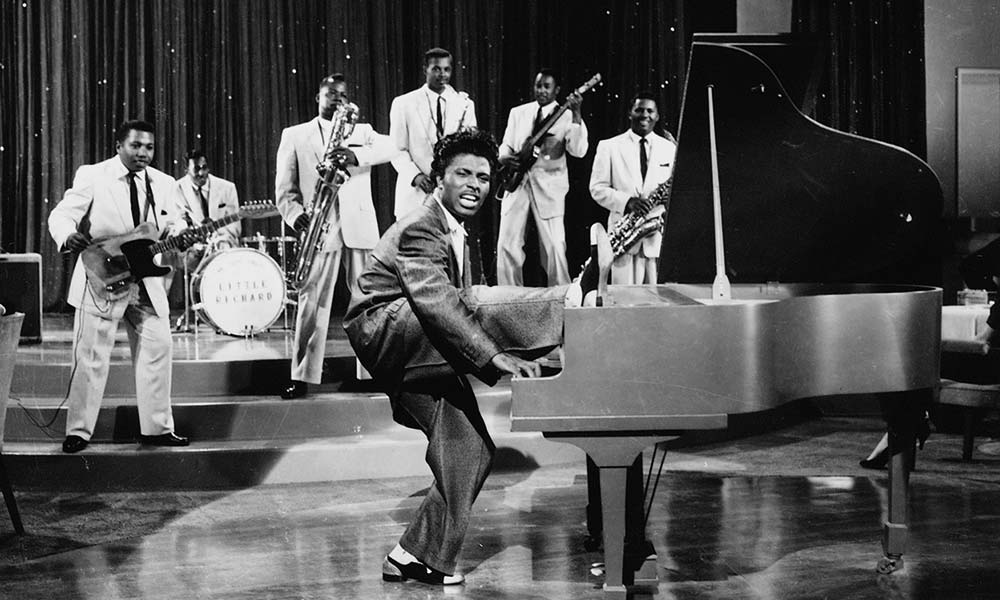
The music of Little Richard, Elvis Presley, Chuck Berry, Bo Diddley, Fats Domino, and so many others was not merely entertainment. It was one of the most cataclysmic musical events of my lifetime, and any serious discussion of classic rock memoirs, music industry stories, or most influential people in popular culture has to begin there.
Classic Rock Memoirs Owe A Debt To The Fifties
Today, if parents complain about their kids listening to speed metal, that reaction is usually aimed at one narrow field of heavy music. In the 1950s, the reaction to rock and roll was national, emotional, and often hysterical, because parents felt this new sound threatening the whole order of things.
That is what makes the best rock autobiographies different from nostalgia. The original music was wild, chaotic, sexual, rebellious, and dangerous, and the adults of that era knew exactly what they were hearing, even if they did not know how to describe it without clutching the drapes.
Music Industry Stories From The Brooklyn Paramount
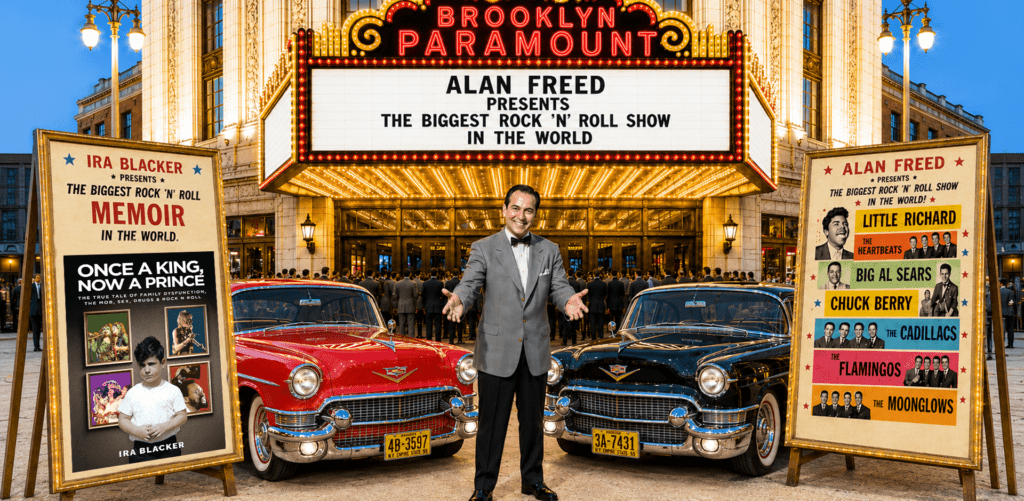
I remember going to Alan Freed’s rock shows at the Brooklyn Paramount, the Fox Theater in Brooklyn, and the Paramount Theater in Manhattan. Those were not museum pieces to me, and they were not footnotes in classic rock memoirs; they were living, sweating, screaming rooms where the future was learning how to dance.
At the Brooklyn Paramount, in downtown Brooklyn, I saw acts that carried the electricity of the time straight into the crowd. I remember The Cadillacs singing “Speedo,” with that unforgettable line, “You can call me Speedo, but my real name is Mr. Earl,” and I remember Little Richard tearing through the room with “Tutti Frutti,” making nonsense syllables sound like scripture from a pulpit on fire.
Most Influential People In Rock And Roll
Alan Freed’s shows were full of the most influential people rock and roll ever produced, even if not everyone understood it yet. The Brooklyn Paramount became one of Freed’s great homes between 1954 and 1959, while the Paramount Theater in Manhattan and the Brooklyn Fox Theatre helped turn rock and roll into a live, public, unstoppable force.
Those theaters mattered because they gave the music a stage before the world had made peace with it. St. Nicholas Arena in Manhattan also played its part, hosting Freed’s first major New York stage show in January 1955, and those early concerts remain essential music industry stories because they show how the music moved from records into mass cultural combustion.
Rock Autobiographies Must Remember Who Came Before Heavy Rock
If you listen carefully to the artists who later became known for heavy rock, blues rock, and hard rock, you can hear who they borrowed from, worshipped, electrified, and sometimes copied outright. The roots ran through Muddy Waters, Howlin’ Wolf, Big Maybelle, Bo Diddley, and dozens of others whose names should be carved into the foundation stone of every serious discussion of rock autobiographies.
Savoy Brown, Cream, ZZ Top, Fleetwood Mac, and many others owed a deep debt to those earlier artists. That does not diminish the later bands; it simply tells the truth about lineage, and truth is what separates real classic rock memoirs from glossy fan-magazine mythology.
Speed Metal Did Not Fall Out Of The Sky
As for pace, let’s talk about speed metal, because some people think frantic musical velocity was pulled out of a hat by modern heavy bands. If you believe that, you need to go back and listen to Little Richard, whose “speed rock” came barreling forward with a ferocity that still sounds dangerous today.
The funny thing about Richard is that if you asked him why he played so fast, he might tell you he wanted to make it impossible for Pat Boone to get the lyrics right. That one line carries more rock and roll truth than a library shelf of safe commentary, and it belongs among the music industry stories that explain how attitude, humor, rebellion, and rhythm became one animal.
Rock Autobiographies Must Honor The Original Grand Masters
The fact of the matter is that not enough people today understand where rock and roll came from. They were not playing Slipknot during Mardi Gras; they were playing Fats Domino, the Neville Brothers, and other artists who carried regional soul, rhythm, blues, and joy into the bloodstream of American music.
There was rock and roll before the Beatles, before stadium rock, before metal, before punk, before MTV, and before every corporate attempt to package rebellion in shrink wrap. The grand masters came first, and rock autobiographies lessen in stature when those grand masters are treated as decorations instead of originators. The grand masters not only came first, but the best rock autobiographies lose their power when those grand masters are treated as decorations instead of originators.
You Don’t Know Diddley
The sad truth is that many people today do not know Diddley, Bo Diddley, that is. He gave us killer Fender guitar licks, a beat that could knock furniture across the room, and songs like “I’m A Man,” “Pretty Thing,” and “Road Runner,” all of which helped shape the sound and swagger that later artists inherited.
That is why rock autobiographies matter. Without Bo Diddley, Little Richard, Chuck Berry, Elvis Presley, Fats Domino, Muddy Waters, Howlin’ Wolf, Big Maybelle, and the rest of that volcanic first generation, there would be no real road to the later noise, glamour, rebellion, and spectacle people now call rock history. Without Diddley, there would be no Diddy.
