








A rock and roll insider memoir should not begin with applause. At least mine does not. Mine begins in Brooklyn, in rooms where the noise was not music, where the shouting came before the guitars, and where I learned early that people could hurt you long before they ever entertained you.
Before I ever stood backstage with rock musicians, before the champagne, the road cases, the dressing rooms, the business deals, the perks, the madness, and the hangers-on, I had already spent a lifetime learning how to survive rooms full of noise. That is what makes Once A King, Now A Prince more than another rock and roll insider memoir. The music business did not create my story. It arrived later, after childhood had already done its worst and left me looking for a way out.
A Rock and Roll Insider Memoir That Started Far From the Stage
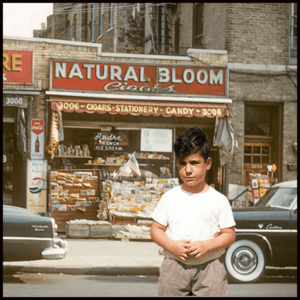
I was not born into glamour. I was not raised with the idea that one day I would be standing near the bright lights, the musicians, the women, the bottles, the arguments, the laughter, and the strange little kingdom that travels with rock and roll. I was raised in a family where fear was part of the furniture.
My father’s anger shaped more of my early life than I care to admit, although I have spent much of my later life admitting it anyway. There were beatings, humiliations, institutions, and the kind of family damage that teaches a child to watch everything. I learned to read a room because I had to. I learned when danger entered before anyone said a word. I learned how silence could be louder than a screaming guitar.
That education did not come with a diploma, but it turned out to be useful. Years later, when I found myself around rock musicians, managers, hustlers, egos, talent, fear, money, drugs, deals, and desire, I had already been trained in the human animal. The training was miserable, but it was training just the same.
That is why this rock and roll insider memoir is personal. The backstage stories are not floating in the air by themselves. They are connected to the frightened kid I once was, the kid who wanted escape, safety, attention, and a place in the world that did not feel like punishment.
Backstage Was Not the Beginning
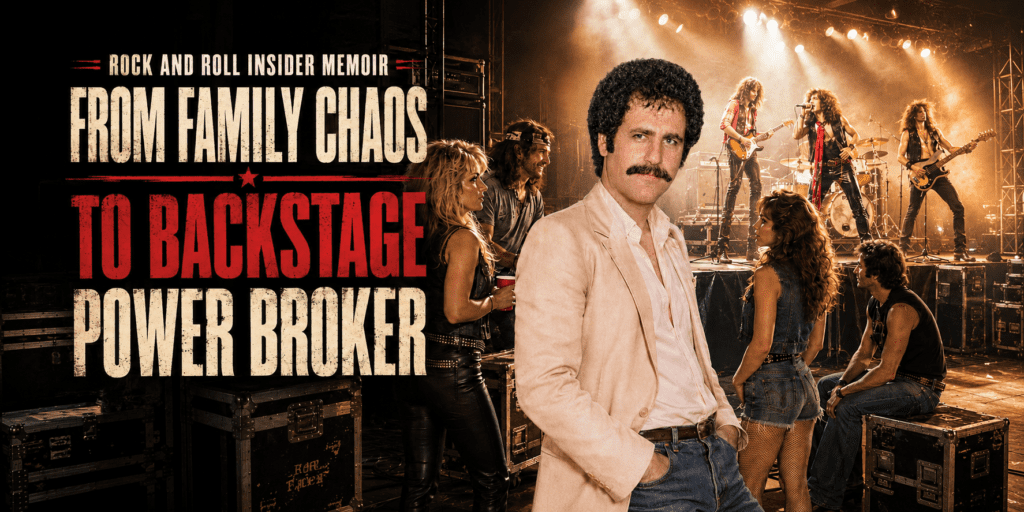
People love backstage stories because they imagine backstage as the forbidden kingdom. They picture the dressing rooms, the musicians coming offstage, the women hanging around, the bottles being opened, the deals being whispered, and the party moving from one city to the next like a traveling carnival with better amplification.
I understand the appeal. I was there. I saw the fun, the absurdity, the privilege, and the waste. I saw musicians at their best and sometimes at their most ridiculous. I saw people who could fill an arena and still need someone in the room to make them feel important. I saw the perks, and I enjoyed more than a few of them. But in my life, backstage was not the beginning. It was the second act.
The first act was a boy trying to understand why he had been sent away, why his home felt like enemy territory, why love always seemed to come with conditions, and why the people who should have protected him could also be the people who damaged him. Long before I entered that business, I had already been on the road in another way. I had been moved from place to place emotionally, spiritually, and sometimes literally, trying to find somewhere I belonged.
That is the part many rock and roll books skip. They start with the star, the stage, or the scandal. My rock and roll insider memoir starts with the wound that made the later rooms matter. Without that wound, this rock and roll insider memoir would only be another backstage story with better lighting.
What I Saw When I Stood Near the Music
When I finally entered the rock and roll world, I was not there as a musician. I was not the man holding the guitar while the crowd screamed. I was the man close enough to see what happened when the screaming stopped. That position has its advantages. When you are not the star, people sometimes forget you are watching. They say things. They reveal themselves. They act out the little dramas that fame does not cure. I saw confidence turn into insecurity, charm turn into cruelty, generosity turn into calculation, and fear hiding under leather, hair, jewelry, and stage clothes.
I also saw talent. Real talent. The kind that changes the room before anyone has a chance to explain it. That part still matters to me. For all the foolishness that traveled with rock and roll, the music was never foolish. The music had power. It had already saved me once as a kid on a Brooklyn rooftop, listening to the sounds that made life feel larger than the apartment below.
That is one reason this rock and roll insider memoir is not written from the cheap seats of bitterness. I loved the music. I loved the ride. I loved the rooms, even when the rooms were insane. I loved the feeling that life had somehow carried me from Brooklyn damage into a world where the lights were brighter, the people were stranger, and the stories were almost too good to be believed. Almost.
The Road From Brooklyn to Rock and Roll
The road into rock and roll was not a straight line for me. It never is when your beginning is crooked. I came into that world carrying old injuries, old defenses, and old instincts. Some helped me. Some hurt me. Some probably did both.

A damaged childhood can make a person weak, but it can also make him alert. I did not always know how to trust, but I knew how to notice. I did not always know how to relax, but I knew how to survive. In the music business memoir side of my life, survival was not a small skill. There were plenty of smiling faces in that world, and not all of them were smiling for my benefit.
The funny thing is that some of the same instincts born in misery helped me navigate the madness. I could spot the bully, the fraud, the user, the wounded child dressed up as a star, and the frightened man hiding inside the big personality. Rock and roll had plenty of all of them.
That does not mean I was always smart. If this were a story about how wise I was, it would be a very short and dishonest book. I made mistakes. I trusted the wrong people. I misread some rooms. I learned late, paid too much, and sometimes mistook excitement for happiness.
That, too, belongs in a rock and roll insider memoir. The truth is not only what happened around the famous people. The truth is what happened inside me while I was standing there. A real rock and roll insider memoir has to tell both stories, or it is only selling the scenery.
Why This Rock and Roll Insider Memoir Is Different
Many people write about rock and roll from the outside looking in, or from the stage looking down. My story comes from a different angle. I was close enough to see the machinery, but far enough away to understand that the show was not the whole truth.
The backstage world had its own weather. Some nights were all heat, laughter, alcohol, and electricity. Some were business dressed up as pleasure. Some were pleasure dressed up as business. Some were just people trying to outrun themselves, one city, one drink, one girl, one deal, or one show at a time.
I understood that because I had been outrunning myself for years.
That is why Once A King, Now A Prince is a rock and roll insider memoir with a personal spine. The music business gives the book its flash, but my life gives it its blood. Without the boy from Brooklyn, the backstage rooms would only be scenery. With him, they become part of a longer journey from fear to identity, from damage to survival, and from being unheard to finally telling the story in my own voice.
That is also why I do not look at this rock and roll insider memoir as a collection of party stories. The parties were there, but so was the kid who had once been sent away, ignored, beaten down, and forced to invent his own way of standing upright.
The Inside Story Was Also My Story
I did not write this book to pretend I was innocent, noble, or untouched by the perks of the life. I was there, and I was part of it. I enjoyed the ride. I enjoyed the access. I enjoyed the moments when life felt like it had finally opened a door to a private room and said, “Come in, Blacker, you earned at least a look.”
But the older I get, the more I understand that the best stories are not only about what happened. They are about why it mattered.
The musicians mattered because the music mattered. The road mattered because I had already been displaced. The backstage rooms mattered because I had grown up outside the rooms where love and approval were supposed to live. The wildness mattered because I had known fear long before I knew freedom.
That is the heart of my rock and roll insider memoir. It is not just a parade of famous names, loud nights, backstage access, and bad decisions dressed up as entertainment. It is the story of how a kid who began life feeling unwanted eventually found himself in rooms where everybody wanted something, and where he had to decide who he was going to become.
If this rock and roll insider memoir has any value, it is because the music business did not erase the earlier life. It revealed it. I had seen enough darkness before the lights ever came up. When the music finally started, I followed it.
Why I Wrote This Rock and Roll Insider Memoir Now
Age has a funny way of changing the lighting in a room. What once looked like fun can later look like escape. What once looked like privilege can later look like another way of asking to be seen. I do not regret the ride, but I understand it differently now.
That is why this rock and roll insider memoir had to be written from the inside out. The music business gave me stories. My childhood gave me the reason those stories mattered. The two are tied together, whether I wanted them to be or not.
I did not arrive in those backstage rooms as a blank page. Nobody does. I arrived with Brooklyn still inside me, with the old fear, the old humor, the old anger, and the old hunger to be somebody other than the kid who had been pushed aside. Rock and roll did not make me whole, but it gave me rooms where I could finally stand up, look around, and understand that I had survived long enough to tell the tale.
That is why Once A King, Now A Prince is not only a rock and roll memoir or a music industry memoir. It is my story of damage, survival, access, confusion, pleasure, punishment, and the long road from being unheard to finally putting my own name on the truth.
In the end, this rock and roll insider memoir is not about chasing fame. It is about what happened to me after I stopped running from the boy I used to be.
