








How To Write A Story That Begins Before The Public Life
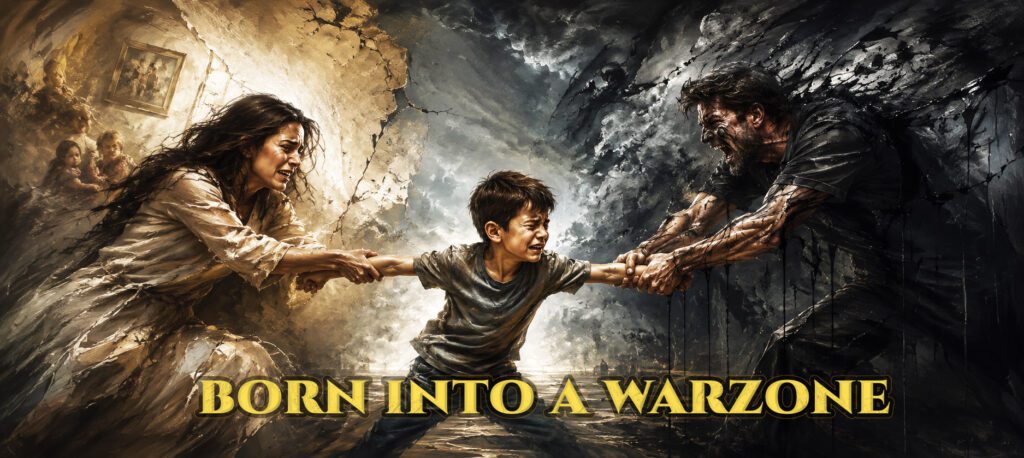
To write a story honestly, you have to begin where the truth begins, and my truth came well before the music. Mine did not begin with peace, safety, or the kind of love a child has a right to expect. It began in a war zone, inside a home where my mother loved me and my father did not want me. That brutal division became one of the first facts of my life, long before I had the words to understand what it meant.
This personal story is not about a perfect childhood spoiled by a few bad memories. It is about a boy born into conflict between two people who should have been united in protecting him. My mother wanted me. My father did not want the marriage, did not want the responsibility, and did not want me as his son. That is not a small wound. That is a starting point.
I did not know then that I was living a true life story that would follow me for the rest of my life. I only knew the house was dangerous, the anger was real, and love was not strong enough to stop the damage. When a child grows up that way, he does not simply remember it. He carries it, argues with it, fights against it, and sometimes spends an entire lifetime proving he should have been wanted. That is one reason the best music memoirs are not only about the music. They are about the life that made the music world possible. That is one reason how to write a story is never only about arranging events. It is about finding the truth underneath them.
The War Between My Mother And Father
I was born into a war zone, and the war zone in my childhood was not imaginary. It was emotional, physical, and constant enough to shape the way I saw the world. My mother loved me, but she was trapped inside her own battle. My father’s anger filled the house. His rejection was not hidden behind polite family manners. It lived in the rooms with us. This war even carried into the rest of the family. My father’s relatives heard his complaints about what a bad wife my mother was, and my mother’s relatives saw my father for what he was: an abusive husband and father.

That is what makes a true life story different from writing a sentimental family memory or from many of the best music memoirs built only around famous names and backstage stories. There was love in my life, but it did not arrive in a clean package. It arrived mixed with fear, confusion, silence, rage, and the terrible knowledge that one parent wanted me while the other wished I had never been part of his life. My mother would read to me when I was a child. My father would not even enter my room. That was the division I lived with: one parent trying to reach me, the other making his rejection part of the air I breathed.
A child does not understand adult failure. He turns it inward, and I began to wonder what was wrong with me. In my memoir, Once A King, Now A Prince, I have a chapter dedicated to my being the “King Of The Devils,” because that was how deeply a child could absorb the message that he was somehow the problem. A child studies faces, listens for footsteps, and measures the temperature of a room before entering it. That is how family dysfunction trains a child without ever announcing itself as a teacher. My story begins there, with me caught between my mother’s love and my father’s refusal to even see me. It is not a theory. It is not a case study. It is part of the machinery that made me who I became.
When Home Stopped Being Safe
Home is supposed to be the place a child runs to when the world outside becomes too much. For me, home was often the place I needed to survive. That turns a child inside out. It teaches him that the place with his bed, his clothes, his mother, and his name can also be the place where he feels least protected.
That is why when you write a story from real life, the beginning has to stay inside the war zone because that was the truth of it. My father’s anger was not background weather. It was the climate of the house. My mother’s love mattered deeply, but it did not erase the fear or stop the consequences. Children raised in that kind of home learn strange skills. They learn when to speak, when to stay quiet, when to disappear, when to become someone else just to get through the day, and, in my case, when to explode. I became an expert in survival before I had any idea what survival costs.
This is where true life story first began. Not in the music business, not backstage, not in hotel rooms, offices, clubs, or airports, but in the emotional wreckage of a family that could not hold itself together. Before there was any public life, there was a private war. If I were to write a story honestly, I had to understand that the stage was rarely the first battlefield.
When Childhood Became A Survival Story

A child does not know he is living a true life story while it is happening, or that it may one day wind up in a journal or memoir. He only knows the room is too loud, the anger is too close, and the people who are supposed to protect him are making decisions over his head that frighten him. He does not think in chapters. He thinks in fear, confusion, and the desperate hope that tomorrow will not be like yesterday.
Being sent away from home to Kings County, and later to Hawthorne, may have removed me from the war zone, but it did not feel like rescue. It felt like abandonment. It felt like betrayal. My mother loved me, but love did not keep me home. My father did not want me, and somehow his rejection helped decide where I belonged. In the end, he effectively got rid of the child he never wanted. The best music memoirs do not skip that kind of wound, because the wound often explains the man who later enters the music world.
That is one of the hard truths behind Once A King, Now A Prince. Sometimes the thing adults call protection feels to the child like exile. They may tell themselves they are getting him away from danger, but the child feels the door close. I felt unwanted. I felt as though the war had ended with me being removed from the battlefield instead of the battle itself being stopped.
That kind of betrayal does not leave quietly. It settled into my bones. It followed me into friendships, business, love, and ambition. It left me with anger and the need to control what once could not be controlled. This is also a record of what happened after I learned, as a child, that even love may not be enough to keep me safe. That is why a true life story has to tell the emotional truth, not just the visible facts.
Sent Away From The War Zone
Being sent away from home changed me. It did not simply move me from one address to another. It told me something about my place in the world before I was old enough to challenge the message. As a child, being sent away from the war zone did not make me feel saved. It made me feel betrayed and sacrificed.
That is the part people do not always understand about writing a true life story like mine. The visible facts are only part of it. Yes, there was conflict. Yes, there was damage. Yes, there was a father who did not want me and a mother who loved me. But underneath those facts was the emotional sentence handed to me: you are the one who has to leave.
The betrayal was not only that my father rejected me. It was that the family system bent around his rejection. The solution was not to make home safe. The solution was to remove the child from the home. That is a terrible thing to absorb when you are young, because it teaches you that your pain is inconvenient and your presence is negotiable. What may be worst of all was the shame of feeling I was to blame.
That lesson became part of the story of my life. I fought it, denied it, used it, ran from it, and carried it into rooms where nobody knew its name. It fed ambition. It fed anger. It fed the hunger to matter. It also made love complicated, because love had once existed beside abandonment, and the child inside me never forgot the contradiction. It told me: even love was not safe. That is why the best music memoirs are never only about what happened after the music began.
Stories From My Life That Began With Betrayal
Many of the later stories from my life have sound, movement, famous names, wild rooms, business pressure, and rock and roll energy. But underneath the louder parts was a boy who had already learned that life could turn against him without warning. The music business did not create that knowledge. It gave it a stage. That is why this part of my story belongs in a discussion of the best music memoirs. It explains the man before the industry. It explains the hunger behind the drive, the suspicion behind the confidence, the need to win, the fear of being dismissed, and the instinct to survive even when the room turned hostile.
People often want memoirs to begin where the glitter begins. They want the backstage door, the famous name, the outrageous night, the deal, the betrayal, the triumph, the fall. But to write a story that lasts, the first door is rarely the famous one. For me, the first door was the one at home, and too often I did not know what waited behind it. This true life story did not become true when other people entered it. It was true from the beginning, when my mother’s love and my father’s rejection pulled me in opposite directions. The later chapters may have had brighter lights, but the first shadows were cast at home.
The Story Of My Life Before The Music Began
Before I became involved in the music business, before I met artists, managers, agents, hustlers, geniuses, frauds, and survivors, I was already carrying the emotional education of my childhood. That education was not gentle. It taught me that love could be real and still fail to protect you. It taught me that rejection could come from the person whose approval you needed most. It taught me that being sent away could feel like being erased.
That is why Once A King, Now A Prince matters as a music memoir. It is not separate from the later life. It is the foundation underneath it. The boy from that war zone did not disappear when the man entered the music business. He came along. He watched. He reacted. He fought to be seen, to be respected, to be necessary, and to be safe in a world where safety had never been guaranteed. In many ways, the story of my life is the story of trying to turn damage into direction. I did not come out of that childhood untouched, and I will not pretend I did. But I also did not remain only what had happened to me. I became more than the rejected child, more than the boy sent away, more than the casualty of my parents’ war.
This book is part of that reckoning. It is not written to soften the past or decorate it with easy forgiveness. It is written because the truth matters, especially when the truth began in a home where my mother’s love and my father’s rejection shaped me before the world ever had its chance. If I was going to write a story about my life, that truth had to stay in it.
Why Write A Story Still Means Telling The Truth
To write a story, especially one that is so personal, is never only about the people in record company offices, backstage rooms, clubs, restaurants, hotels, or meetings where careers are made and broken. It is about what the writer brought into those rooms. Mine taught me fear, hunger, defiance, mistrust, ambition, and survival. It also taught me that memory has a long reach, and that the child you were does not vanish simply because the adult learns how to keep moving.
That is why I tell this true life story now. Not because it is easy, and not because every part of it has been neatly resolved. I tell it because family damage is often hidden behind closed doors, polite explanations, and the false comfort of saying everybody did the best they could. Sometimes people did not do their best. Sometimes a child paid the price for adult weakness, anger, and failure.
My mother loved me. My father did not want me. I was sent away from the war zone, but the war came with me in ways I would spend years trying to understand. That is the beginning of my life before the music, and it is also the beginning of the man who would eventually write Once A King, Now A Prince.
When people say write a story, they may think it begins with a blank page. For me, it began with a boy standing inside a family war, trying to understand why love was present, rejection was louder, and home was not safe enough to keep him.
