









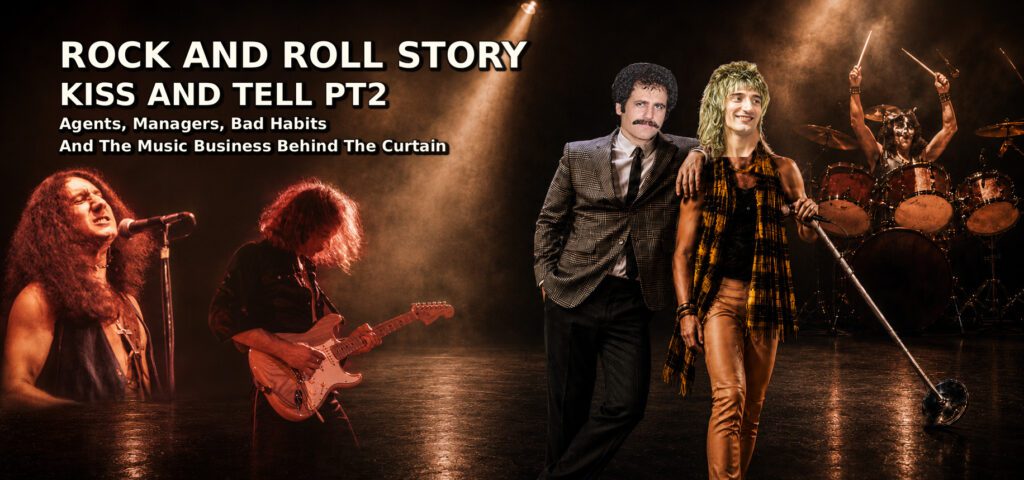
Agents And Managers With Bad Habits Is A Rock And Roll Story
This rock and roll story is not told from a distance. It is the kind of rock and roll story that could only come from being inside the rooms where the deals, the drugs, the threats, the betrayals, and the bad judgment all lived together. I was there, and I will be the first to admit that I too shared some of those habits. I liked a good joint, and in fact, while in Hamburg on a visit to sign some German bands, I stayed at the Atlantic Hotel on the lake. The concierge warned me not to leave the window open because of the insects that could come in from the lake proximity. Randy Pie, a German rock band I met with, gave me a “spliff,” a fat doobie with weed sprinkled over tobacco. I did not smoke tobacco, but I wanted the weed. After smoking the spliff, I laid down on the bed, dizzy from the tobacco, and looked up at the wall behind the bed and the ceiling. From midway up the wall to well into the ceiling, there was a dark area, and that dark area was made entirely of insects because, naturally, I had left the window open. There I was, with a rolled-up magazine, swatting insects on my hotel room wall. It was a never-ending battle, and finally the concierge gave me a new room.
Many of the people around me during my New York days were doing blow, something I did not discover for a brief period until moving to L.A. following my mother’s death. Wally Meyrowitz, who carried the Uriah Heep contracts to JFK for signatures, actually became a heroin addict. At lunch, he would go into Central Park in order to get high. He died from an overdose. A good buddy of mine from college, who also did very well in the music business, was a fellow agent, Jon Podell. On one of my frequent trips back to New York after moving to Los Angeles, I met Jon for lunch at Patsy’s Restaurant on West 56th Street in Manhattan. It was one of the scariest events ever to me at that time. He was awake and talking, and then he would suddenly go into sleep mode. He was doing speedballs, a combination of heroin and cocaine. Up, down, up, down again.
Bill Hall, who had joined us at ATI and brought over ZZ Top, among other Southern bands, liked his snort. Most of the agents smoked weed, as many people did in the sixties and seventies. The only throwback was Sol Saffian, my partner, as he liked his Scotch. This was part of the world behind the curtain, and any honest music business memoir life from that period has to admit that the business was not only contracts, limousines, backstage passes, and big commissions. It was also bad judgment, worse habits, and people who sometimes disappeared into the very life they helped sell. That is what makes this more than gossip. A rock and roll story from inside the business has to carry the smell of the rooms, the mistakes, the bad decisions, and the people who did not survive their own appetites. Some of what happened back then was funny only after enough years had passed. Some of it was not funny then, and it is not funny now.
Fleetwood Mac: Egg On My Face In My Rock And Roll Memoir
This was the one tour where I had egg on my face. During the transition of membership from Fleetwood Mac with John McVie, the blues band, into Fleetwood Mac the pop band with the advent of Stevie Nicks as lead singer and Lindsey Buckingham, the original manager, Clifford Davis, put together another group and we at ATI set up a tour. It was a disaster, as there was not a single original member. The tour was then cancelled, and all monies were refunded to the promoters. That was some serious egg on our faces.
In a rock and roll story, you do not always get to be the hero. Sometimes you are the guy standing there with the problem in his hands, explaining to promoters why the band they expected was not the band they were getting. In this case, the name was enormous, the expectations were enormous, and the reality was something nobody wanted to buy once they understood what they were actually getting. That is the part of the business the public almost never sees. A name can sell a ticket, but if the substance behind the name is not there, the whole thing collapses. I learned plenty in that episode, and none of it came wrapped in applause. As a rock and roll story, it was embarrassing, expensive, and unforgettable.
Buddy Miles: The Mob In My Memoir About Music Industry Life
I had Savoy Brown headlining in a theater in the Italian section of Brooklyn, which I think was not too far away from the Army base there. Buddy Miles, the drummer with Jimi Hendrix during the Band of Gypsys period, was special guest on the bill. Following Buddy’s set, and while Savoy Brown were setting up for theirs, Buddy came to me and asked for some help because the promoters simply did not want to pay him. I interceded with the promoters, way too obnoxiously, but I got Buddy paid. He later became a client.
The problem with how I handled it was that the two brothers who owned the theater, and made wise guys, wanted me dead. It took a pal, Carmine “Wassel” DeNoia, to bring it to the table with his buddy, a famous member of the Genovese family, to sort things out and keep me alive. That may sound outrageous now, but it was not a movie scene to me. It was the kind of rock and roll story where the applause was over, the lights were coming down, and the real danger was not on the stage. It was in the room afterward, when money was due, tempers were hot, and the wrong words could turn a booking dispute into something far worse. I had no great plan that night beyond getting Buddy paid. That was my job, and I did it. The problem was that I did it with too much mouth, not enough caution, and a very poor reading of who was standing in front of me. I survived it, but only because somebody who knew that world better than I did stepped in before the story ended in a much uglier way.
Billy Preston: Sex Drugs Rock And Roll Without The Romance
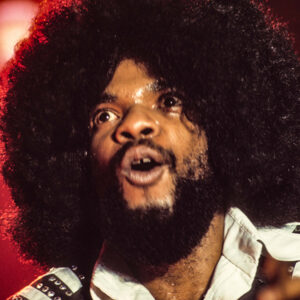
I had always been a fan of Billy Preston’s, even going back to his days with Ray Charles and Little Richard in the sixties, and then with the Beatles, earning co-billing on “Get Back.” I don’t recall how we actually met, but sometime thereafter, I approached him on the basis of managing his solo career. He invited me up to his home in what was either Topanga or Malibu Canyon, though I don’t recall which. After taking way too long to get his butt from his room to the living room, he appeared totally whiffed out on snort. Having any conversation with him was beyond the pale, let alone one about my willingness to manage him.
He went into an angry tirade about those in the music business who took advantage of him, and while ranting and flailing his arms about, he fell flatly on his ass. I have no idea if a deal could have been made, but Preston was way too far out of control at that time for me to even consider taking him on as a client. There are parts of sex drugs rock and roll that people like to romanticize, but when you are sitting across from someone you admire and watching him spin out in front of you, the romance leaves the room very quickly. Billy Preston was not some nobody trying to act like a star. He was a gifted man with a real history, and that made it worse to watch. This rock and roll story was not about whether he could perform or whether he had talent. Of course he had talent. The issue was whether there was enough stability around him to build anything meaningful, and on that day, the answer was no.
ZZ Top: Bill Ham’s Almost Certain Death

I had set up a booking for ZZ Top to play at Prospect Park in Manhattan during their regular series of summer events. While ZZ Top was on stage performing, some gangbangers in front of a stage with very little security were getting too close for comfort to the band, at least in the eyes of Bill Ham, their then-manager. The next thing I heard was Bill yelling at the kids to back off, and not in too friendly a tone. Following that, I noticed one of them pull a rather long and deadly-looking blade from somewhere. Their intent was to settle the score, as they saw things, with Bill yelling at them.
I immediately went over to them to talk and try to calm them down. Fortunately for Bill, I succeeded. That is another rock and roll story that could have gone in a very different direction. A manager yelling at the wrong people, a knife appearing in the crowd, and one conversation standing between a concert problem and something much worse. People forget how little control there sometimes was at those shows. You could have a major act on stage, a crowd pushing forward, inadequate security, and personalities on both sides of the barricade ready to explode. From the outside, it looked like a concert. From where I stood, it could turn into a street problem in two seconds. That is why this rock and roll story still feels sharp when I think back on it.
Rush: Tell It To The Judge In A Music Industry Memoir
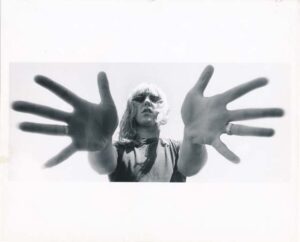
It is no secret that my plan to launch Rush was both unique and brilliant, without which they would have been just another Canadian bar band. At that time, their sound was far less perfected than it would be later on. I tell the entire story of my game plan and its execution in a chapter of my rock and roll memoir, Once A King, Now A Prince. After I broke the band due to my touring with them and securing a record deal, I received a letter from Ray Daniels, my co-manager of Rush at the time, dismissing me and demanding repayment of my $20,000 commission earned from the record deal I made for them.
Needless to say, some years later the case of Ira Blacker vs. Rush came to trial, and I won $250,000 in 1970s money. In 2026, that same sum would be worth about 1.5 million dollars. The highlight of that trial was when the judge had had enough of the crap Ray Daniels’ attorney was offering in testimony while Ray was being deposed as a witness. The judge started waving my contract with the band in the face of Ray’s attorney, to the point where I thought he might even smack him in the face with it. The judge then asked him quite loudly, “What do you call these papers?” Sheepishly, the attorney replied, “A contract, a signed contract.” Case closed. I won.
That was not simply a legal victory. It was also a reminder that even in a business built on noise, image, and swagger, paper still mattered. A signed contract could cut through the fog better than any backstage speech, and that courtroom became its own kind of rock and roll story. A music industry memoir life has to include moments like that because the music business was never only music. It was leverage, timing, nerve, paperwork, memory, and sometimes a judge who finally got tired of listening to nonsense. The stage was one battlefield. The courtroom was another.
Savoy Brown: Kim’s Payback And The Price Of Loyalty

I spent many years representing Savoy Brown, both through their decent incarnations and some quite awful. In fact, to my ears and eyes, the best version of Savoy Brown was the first with Chris Youlden. As they were my first meaningful signing, first at Associated Booking and then, when they joined me at American Talent International, I always gave them the extra push. That extra push included representing Kim Simmonds for management when he put together a horrible trio from his new hometown in Ohio’s farmland. Despite the awful group, I still managed to put them on the road and build from there. I got them a video deal for a live album, with them being one of the first groups to even make a video.
The payback came when Kim’s wife decided she could be his manager, probably stirred on by their agent, my old pal Mark Hyman. So much for the loyalty of all. In time, as in all bad dealings, our contract for management was arbitrated in front of a judge. Needless to say, I won. So much for loyalty, though. This rock and roll story still bothers me more for the loyalty than for the money. Money comes and goes in the music business, sometimes faster than anyone expects. Loyalty, when it disappears, leaves a different kind of mark. You remember who you pushed for, who you protected, who you kept working, and who later decided your part in the story was suddenly negotiable.
A music industry memoir cannot be honest if it leaves out betrayal. The business had great nights, great bands, and moments when you felt you were helping shape something that would last. It also had people who forgot who pushed the wheel before it started turning.
Once A King, Now A Prince: A Rock And Roll Memoir With No Clean Ending
A rock and roll story like this one does not come wrapped in a clean moral. Agents, managers, promoters, musicians, lawyers, hustlers, friends, and enemies all moved through the same rooms, and sometimes they changed sides before the next drink was poured. Some people got rich. Some got ruined. Some got away with things they should not have, and some, like me, ended up telling the story years later with enough distance to laugh at parts of it and enough memory left to know which parts were not funny at all.
That is part of what Once A King, Now A Prince is really about. It is not just a rock and roll memoir about famous bands. It is a firsthand account of what happened behind the bookings, the tours, the handshakes, the lawsuits, the drugs, the egos, the betrayals, and the occasional moments when luck, nerve, or a signed contract kept the whole thing from collapsing. This rock and roll story is only one slice of it, but it is a pretty good reminder of the world I lived in. Some of it was thrilling. Some of it was insane. Some of it was dangerous. And some of it, even now, still makes me wonder how the hell I got through it.
These stories stay with me because they show the music business as it really was from the inside. Not every person in them comes out clean, and I certainly do not always come out looking good. But they are true to the life I lived, and they belong in the larger story of a time when rock and roll was not managed by committee, filtered through publicists, or softened by corporate caution. It was rougher than that, louder than that, and much more dangerous than most people standing in the audience ever knew. That is the rock and roll story I lived.
