









Music Business True Stories From The Crazy Seventies
Some music business true stories do not begin in a boardroom, a booking office, or a record company suite. They begin on the road, in some strange town, or in some Los Angeles living room where the rules of normal life had apparently been left outside with the coats. That was the music business I knew. It was not polished, not corporate, and not run by people with sensitivity manuals tucked under their arms. It was loud, loose, dangerous, funny, generous, selfish, and sometimes flat-out insane.
These music business true stories are not the kind you get from a press release. They are the kind you carry around for fifty years because they explain the world behind the music better than any publicity photo ever could. The public saw the stage, the lights, the women, the hotels, and the suggestion that everybody involved was living inside one long party. Some of that was true. The rest was instinct, timing, hustle, depression, betrayal, bad judgment, and the occasional moment when you wondered what strange planet you had landed on.
Music Business True Stories From Los Angeles
Back in the crazy seventies, swingers’ parties were part of the scenery, especially in Los Angeles, where the music business, Hollywood, and assorted free spirits all seemed to share the same oxygen. I went to one with my friend Nancy, who announced upon entry that she was there only because a man needed a female companion to get in. She made it very clear that she would not be participating. That sounded firm enough, but a few minutes later, I walked into another room with a new lady friend, and there was Nancy, wearing nothing but a turban-type hat and whatever was left of her earlier declaration. So much for sworn testimony.
That was one of those music business true stories that said more about the period than any lecture could. Everybody had rules until the door closed, the music played, and the seventies took over. At that same event, as I recall, Al Kooper, from Blood, Sweat & Tears, The Blues Project, and his solo career, arrived with a stunning blonde. I remember wondering why any man in his right mind would bring someone that beautiful to a place designed around sharing. But logic was not always the chief operating principle in those days.
Before long, Al and his friend undressed, and with four other people, got into a group session right there on the living room floor. I called it a twelve-legged race, and that description still holds up better than anything more polite. These were music business true stories from a time when the music business was not just a business. It was a traveling circus with better shoes, louder amps, and fewer rules.
Music Business True Stories And The Big Snort
In all my time at ATI, and in the music business at large, I had never done coke. That changed after I moved to Los Angeles to set up my living quarters and my new rock and roll management business. My mother was dying of cancer, and emotionally, I could not remain in New York City, where my father lived. I had to get out of his venue, even if I was walking straight into another kind of storm.
Within a couple of days of setting up shop in L.A., I received the call that my mother had passed. I was crushed. My protector, most of the time, from my father was gone. My mom was gone. At that moment, it felt like the lowest point in my life. I was left in an emotional void.
As it happened, as I recall, my buddy Dan, who was a tour manager for Chaka Khan, whipped out a gram of coke as we were walking down the street to a party. That was my first time at “the big snort.” I liked it. I was off to the races.
Years later, after I had decided never to do more “blowzine,” with my “whiffing” days well behind me, my shrink gave me a strange kind of explanation. He said coke may have saved my life, because who knows what I might have done in the state I was in? Coke replaced the endorphins that my depression had killed. That was one of the darker music business true stories from the crazy seventies. Not glamorous. Not heroic. Just true.
Music Business True Stories From Toronto
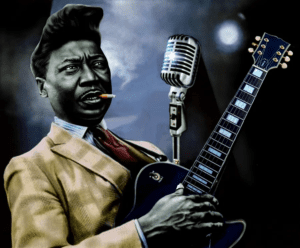
One of the more eye-opening road trips I ever took was to Toronto. I went there to try to sign a Canadian group before I later became involved with Rush. While I was there, I had the privilege of seeing Muddy Waters perform live, and that alone made the trip worthwhile. Muddy was fabulous. There are blues performers, and then there are people who make you understand where the whole thing came from. Muddy was one of the best in history, and seeing him live was a blessing.
But that same trip also gave me one of the ugliest music business true stories I ever carried home. The promoter helping me around town picked me up from the airport, and at some point, I asked him what he and his friends did for fun in Toronto. His answer shocked me cold. He told me, without embarrassment, that he and his pals went “Paki bashing.” He described driving around with friends, spotting Pakistani residents, waiting for a traffic light, jumping out with baseball bats, and attacking the occupants of the other car.
That one stayed with me. It was not funny. It was not colorful. It was just ugly. The Canada I saw later in life seemed to have moved to the other end of the scale, but that night showed me something rotten sitting under the surface. Not all music business true stories are amusing. Some just tell you what kind of world you were traveling through.
Music Business True Stories And The Waldorf Card Game
They say the mob never forgets. I had a friend back in New York who was, as the mobsters used to say, “a friend of ours.” He was also a cousin of a very high-ranking mobster. After I left ATI, I guess my friend felt I was of less use to him. That is when he invited me to what was described as a “fixed” card game at the Waldorf Astoria on Park Avenue, and fixed in our favor.
The game was supposed to be fixed so he and I could win. As I recall, that was not what happened. It felt like a sting, and it cost me $85,000 in late-seventies dollars, which today would be roughly $465,000. The most amazing part of that ugly tale was the balls he had afterward, when he asked me to pay him back for the $10,000 he had loaned me after I had already run through my own money.
No shame.
Of all the music business true stories I carried out of those years, that one had a special stench to it. Sex, drugs, bad manners, and backstage lunacy were one thing. Betrayal by someone who smiled at you while helping empty your pockets was another.
Music Industry True Stories That Stayed With Me
The reason I like music business true stories is that they strip the shine off the business without killing the music. The songs were real. The talent was real. Muddy Waters was real. Rush was real. So were the lunacy, the sex, the drugs, the depression, the racist shocks, the betrayals, and the deals made by men who could smile at you while reaching for your pocket.
That is what Once A King, Now A Prince is really about. It is not a museum tour through rock history. It is a walk through the rooms where the deals were made, the lies were told, the women appeared, the money moved, and the music somehow survived all of us. These rock and roll insider stories are part of that world, not the cleaned-up version, but the one I actually lived.
Some music business true stories make you laugh. Some make you shake your head. Some make you wonder how any of us got out of that business in one piece. But if you want the truth about those years, you cannot separate the music from the madness. Those music industry true stories and music industry stories traveled together, checked into the same hotels, ate at the same restaurants, and often woke up wondering who had the room key.
