









Why The Best Music Autobiography Tells The Whole Life
Childhood Came Before The Music

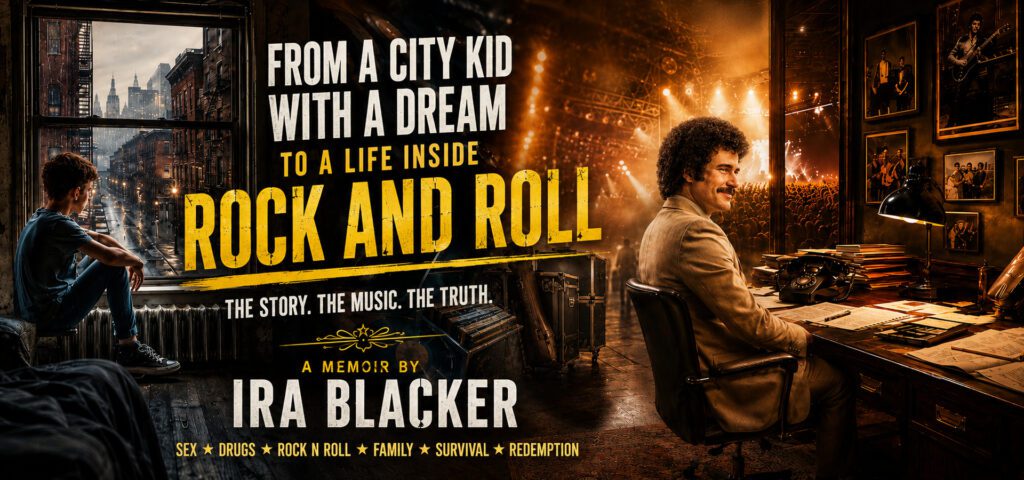
To understand why I believe a best music autobiography has to be about more than the music business, you have to begin long before I ever booked an artist, negotiated a contract, or walked backstage. My story began in a severely dysfunctional family, where survival came before ambition and childhood left scars that followed me into adulthood.
Those years shaped the way I dealt with people, the risks I was willing to take, and the drive that eventually pushed me toward a completely different life. Music became an escape, but it also became something larger: a place where I could build an identity that belonged to me. Many of the best music memoirs concentrate almost entirely on fame, records, tours, and celebrity. My story cannot be told that way because the person who entered the music business was already carrying an entire lifetime of experiences with him. That is why the wider life belongs in the story.
Finding My Way Into The Music Business
My entrance into the music business was not some carefully mapped career move. I found my way there through a combination of ambition, instinct, timing, and a growing understanding that this was a world where I belonged. I was learning how artists, agents, promoters, managers, record companies, and venues worked together, and just as importantly, how they sometimes worked against one another.
At Hofstra, my first amateur venture into the music business began almost by accident. Larry Marshak and I became entertainment directors for our fraternity’s annual dance and decided it would be both cool and profitable to hire some recognized rock and roll talent. We found the manager of the Laddins, an oldies group by then, but before we could put the show together, the fraternity backed out. Marshak and I did not. We found our own hall in Glen Cove, called the Golden Slipper, and decided we would show our fraternity brothers how it was done. I designed the flyers, we plastered the local college parking lots with them, and our little promotion became the Kitten Klub.
The Four Rays were the band, Little Marty handled the soul side of the bill, and I became Master of Ceremonies. On opening night, with tickets selling for thirty-five cents, about 1,100 people paid to get in. I was around twenty years old, still at Hofstra, and suddenly my amateur experiment had turned into a very real taste of show business. That first taste of success is part of what gives a best music autobiography its shape, because it shows where the instincts began before there was ever a professional title attached to them.
The Golden Slipper led directly to the Silver Knight. Bernie Kurtz and Arnold Silver had seen what Marshak and I were doing and offered us positions at their club in the Five Towns. Upstairs was geared toward the college crowd with jazz and comedy; downstairs was rock and roll.
Al Kooper was the regular bass player, and Paul Simon sat in one night before his rapid rise with Garfunkel. I learned crowd control by jumping into fights with the bouncers, expanded my work as an MC into stand-up comedy, and produced my first record, “Stormy Weather,” with a local Doo Wop group Marshak and I called the Five Sharks.
I was doing pieces of the music business before I had any formal standing in it, learning promotion, production, talent, audiences, and the strange cast of characters who came with all of it. Those years belong in a best music autobiography because they show the learning curve, the mistakes, the characters, and the experience that came before the polished career.
Then came the Emeralds, one of the hottest bands on Long Island. I had arranged for them to play the Silver Knight, but when I arrived for their opening night, the place was padlocked and a Sheriff’s notice was on the door. The owners had not paid their bills, the club was shut down, and the Emeralds’ equipment had been seized along with the rest of the assets. I met the band at a diner over eggs and gave them a simple proposition: they were out of work and so was I, so why didn’t I manage them and find them work?
They agreed. I learned the phrase “tools of the trade,” helped get their equipment released, and started traveling around Long Island showing club owners pictures of the Emeralds and convincing them that the band could bring people through their doors.
Before long, my business card read something like Ira Blacker: Agent, Manager, Record Producer, Record Company, and whatever other title an ambitious amateur could squeeze onto a card. I did not yet appreciate the idea of specialization because I was doing everything I could get my hands on. The Golden Slipper had taught me promotion, the Silver Knight had taught me how a club and its entertainment worked from the inside, and the Emeralds turned me into an amateur agent and manager before anyone had officially hired me to be either one.
That progression is exactly why a best music autobiography should follow the whole life, not just the years after the business cards and office doors became official. That was the real bridge from my college years into Associated Booking Corp. The professional career did not appear from nowhere; I had already been building it without realizing exactly where it was taking me.
It was a business built on personalities, relationships, negotiation, judgment, and the ability to recognize opportunity before everyone else saw it. A rock and roll memoir can give readers the backstage stories, but a broader autobiography should also explain the decisions and circumstances that put someone backstage in the first place. Those early years were the bridge between the life I had survived and the career I was beginning to create.
Associated Booking Corp. Taught Me The Business
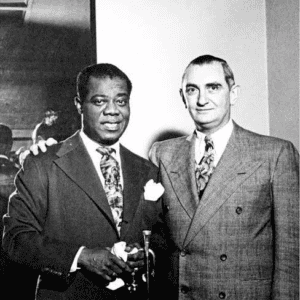
Associated Booking Corp., or ABC, became an important part of that education. This was where the business stopped being something I was simply trying to enter and became something I was learning from the inside. That period belongs in any best music autobiography because it explains how the career was actually built, not just what happened after success arrived.
Booking artists meant understanding far more than dates on a calendar. You had to know the artist, the market, the promoter, the venue, the money, and whether everyone involved could actually deliver what they promised. It was a daily education in people as much as entertainment.
I began developing the instincts that would later guide much bigger decisions, and I started building relationships throughout the industry. When readers look for the best rock and roll autobiographies, I think the strongest ones show this part of the journey too: not simply who became famous, but how the machinery worked behind the fame and how somebody learned to operate inside it.
Owning American Talent International Changed Everything
American Talent International took that experience to another level. I owned ATI, and the agency grew into a major force in the American concert business. I signed and represented a large roster of artists during an era when rock was exploding into something much bigger than anyone had imagined only a few years earlier. Rod Stewart and Faces, Deep Purple, ZZ Top, Rory Gallagher, Uriah Heep, Savoy Brown, Nazareth, Rush, and many others became part of my professional life. That scale of experience belongs in a best music autobiography because it shows what the business looked like from the inside while it was happening.
These were not names I read about years later. They were artists whose careers, tours, problems, opportunities, and decisions were part of my everyday world. That is where a best music autobiography becomes something different from a collection of celebrity anecdotes. The artists matter, but so do the decisions, risks, arguments, victories, mistakes, and relationships behind them. To me, the best rock and roll autobiography should take readers into that world without pretending the glitter was the whole story.
Management Brought Me Even Closer
Management brought another change because now I was even closer to the artist and the career itself. My work with Rush, Kraftwerk, and others moved me beyond simply putting artists on the road and deeper into the decisions that could shape where a career went next. Rush became one of the defining relationships of that period for me, and Kraftwerk presented a completely different kind of artistic challenge. A best music autobiography should show how the work changed as the career changed, because each new role revealed a different side of the business.
Management meant dealing with the creative side, the business side, record companies, touring, personalities, expectations, and the consequences of decisions that sometimes took years to reveal themselves. These experiences are part of what separates my story from a book that only looks at one narrow piece of the music business and helps catapult it into the ranks of a best music autobiography.
For me, that is another reason a best music autobiography has to follow the entire path, because each stage of the life changed the way I approached the next one. A best music autobiography should tell readers who the person was before the success, what drove him toward that life, how he learned the business, what he built, whom he encountered, and what happened when the career changed again. Once A King, Now A Prince contains the rock and roll, but it also contains the childhood, the family, the ambition, the mistakes, the victories, and the moves that eventually led me into the business of music. That wider view is what makes the story mine.
